1Zpresso Q Air Manual Coffee Grinder
- Burrs
- Stainless steel heptagonal conical
- Capacity
- 15–20g beans
- Weight
- 365g (12.8 oz)
- Size
- 47 x 145 mm
- Adjustment
- 10-number dial, 30 clicks/rotation
- Body
- Polycarbonate
- Warranty
- 1 year limited
Overview — Who is this for?
The 1Zpresso Q Air is a small manual coffee grinder with stainless steel burrs. 1Zpresso rates it at 365g (±10g), and its body is about 47mm wide and 145mm tall. The company says it's smaller than a soda can, and it fits inside an AeroPress plunger. It holds 15–20g of beans, about one generous cup, and 1Zpresso sets it up for pour-over, drip, French press, and cold brew. It sits in the mid-range for hand grinders; check the current price on Amazon, since it moves often.
It's for the van lifer who brews one or two cups at a time, mostly pour-over or AeroPress, and wants a burr grinder that takes up almost no space and has no glass to break. It's not for someone grinding for four people every morning, and it's not really an espresso grinder, though it can get there.
What it replaces and what changed
If you came here looking for the Hario Skerton Pro, that listing is no longer available on Amazon. The Q Air is the hand grinder we now recommend in its place. It's a different kind of grinder, though, and it's worth being clear about what you gain and what you give up.
- Burrs: ceramic to steel. The Skerton Pro used ceramic conical burrs. The Q Air uses a stainless steel heptagonal (seven-sided) conical burr, the same burr 1Zpresso puts in its aluminum-bodied Q grinder. The steel burr in this class of grinder generally produces a more uniform pour-over grind than budget ceramic burrs.
- Adjustment. The Skerton Pro used a small notched nut behind the burr, and you had to partly disassemble it to change settings. The Q Air has a numbered dial with 10 numbers and 30 clicks per full rotation, so you can write down "setting 2.4 for V60" and return to it.
- No glass. The Skerton Pro's catch bowl was glass. The Q Air's housing and catch cup are polycarbonate plastic, so there's nothing to shatter on a van floor.
- Size and weight. The Skerton Pro weighed about 1.4 lb (roughly 635g) and stood much taller. At 365g, the Q Air is a little over half that, and small enough to disappear in a drawer.
- Capacity. This is the big trade-off. The Skerton Pro's hopper held about 100g. The Q Air holds 15–20g, depending on the bean. Several Amazon owners say they fit closer to 14–16g. Brewing for two means grinding twice.
- Price. The Q Air costs a little more than the Skerton Pro did.
In short, you pay a bit more for a smaller, lighter grinder with no glass parts, a steel burr and a repeatable dial. You give up batch capacity.
Design & build
The burr. 1Zpresso calls it its "new heptagonal burr." It's a stainless steel conical set, and retailers list it at 38mm. 1Zpresso says each burr is factory calibrated to minimize wobble and rates it for 100 to 200 kg of grinding. At a 15g daily dose, that's many years of coffee.
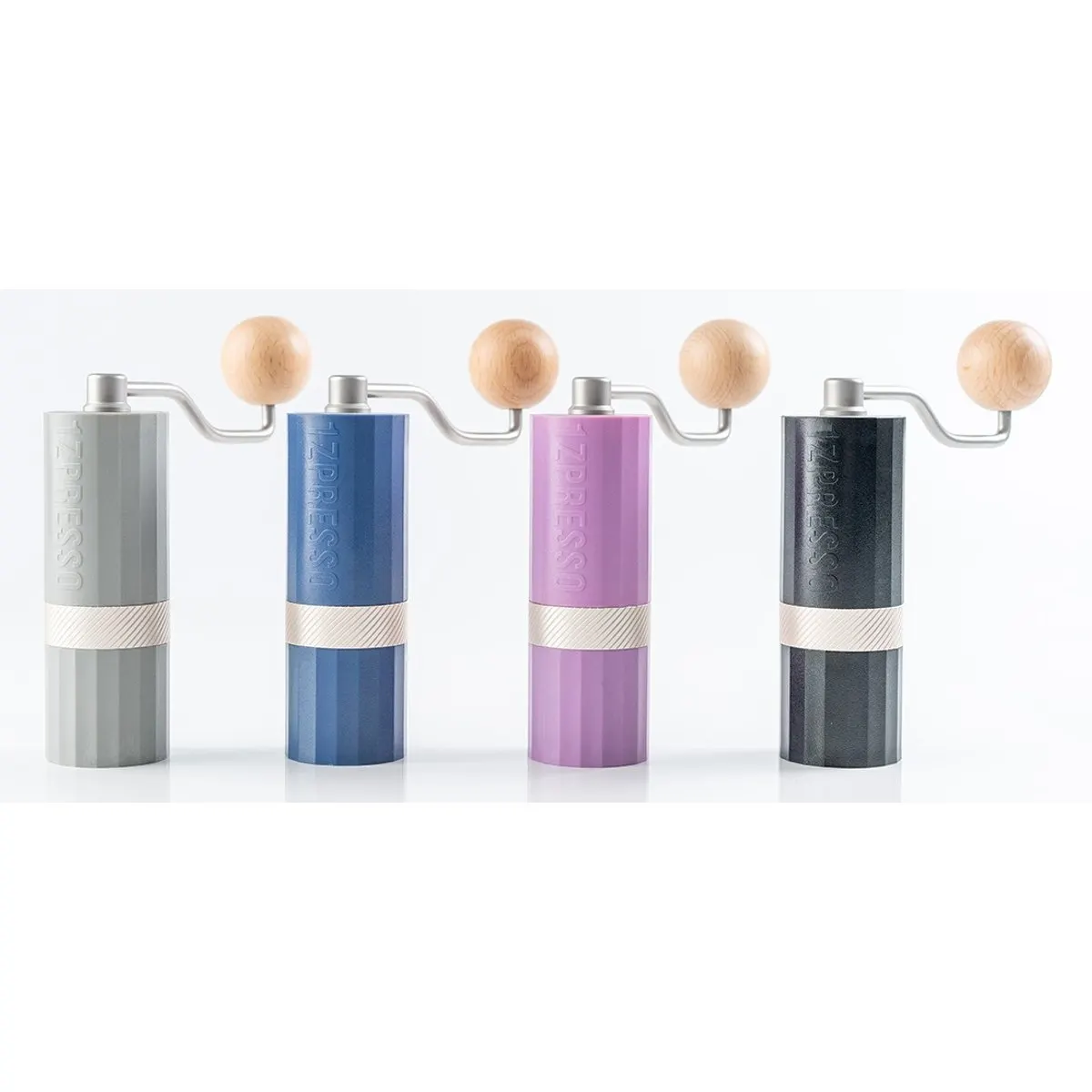
The body. The outer housing and catch cup are polycarbonate (PC), which is how 1Zpresso keeps the weight down. The heavier Q uses aluminum alloy for the same parts. One reviewer notes the Q Air still uses a metal internal frame, and describes the grinding action as smooth thanks to a dual-bearing design. It comes in four colors: gray, blue, purple, and black. The Amazon listing for this review is the black version.
The handle. The crank is a fixed bent steel arm with a wooden knob. It doesn't fold, unlike the Q2 and Q2 S. For storage, that's the one awkward protrusion. Because the handle is short, owners say leverage is limited at very fine settings.
The dial. You set the grind at the base of the burr with the catch cup removed. There are 10 numbers and 30 clicks per rotation. It's a stepped, clicky adjustment, so it won't drift while you grind, and it's easy to note and repeat.
Cleaning. 1Zpresso calls the design patented and says it cleans "with ease, no burr removal needed." In practice that means brushing out the burr and catch cup. Use a dry brush and avoid soaking it.
What's in the box. The grinder and an anti-slip rubber band for grip. The Q Air doesn't include the drawstring pouch or cleaning brush that come with the Q, so a small brush is a worthwhile add.
Warranty. 1Zpresso offers a one-year limited warranty.
Performance in a van
Pour-over and AeroPress. This is what the Q Air is built for, and reviewers agree it's the right tool here. Coffee Chronicler timed about 35 seconds to grind 15g for pour-over and described the cups as sweet and full-bodied. The same reviewer noted that the Q Air's burr has more prominent pre-breakers than the older Q2's, which trades a little acidity clarity for more sweetness and body. Its grind range suits the AeroPress and similar brewers well. For a full manual brewing setup, pair it with the AeroPress Original or the Hario V60 ceramic dripper.
French press and cold brew. Both are on 1Zpresso's list of recommended uses. A coarse setting is quick to grind. For a full 1L French press or a big cold brew batch you'll need to grind several loads, because the 15–20g capacity is small for those brewers.
Moka pot. 1Zpresso's own graphics show moka pot as a setting. That suits a Bialetti Moka Express, though grinding enough for a 6-cup pot takes more than one fill.
Espresso. It can grind fine enough, but this is the Q Air's weak spot. Coffee Chronicler reported 60–75 seconds for a 16g espresso dose, which is slow with the short handle, and called the espresso results passable rather than rich. Amazon lists pour-over, French press, and cold brew as recommended uses, not espresso. If you're pulling shots on a Wacaco Picopresso, plan on a dedicated espresso grinder. Our guide to making real espresso in a van explains why grinder choice matters so much there.
Static. The plastic catch cup builds static, so fine grounds can cling to the cup and jump when you pour. Reviewers recommend the Ross Droplet Technique: a single drop of water on the beans, stirred in before grinding. That largely solves it.
Owner ratings. On Amazon, the Q Air has a 4.6 out of 5 rating from about 150 ratings at the time of writing. Build quality, grind quality, portability, and value come up most in reviews. The main complaint is capacity.
Living with it
Storage. At about 47mm across and 145mm tall, the Q Air fits in a utensil drawer, a door pocket, or the coffee bin next to your kettle. AeroPress owners can nest it inside the plunger, so the brewer and grinder take up the space of the brewer alone. The fixed handle sticks out to one side, so store it lying flat or with the handle tucked against something soft.
In a moving vehicle. There's no glass to break, and polycarbonate shrugs off a fall better than glass would. The bigger risk is the burr setting. Once you've dialed in a setting, it won't move while driving, because the adjustment is stepped and sits behind the catch cup. Keep it in a drawer or bag so it can't rattle loose from a shelf.
Power and noise. It needs no battery, inverter, or cable. Grinding is a low crunch rather than a motor whine, so you can make coffee at dawn without waking anyone. For a van running on a small battery bank, that matters. An electric burr grinder is a short but real load, and the Q Air is zero.
Daily routine. A 15g pour-over dose takes around 35 seconds by reviewer timing, and it's a one-hand-hold, one-hand-crank job. If two people want coffee, plan on two grinds, about a minute total. For more on building a full brewing setup around a hand grinder, see our van coffee complete guide.
Who should skip it
- Batch brewers. If you make a full French press or a big pot for several people every morning, the 15–20g capacity will get old fast. A larger-capacity hand grinder makes more sense.
- Daily espresso drinkers. It works, but it's slow and the results are average. Spend more on an espresso-focused grinder.
- People who want a premium feel. The plastic body feels light and some owners call it cheap-feeling, even though it's built well. The aluminum-bodied 1Zpresso Q is the same burr in a metal body, for more money and about 110g more weight.
- Absolute minimum budget. It costs more than the Skerton Pro did. If cost is the only thing that matters, this isn't the cheapest burr grinder.
Alternatives
Within our coffee reviews, the Q Air pairs with brewers rather than competes with them:
- AeroPress Original. The natural partner. The grinder nests in the plunger, and the pair covers most van coffee needs.
- Hario V60 02 ceramic dripper. If pour-over is your ritual, the Q Air's strength lines up with it. Add a Bonavita electric gooseneck kettle if you have the power budget, or a stovetop gooseneck if you don't.
- GSI Outdoors Ultralight Java Drip. A minimal, packable pour-over cone for people who want the lightest possible kit.
- Stanley Classic Vacuum French Press. Great for a hot pot that stays warm, but you'll be grinding several Q Air loads to fill it.
Verdict
The 1Zpresso Q Air is the best fit we've found for van coffee at one or two cups at a time. It has a steel heptagonal burr with a repeatable numbered dial, it weighs 365g, it fits inside an AeroPress, and there's no glass to break. Compared with the Hario Skerton Pro it replaces on this page, it's smaller, lighter, free of glass, and easier to dial in, with a burr that reviewers rate highly for pour-over. It also holds a fifth of the beans and costs a bit more.
If you brew pour-over or AeroPress for yourself or one other person, it's an easy recommendation. If you brew big batches or pull espresso every morning, it isn't the right grinder.
FAQ
What replaced the Hario Skerton Pro? The Skerton Pro listing is no longer available on Amazon. We now recommend the 1Zpresso Q Air in its place. It swaps ceramic burrs for a steel heptagonal burr, a glass catch bowl for polycarbonate, and a 100g hopper for a 15–20g one, and costs a little more.
Does the 1Zpresso Q Air really fit inside an AeroPress? Yes. 1Zpresso says it nests inside the plunger of an AeroPress, and Amazon owners mention fitting it inside theirs. It's about 47mm wide and 145mm tall.
How much coffee does the Q Air hold? 1Zpresso rates it at 15–20g of beans. Some owners report it fits closer to 14–16g, depending on bean size and roast. That's one cup per grind.
Can the 1Zpresso Q Air grind for espresso? It can grind fine enough, but it's slow (one reviewer timed 60–75 seconds for a 16g dose) and espresso results are described as average. 1Zpresso and Amazon list pour-over, French press, and cold brew as its intended uses.
What's the difference between the Q Air and the 1Zpresso Q? They use the same burr and the same 15–20g capacity. The Q Air has a polycarbonate housing and catch cup and weighs 365g. The Q uses aluminum alloy and weighs about 475g, and comes with a drawstring pouch and cleaning brush.
How do I adjust the grind size? Remove the catch cup and turn the numbered dial at the base of the burr. It has 10 numbers and 30 clicks per rotation. Note the setting you like for each brewer so you can return to it.
Why do coffee grounds stick to the catch cup? That's static from the plastic cup. Adding a single drop of water to the beans and stirring before grinding (the Ross Droplet Technique) greatly reduces it.
Compare with similar products
See how this stacks up against the other coffee gear we've reviewed.
Related Reviews
For: Coffee for several, no glass
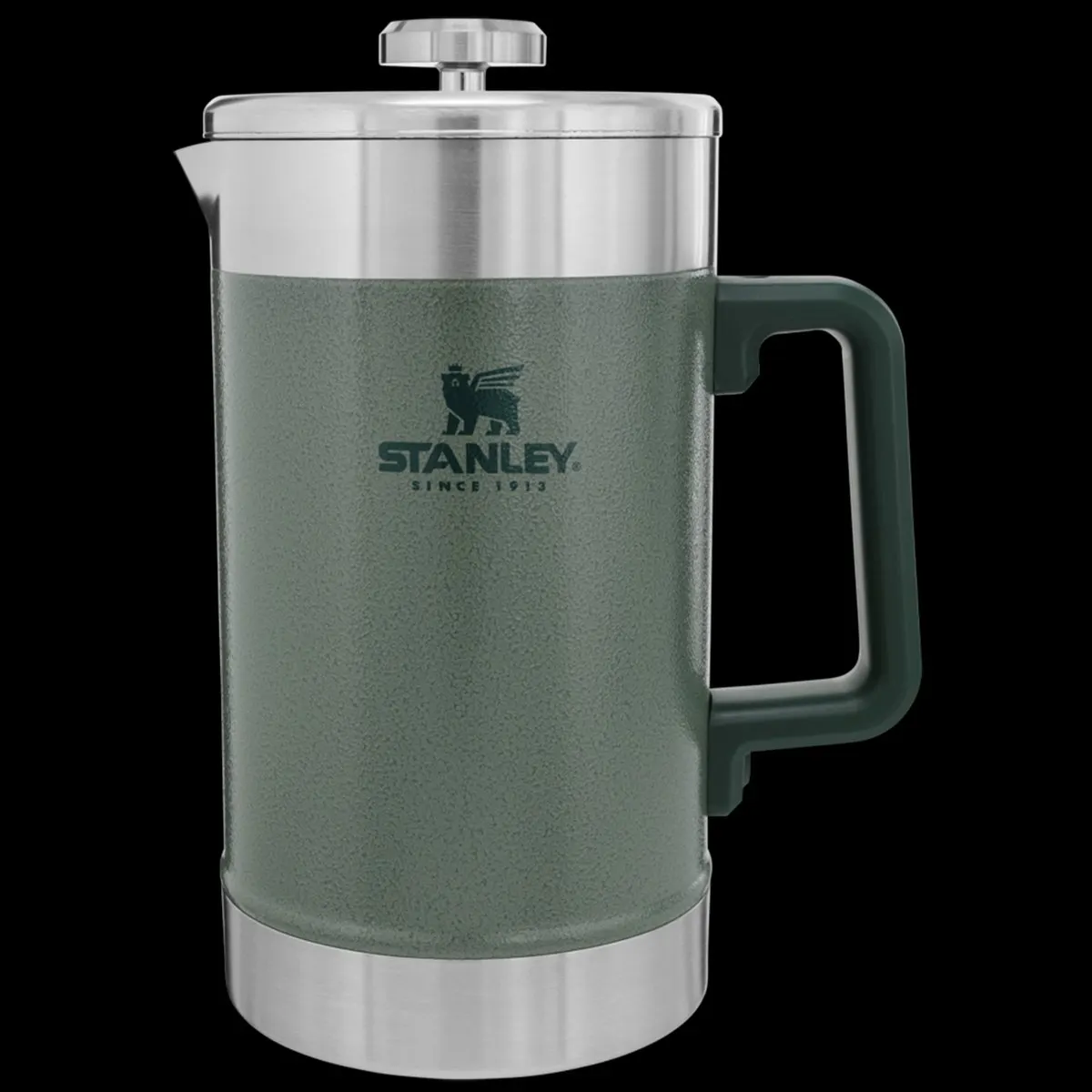
Stanley Classic Stay Hot French Press
A French press with no glass to break. Stanley says the vacuum-insulated stainless body keeps coffee hot for 4 hours after brewing, it brews 48 oz at once, and it is backed by Stanley's lifetime warranty.
For: Pour-over on shore power
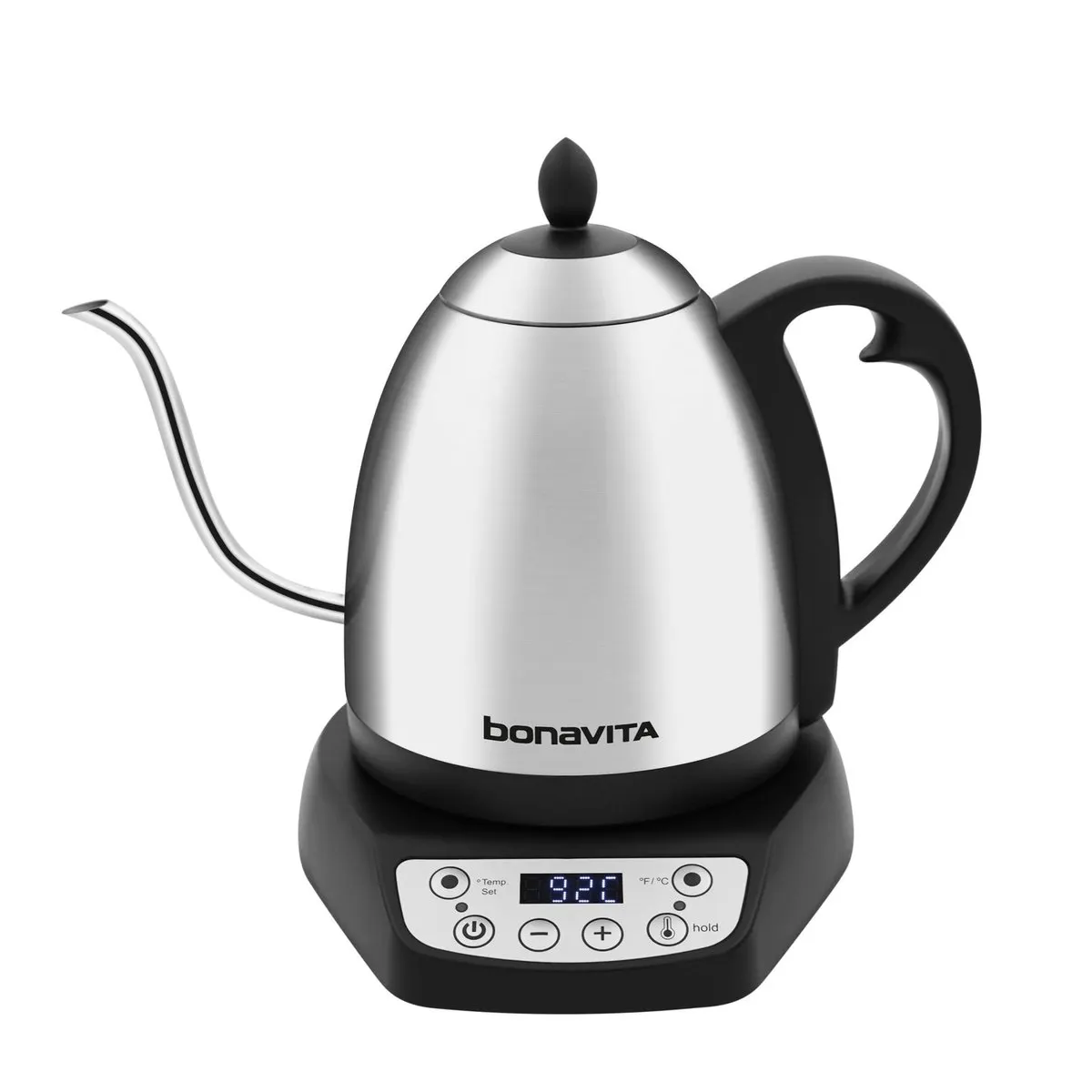
Bonavita 1.0L Electric Gooseneck Kettle
The pour-over kettle for vans with shore power or a 1500W inverter. Precision gooseneck spout, 1L capacity, full boil in 4 minutes, and the controlled pour rate is what separates good pour-over from great. Stovetop alternative below.
For: Backup single-cup pour-over
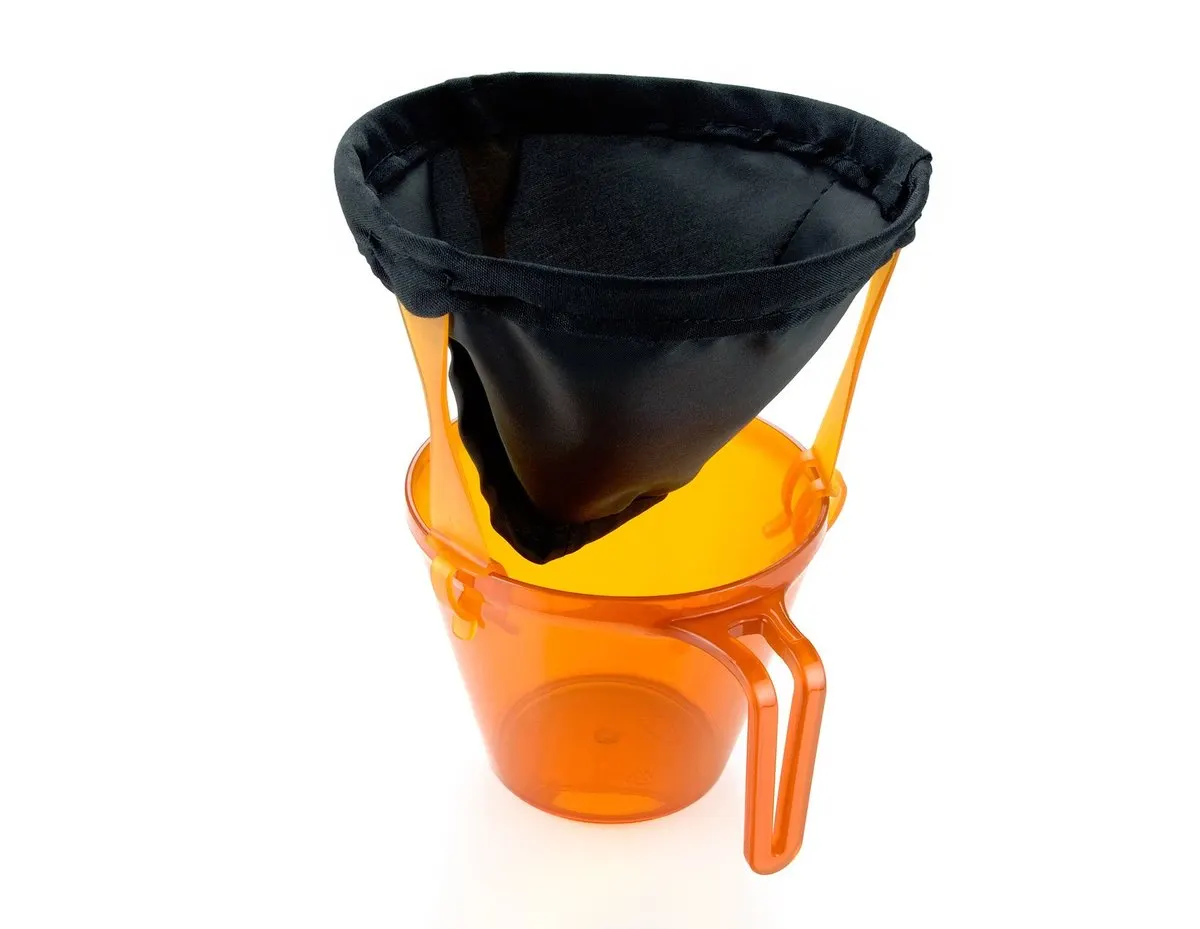
GSI Outdoors Ultralight Java Drip Pour-Over Filter
An inexpensive backup pour-over that fits in a glove box. Folds flat, weighs almost nothing, and clips onto a cup or thermos for a single-serving pour-over without paper filters. Useful when the kettle and dripper are packed away.