Best Coffee Gear for Van Life: Complete Guide
How to brew great coffee in a van: AeroPress, pour-over, moka, French press and real espresso compared, plus grinders, kettles, power and water use, and our 2026 picks.
Disclosure: As an Amazon Associate I earn from qualifying purchases. Links to Amazon on this page are affiliate links: if you buy through one, VanLifeKitchens.com may earn a commission at no extra cost to you. Read our affiliate disclosure.
Coffee is the one meal-adjacent ritual in a van that happens the same way every single morning. Groceries, weather and campsites change; the first cup does not. That makes coffee gear one of the few van kitchen purchases where small differences in reliability, cleanup and power draw add up over hundreds of mornings.
This guide is for anyone building or upgrading a van kitchen who wants good coffee without dragging a house kitchen's worth of gear along. It covers the five brewing methods that actually work in a van, why the grinder matters more than the brewer, how to handle kettles and power, how much water each method uses, and our picks from budget to premium for 2026. If you only want the shopping list, skip ahead to the "Best coffee gear for van life (2026)" section near the end.
What makes van coffee different
In a house you can own a drip machine, a Chemex and a French press and rotate by mood. In a van, every item has to justify its cubic inches, survive washboard roads, and work with whatever heat source and water supply you have. The question stops being "what makes the best cup" and becomes "what makes the best cup you will actually make every morning, in the cold, with a limited water jug and a burner that wants to blow out."
Three variables decide which method fits your rig:
- Power. Anything with a heating element (electric kettles, drip machines, electric grinders) draws real current from your battery bank. Run the numbers in our van kitchen power budget guide or the power calculator before you commit.
- Heat source. Aluminum moka pots do not work on induction; some kettles do not either. Our induction vs butane vs propane guide covers what each fuel can and cannot heat.
- How much you care about the cup. If coffee is caffeine delivery, the answer is simple and cheap. If it is the best part of your morning, the answer gets more interesting (and more expensive).
What we do not recommend for vans: pod machines (power draw, waste, cost per cup, single-source supply of pods), electric drip brewers (bulky, high draw, use more water than you need), and percolators (they recirculate already-brewed coffee and tend toward bitter, over-extracted results).
The five coffee methods that work in a van
Coffee has dozens of brewing methods. Only five reliably pass the van test of small, durable, fast, consistent and power-efficient enough for daily use.
1. AeroPress — the reliability pick
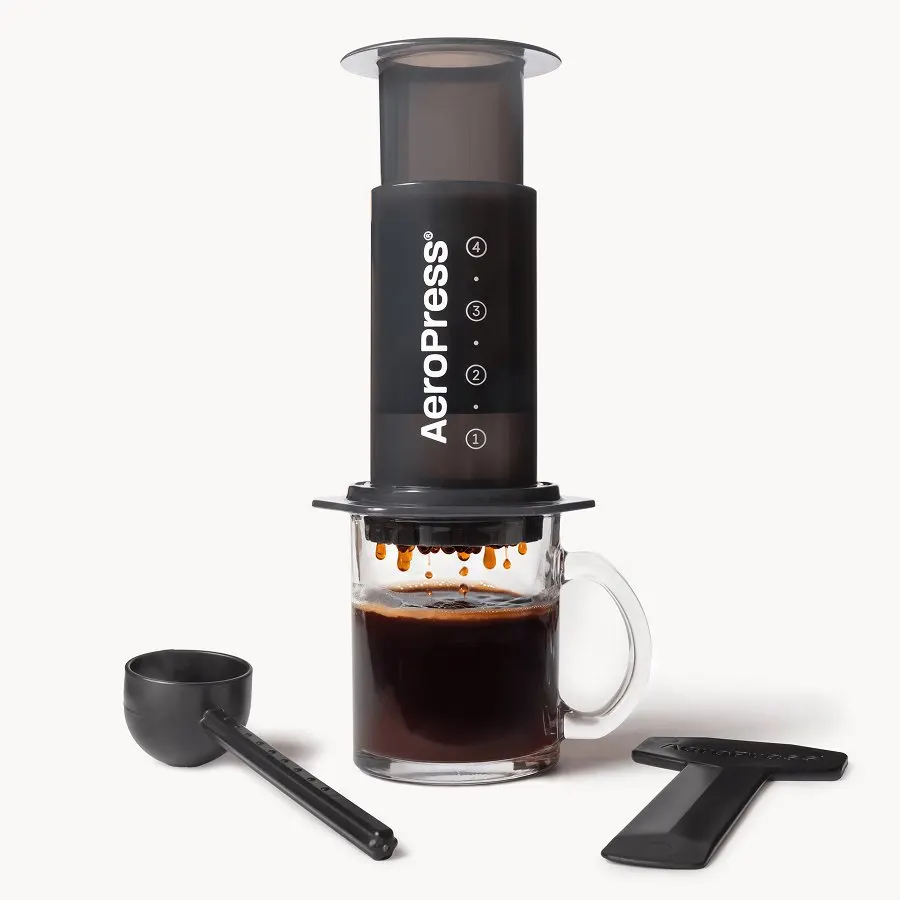
The AeroPress Original is a plastic plunger brewer that makes one cup of up to roughly 8 oz in about 90 seconds once your water is hot.
How to brew: about 15 g of coffee to 220–250 g of water, medium-fine grind (a bit finer than drip), water around 80–85 °C (175–185 °F). Stir, steep, press. The cooler water and short contact time are part of why it is so forgiving.
Taste: clean and low in bitterness, somewhere between pour-over and a strong drip cup. It will rarely produce the best cup you have ever had, and it will rarely produce a bad one either.
Why it suits vans: the body is BPA-free polypropylene with no glass to break. Cleanup is popping the spent puck into the trash and rinsing. It works with any kettle on any heat source, uses little water, and the brewer, filters and a small bag of coffee nest together in one mug-sized space. The margin for error is large: slightly wrong grind, a distracted stir or off-temperature water still yields something drinkable — useful when you are brewing while someone else is packing up the bed.
Trade-offs: single cup per brew, and paper filters need restocking (a reusable metal filter removes that and adds a little more body). The smaller AeroPress Go variant is designed to pack inside its own cup if space is extremely tight.
2. Pour-over — the taste-ceiling pick
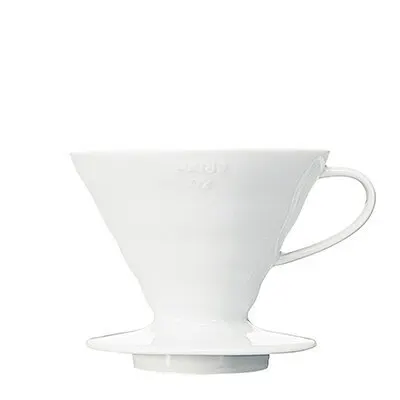
A cone dripper plus a gooseneck kettle produces the cleanest, most nuanced cup in this guide when done well. The Hario V60 02 Ceramic Dripper is the standard: a 60-degree cone that brews 1–4 cups and gives you more control over extraction than any other manual method.
How to brew: roughly a 1:16 ratio (20 g coffee to 320 g water), medium grind, water at 92–96 °C (198–205 °F), a 30–45 second bloom, and a total brew time of about 3.5–4 minutes.
Taste: bright and articulate. Pour-over is the method that shows off light-roast single-origin beans — the florals, acidity and finish that heavier methods blur. If you buy expensive beans, this is the method that justifies them.
Trade-offs: it rewards attention and punishes shortcuts. You need a gooseneck kettle (regular spouts pour too fast to control), a scale for consistency, and four minutes of standing still. Ceramic retains heat well during the brew but can chip or crack if it bangs around a drawer, so pack it in a cloth or a padded slot. If you want something less fragile, plastic V60s and flat-bottom stainless drippers such as the Kalita Wave are the common alternatives; flat-bottom drippers are also more forgiving of uneven pouring.
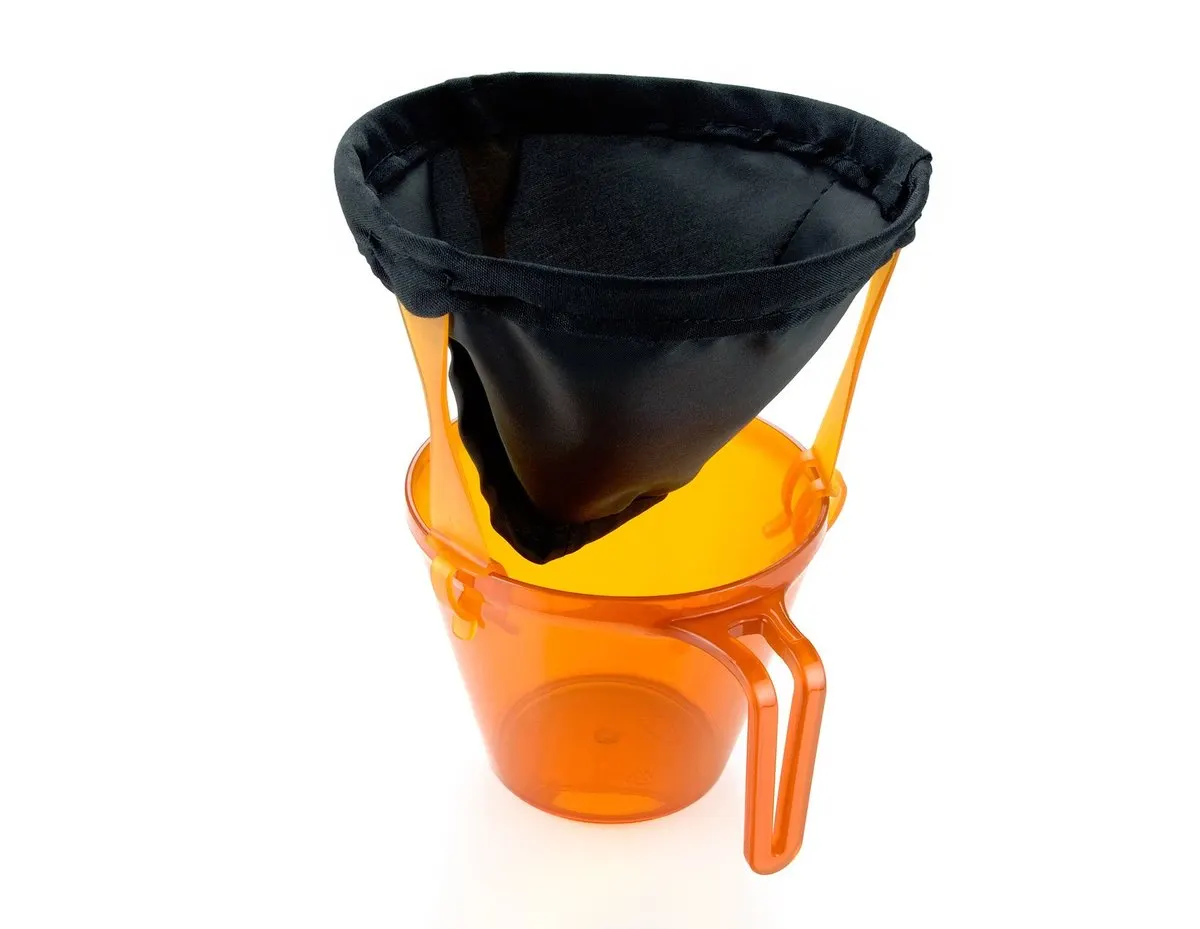
For the ultralight end, the GSI Outdoors Ultralight Java Drip is a fold-flat reusable mesh cone that clips onto any mug. It leaves more sediment than paper and only makes one cup, but it weighs under an ounce and makes a sensible glove-box backup.
3. Moka pot — the no-electricity classic
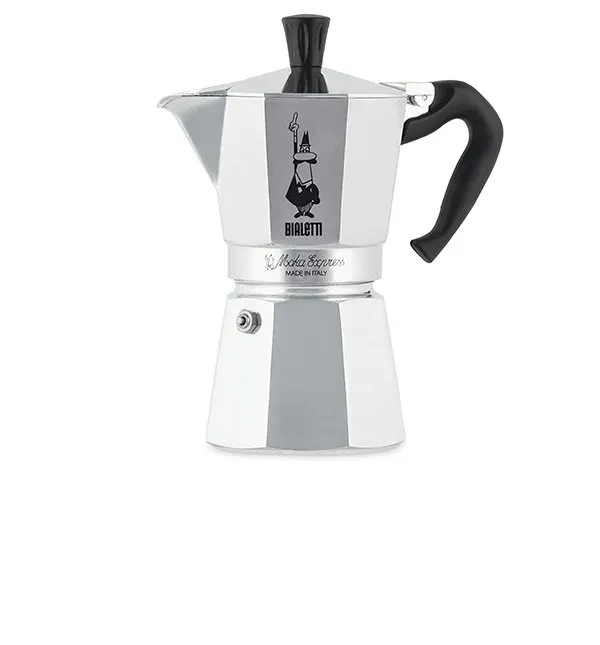
The Bialetti Moka Express (6-cup) is an aluminum stovetop brewer that forces steam-pressurized water up through the grounds. The 6-cup model makes about 9 oz of strong coffee — roughly two servings — in around 5 minutes. Solo drinkers often prefer the 3-cup size, which wastes less coffee and heats faster.
How to brew: fill the base with hot (not boiling) water just below the valve — pre-heating water in your kettle shortens time on the burner and reduces the scorched taste. Fill the basket level with a grind a little coarser than espresso, and do not tamp. Heat on medium-low and take the pot off the burner as soon as the flow turns pale and starts to sputter. Letting it run dry is the most common reason moka coffee tastes bitter.
Taste: strong, chocolatey, heavy-bodied. It is not true espresso — the pressure is far lower and there is no real crema — but it is the closest you get without a lever press or a machine, and it makes a good base for milk drinks.
Why it suits vans: no electricity, no filters, no moving parts beyond the safety valve, and it disassembles for cleaning in seconds. It works on butane, propane and a campfire grate, all of which mean brewing outdoors (see the stove note in the kettle section below). Bialetti replacement gaskets are cheap and easy to find, which is part of why the original is worth choosing over knockoffs.
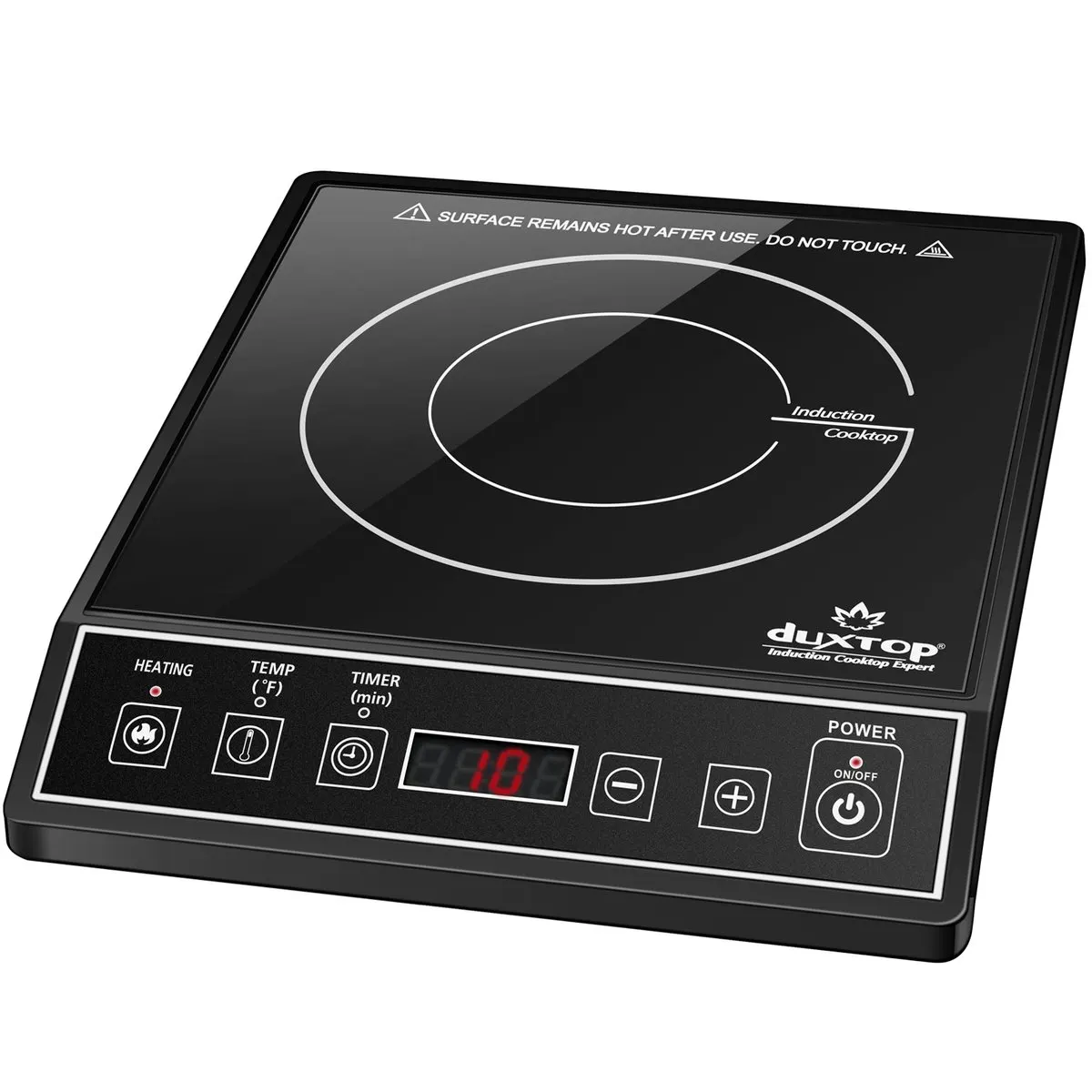
The induction catch: the classic aluminum Moka Express does not work on induction. If you cook on an induction hob like the Duxtop portable induction cooktop, buy a stainless-steel, induction-rated moka pot (Bialetti sells these, such as the Venus and Moka Induction lines) or use an induction adapter plate. Bialetti also notes that the aluminum interior reacts with very acidic water, so rinse rather than scrub with harsh cleaners.
4. Manual lever espresso — the real espresso pick
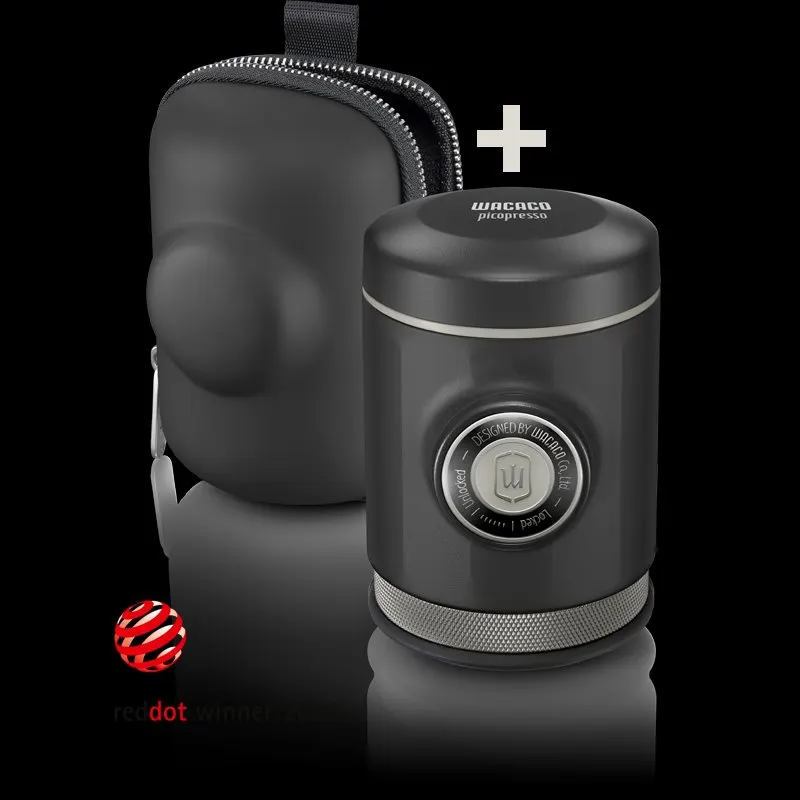
Hand-powered espresso makers are the only way to get true espresso in a van without a large electrical system. The Wacaco Picopresso is the compact option we review: you add finely ground coffee to the basket, tamp, pour in hot water from your kettle, and pump by hand to build pressure. Wacaco rates it for up to 18 bar; espresso is conventionally extracted at around 9 bar, which the Picopresso reaches comfortably. The result is a genuine double shot (about 2 oz) with crema, in roughly 30 seconds of pumping.
Typical recipe: around 18 g of coffee in, 36 g of espresso out, in 25–32 seconds, with water around 93 °C (200 °F). The grind must be very fine and very consistent — which is why a capable grinder is not optional for this method (see below).
Trade-offs: real learning curve to dial in; one drink at a time; a separate kettle is required; and prep (dosing, distribution, tamping, pre-heating) adds a couple of minutes. Larger lever machines such as the Cafelat Robot and the Flair line make bigger, heavier, sturdier alternatives if you have the counter and cabinet space.
Be honest about whether you want espresso every morning or just like the idea of it. Our dedicated guide to making real espresso in a van covers lever presses, moka pots and AeroPress espresso adapters, grind settings, and dialing in step by step.
5. French press — the bulk-brew pick
French press is the simplest immersion method: coarse grind, about 4 minutes of steeping, press, pour. A typical ratio is around 1:15–1:16 (30 g coffee to 500 g water) at about 93 °C (200 °F).
Taste: full-bodied and oily with more texture than any other method here, because a metal mesh lets the coffee's oils through where paper would trap them. It suits darker roasts and cold mornings.
The Stanley Classic Stay Hot French Press is the van-friendly version: all 18/8 stainless with vacuum double walls, no glass to shatter, a 48 oz capacity, and Stanley says it keeps coffee hot for hours — useful for couples who drink steadily through the morning without a separate thermos.
Trade-offs: cleanup is the worst of any method in this guide. Wet grounds in a plunger are awkward without a full sink. The practical workaround is to knock the grounds into a lined trash or compost bin, rinse with a small splash of water, and wipe with a paper towel — see our van kitchen dishwashing system for low-water cleanup routines. The Stanley is also heavy at about 1.4 lbs, and the plunger mesh is the part most likely to need replacing over time.
Methods compared
| Method | Our pick | Price tier | Brew time (hot water) | Power needed | Works on induction | Best for |
|---|---|---|---|---|---|---|
| AeroPress | AeroPress Original | Budget | ~90 sec | None (any kettle) | Yes (kettle does the heating) | Daily reliability |
| Pour-over | Hario V60 02 | Budget | 3.5–4 min | Gooseneck kettle | Yes (with suitable kettle) | Best flavor |
| Moka pot | Bialetti Moka Express | Mid-range | ~5 min | None (stovetop) | No (aluminum) | Gas-only, off-grid |
| Lever espresso | Wacaco Picopresso | Premium | ~2–3 min incl. prep | None (any kettle) | Yes (kettle does the heating) | Real espresso |
| French press | Stanley Stay Hot French Press | Mid-range | ~4–5 min | None (any kettle) | Yes (kettle does the heating) | Couples, bulk brewing |
For head-to-heads, see AeroPress vs Hario V60 (reliability vs taste ceiling) and Picopresso vs Bialetti Moka Express (real espresso vs traditional stovetop).
For hot weather: cold brew. The five methods above are all brewed with hot water. The OXO Brew Compact Cold Brew Coffee Maker needs none: OXO's recipe is 175 g of coarse coffee to 24 oz of water, left 12 to 24 hours on the counter or 20 to 24 hours in the fridge, and it drains itself into a glass carafe as 16 oz of concentrate that you dilute 1:2 or 1:3. That means no stove, kettle or battery draw on a hot afternoon, but you plan a day ahead, carry a lot of beans, pad the glass carafe and keep the concentrate cold. For iced coffee one cup at a time, AeroPress publishes a quick cold method; see OXO Compact Cold Brew vs AeroPress.
The grinder matters more than the brewer
Every method above is bottlenecked by grind quality. Extraction depends on particle size, and blade grinders produce a mix of dust and chunks with little in between: the dust over-extracts (bitter) while the chunks under-extract (sour). A blade grinder can make an expensive espresso maker perform badly; a decent burr grinder makes every method noticeably better.
Our pick for most vans: the 1Zpresso Q Air Hand Grinder, which replaced the Hario Skerton Pro in our lineup. It has a stainless steel conical burr, a numbered dial with 30 clicks per rotation, a polycarbonate body with no glass to break, and no power draw. At 365 g it nests inside an AeroPress plunger, so grinder and brewer pack as one unit. The catch is capacity: it holds only 15–20 g of beans per grind, which suits one or two cups of AeroPress or pour-over but means two or more rounds of cranking for a full French press or a large moka pot.
For espresso: the Q Air can grind fine, but it is slow and only average at espresso fineness. If the Picopresso is your main brewer, budget for a higher-end hand grinder with fine, repeatable adjustment — 1Zpresso's larger models (JX-Pro, J-Max, K-series), Timemore and Comandante are the common choices, and they cost considerably more than the Q Air. These are not in our review catalog, but they are the category standard for portable espresso grinding.
Electric grinders (Baratza Encore, Fellow Opus and similar) are great at home, but the counter footprint and inverter use rarely make sense in a van for 15–30 g of beans a day. Stay manual unless you have a large battery bank and a dedicated coffee station.
Pre-ground is fine to start. If grinding by hand every morning sounds like a chore, buy pre-ground for your method in small bags and add a grinder later. An AeroPress with fresh pre-ground coffee beats a pour-over you are too tired to make.
The kettle question
Your kettle choice follows from your brewing method and your power system.
- Any stovetop kettle works for AeroPress, French press and pre-heating moka water. On induction, check that the base is magnetic.
- Gooseneck kettle is required for good pour-over. Stovetop goosenecks (Fellow Stagg, Hario Buono and similar) draw nothing from your batteries and work on gas; check induction compatibility before you buy.
- Electric gooseneck: the Bonavita 1.0L Electric Gooseneck Kettle gives precise pour control, a 1 L capacity and a full boil in about 4 minutes. It draws 1000 W on 120 V AC, so it needs a pure sine inverter with comfortable headroom (1500 W or larger is a sensible minimum) and a battery bank that can handle the load. As rough math (an estimate, not a measurement), a 4-minute boil at the 1000 W rating uses about 67 Wh — on the order of 6–8 Ah from a 12 V bank once inverter losses are included. That is fine on a mid-size lithium bank and easy on shore power, but a noticeable daily hit on a small system. Electric kettles with variable temperature control (such as the Fellow Stagg EKG) draw similar or higher wattage.
If you have a limited electrical system, a stovetop gooseneck on butane or propane is the simpler answer, used outside the van.
Where you heat the water matters. Butane cassette stoves, propane camp stoves and canister stoves are labelled by their manufacturers for outdoor use: Coleman and MSR say outdoor use only and warn against use inside campers, tents and vehicles, and Iwatani warns never to use its cassette stoves in a small enclosed space such as a car or tent because of carbon monoxide. That applies to a five-minute moka brew as much as to a full meal. A cracked window, a roof fan or a CO alarm does not make these stoves acceptable inside a van; the alarm is a last-line warning device. If you want to make coffee indoors on a rainy morning, the options are an induction hob with a compatible kettle or moka pot, or an electric kettle sized to your inverter. Induction still produces steam, so run the roof fan for general cooking ventilation.
Water: quantity and quality
How much water coffee uses. Approximate per-drink figures, including a quick rinse:
- Espresso (lever) or moka: roughly 100–150 ml per drink
- AeroPress: roughly 250 ml
- Pour-over: roughly 350 ml (brew water plus pre-rinsing the paper filter)
- French press: roughly 550 ml for a 2-cup batch plus rinse
Across a week of two-person mornings, method choice can swing your water use by several liters — worth knowing if you boondock on a fixed tank. Our van water system setup guide covers tank sizing.
Water quality affects taste. Water from campground spigots and different municipal sources varies widely in mineral content and chlorine, which changes how coffee extracts and tastes. Pour-over and espresso are the most sensitive. Running drinking and coffee water through a carbon filter removes most chlorine taste; see our water filtration complete guide. For full consistency, some coffee enthusiasts brew with distilled or RO water remineralized with coffee-specific mineral packets.
Beans, storage and backups
- Buy small. Half-pound bags you finish within two to three weeks of the roast date stay noticeably fresher than large bags.
- Store sealed, opaque and out of direct sun. Oxygen, light and heat are the enemies. The fridge is unnecessary and the temperature swings when you open it encourage condensation.
- Keep whole beans when you can. Ground coffee goes stale much faster than whole beans.
- Keep a backup. Specialty instant coffee has improved a lot and weighs almost nothing; a tin covers mornings when the grinder or kettle is out of action. Store spare coffee with the rest of your shelf-stable van pantry staples.
Pick your coffee setup: three archetypes
Most van coffee setups fall into one of three patterns.
The five-minute morning
You want coffee within minutes of waking up, with no technique to learn.
- AeroPress Original
- Any kettle you already own
- Pre-ground coffee, or add the 1Zpresso Q Air for whole beans — it packs inside the AeroPress plunger
A budget kit. Brew time: about 90 seconds once water is hot. This is the approach in our Sprinter 144 Minimalist setup.
The pour-over ritualist
You enjoy the process — grinding, the bloom, the slow pour — and accept 6–8 minutes from beans to cup.
- Hario V60 02 Ceramic Dripper
- Bonavita Electric Gooseneck Kettle (or a stovetop gooseneck if your power system is small)
- 1Zpresso Q Air Hand Grinder
- A scale and whole beans: the Hario V60 Drip Scale weighs and times the brew, runs on two AAA batteries and reads in 0.1 g steps up to 200 g. Hario USA says it isn't water resistant, so keep it away from the sink.
A mid-range kit — the electric kettle is the biggest cost. See how this fits into a full-time kitchen in the Off-Grid Chef Promaster setup.
The espresso lover
You want real espresso and are willing to invest in technique and a grinder.
- Wacaco Picopresso
- An espresso-capable hand grinder — often costs as much as the brewer itself
- Any kettle
The premium kit. Brew time: 2–3 minutes once water is hot.
Which fits which van? Weekenders on a small battery bank and a butane stove used outdoors: AeroPress and a hand grinder. Full-timers on induction with a large bank: pour-over when there is time, AeroPress on travel days, and a moka pot or stovetop kettle as a no-power backup. Long off-grid stretches with gas cooking: a moka pot is hard to beat, since it needs only fuel, water and coffee. Couples with mismatched tastes often pair an espresso maker for one person with a French press for the other.
Best coffee gear for van life (2026)
Our picks from the coffee gear we've reviewed. Check the linked reviews for full specs, pros and cons, and current prices on Amazon — they move often.
Best overall — AeroPress Original. The default recommendation for most van dwellers: a plastic body with no glass to break, fast, forgiving, minimal water and a five-second cleanup. Choose something else only if you want a higher taste ceiling or real espresso.
Best pour-over — Hario V60 02 Ceramic Dripper. The highest flavor ceiling in this guide for very little money. Needs a gooseneck kettle, a decent grinder and careful packing.
Best grinder — 1Zpresso Q Air Hand Grinder. The biggest single upgrade to any setup using whole beans. Steel burr, no power, no glass, and it nests inside an AeroPress. Holds only 15–20 g per grind; for daily espresso, step up to a dedicated espresso hand grinder.
Best kettle for pour-over (inverter builds) — Bonavita 1.0L Electric Gooseneck. Precise gooseneck pour and a quick boil. Only for builds with a capable inverter and battery bank or regular shore power; otherwise choose a stovetop gooseneck.
Best real espresso — Wacaco Picopresso. True espresso with crema, no electricity, and small enough for a jacket pocket. Budget for a proper grinder and practice time.
Best traditional stovetop — Bialetti Moka Express 6-Cup. Strong coffee for two, no filters, no power, and a simple design where the gasket is the usual wear part. Gas and fire only (so outdoors in a van) — not induction.
Best for couples and bulk brewing — Stanley Classic Stay Hot French Press. 48 oz, all-stainless, and insulated so the second cup is still hot. Heavier and messier to clean than the alternatives.
Best ultralight backup — GSI Outdoors Ultralight Java Drip. Fold-flat mesh pour-over for the glove box or day trips.
Quick decision table
| Your situation | Recommended kit | Cost level |
|---|---|---|
| New to van life, want it simple | AeroPress + any kettle (+ Q Air for whole beans) | Budget |
| Pour-over ritualist with a solid electrical system | V60 + Bonavita gooseneck + Q Air | Mid-range |
| Pour-over on a small electrical system | V60 + stovetop gooseneck + Q Air | varies by kettle |
| Real espresso | Picopresso + espresso-capable hand grinder | Premium |
| Gas-only or long off-grid stretches | Bialetti Moka Express + butane or propane stove (outdoors) | Budget to mid-range, plus a stove |
| Couple drinking through the morning | Stanley French press + Q Air (grind in two rounds) | Mid-range |
| Minimalist weekend kit | AeroPress or GSI Java Drip only | Budget |
Frequently asked questions
What is the best coffee maker for van life?
The AeroPress Original is the best overall for daily reliability: it has no glass to break and is hard to damage in normal use, brews in about 90 seconds, and cleans up in seconds. The Hario V60 produces the best-tasting cup if you have a gooseneck kettle and a grinder. The Wacaco Picopresso is the pick for real espresso. Choose based on how much time and attention you want to give your morning ritual.
Can you make real espresso in a van?
Yes. A manual lever espresso maker such as the Wacaco Picopresso is hand-pumped to espresso pressure (Wacaco rates it for up to 18 bar; espresso is typically brewed around 9 bar) and produces a real double shot with crema. It needs hot water from any kettle and a burr grinder that can grind fine and consistently. No electricity or plumbing is required. See our guide to making real espresso in a van for the full workflow.
What is the cheapest good coffee setup for a van?
An AeroPress Original with pre-ground coffee and any kettle you already own. When you want fresher coffee, add a burr hand grinder such as the 1Zpresso Q Air. For an ultralight backup, the GSI Ultralight Java Drip is one of the cheapest brewers you can buy.
Do I need a burr grinder for van coffee?
Not to start — fresh pre-ground coffee in small bags works well with an AeroPress, French press or moka pot. But if you buy whole beans, use a burr grinder rather than a blade grinder: blade grinders produce uneven particles that make coffee taste both bitter and sour. For espresso, a high-quality burr grinder is essential.
Does a moka pot work on induction?
The classic aluminum Bialetti Moka Express does not, because aluminum is not magnetic. Use a stainless-steel, induction-rated moka pot (Bialetti makes induction models) or an induction adapter plate. On butane, propane or a campfire grate, the aluminum Moka Express works well; those are outdoor heat sources, since camp stove manufacturers label them for outdoor use.
Can I run an electric kettle in my van?
Yes, if your electrical system can handle it. An electric gooseneck like the Bonavita draws about 1000 W, so you need a pure sine inverter with comfortable headroom (1500 W or more is a sensible minimum) and a battery bank sized for the load. As an estimate (1000 W for about 4 minutes, plus typical inverter losses), each liter boiled uses roughly 6–8 Ah from a 12 V bank; actual use depends on starting water temperature and your inverter's efficiency. On a small system, use a stovetop kettle on gas outdoors instead.
How do I keep coffee beans fresh in a van?
Buy small bags (around half a pound), keep them sealed in an opaque container out of direct sunlight and heat, and finish each bag within two to three weeks of the roast date. Whole beans stay fresh longer than ground coffee. Refrigeration is unnecessary and can cause condensation.
Does water quality affect coffee in a van?
Yes. Mineral content and chlorine vary between campground spigots and town taps, which changes how coffee extracts and tastes, especially for pour-over and espresso. A carbon filter removes most chlorine taste. For full consistency, some people brew with distilled or RO water remineralized with coffee mineral packets.
The verdict
For most van dwellers, the right coffee kit is an AeroPress Original, the kettle you already own, and a 1Zpresso Q Air once you move to whole beans — a budget setup that works every morning with little fragility and no battery draw.
Upgrade from there only for a specific reason: the Hario V60 plus a gooseneck kettle if you want the best-tasting cup and enjoy the ritual; the Wacaco Picopresso plus a serious grinder if you want real espresso; the Bialetti Moka Express if you cook on gas and want zero electrical dependence; or the Stanley French press if two of you drink coffee all morning. Skip pod machines, electric drip brewers and blade grinders. Browse every coffee review in our coffee gear category.
Products covered in this guide
Disclosure: As an Amazon Associate I earn from qualifying purchases. Links to Amazon on this page are affiliate links: if you buy through one, VanLifeKitchens.com may earn a commission at no extra cost to you. Read our affiliate disclosure.
More in Buying Guides
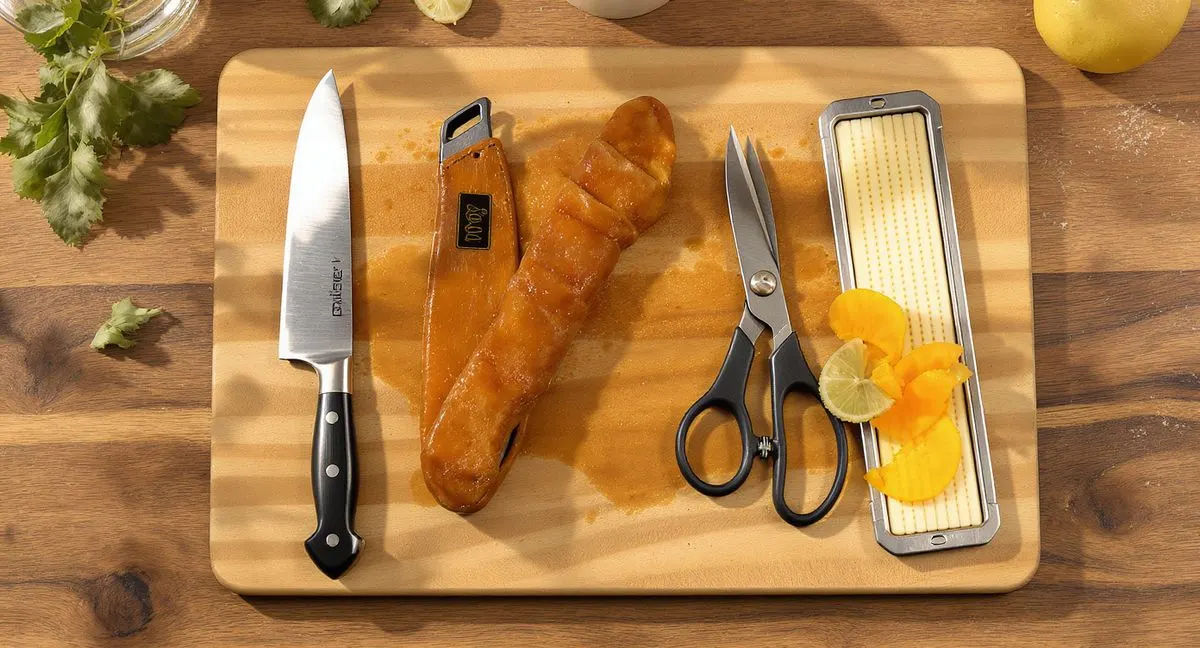
Best Van Kitchen Knives & Prep Tools: Full Guide
The two-knife van kit, choosing a cutting board, shears, mandolines, sharpening on the road, safe storage and low-water hygiene, plus our 2026 knife and prep tool picks.
Summer Van Kitchen Survival Guide: Cooking in 100°F Heat
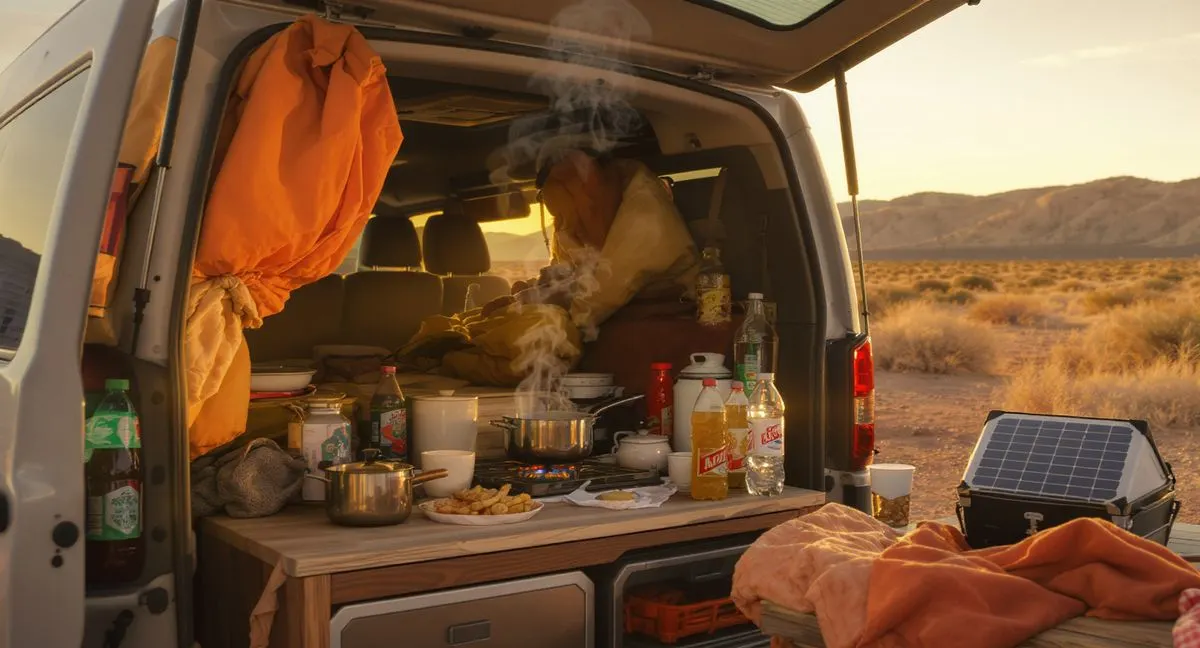
How to cook real meals in a van when the interior hits 110°F — solar cooking, outdoor prep zones, heat-shedding gear, and the workflow changes that keep the cabin livable in peak summer.
Induction vs Butane vs Propane: Which Wins in a Van?
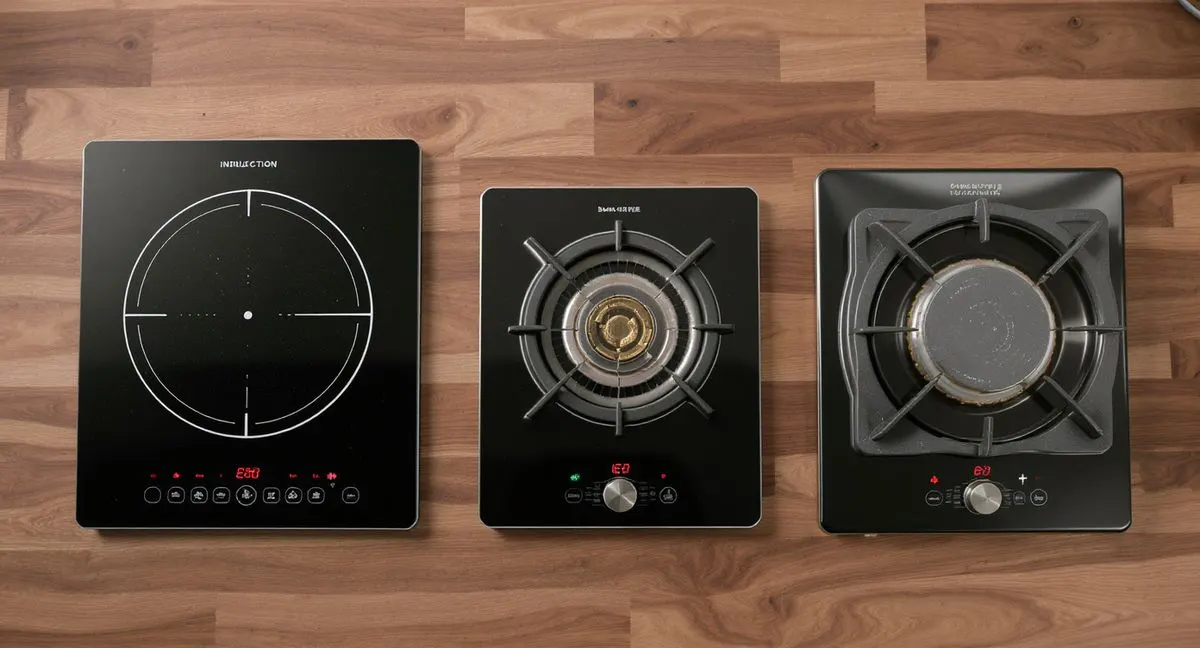
An honest head-to-head of the three main van cooktop fuel sources — with real power, cost, and cold-weather numbers.