The Budget Van Kitchen: A Complete Build List
Every piece of gear you need to cook real meals in a van on a tight budget — no electrical system required, no custom cabinetry.
Disclosure: As an Amazon Associate I earn from qualifying purchases. Links to Amazon on this page are affiliate links: if you buy through one, VanLifeKitchens.com may earn a commission at no extra cost to you. Read our affiliate disclosure.
Short answer
A working minimal van kitchen needs a stove, one pan, one pot, water, a filter, a knife and somewhere dry to keep food. Every product below is the budget-tier option in its category on this site, and every one is easy to carry forward if you upgrade later.
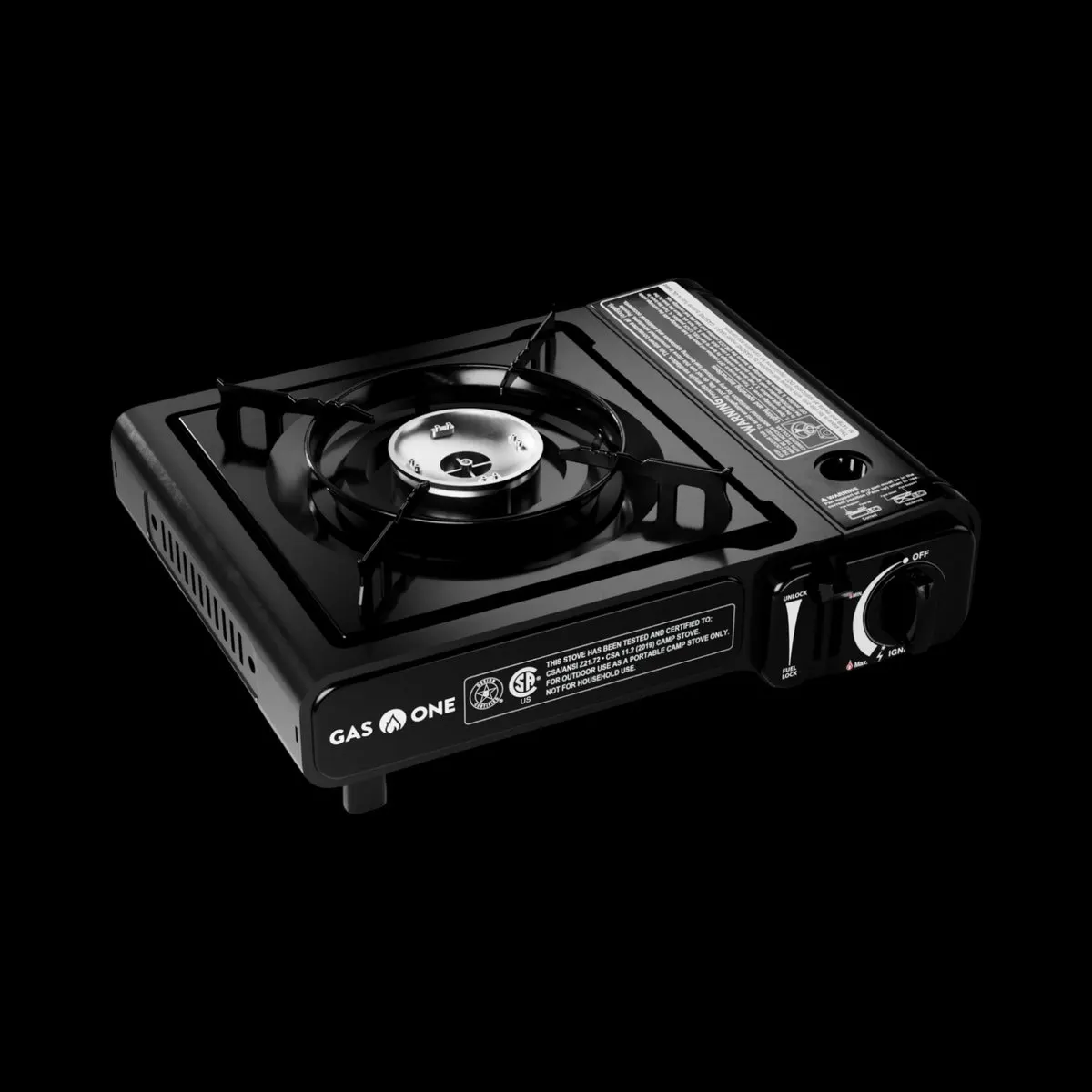
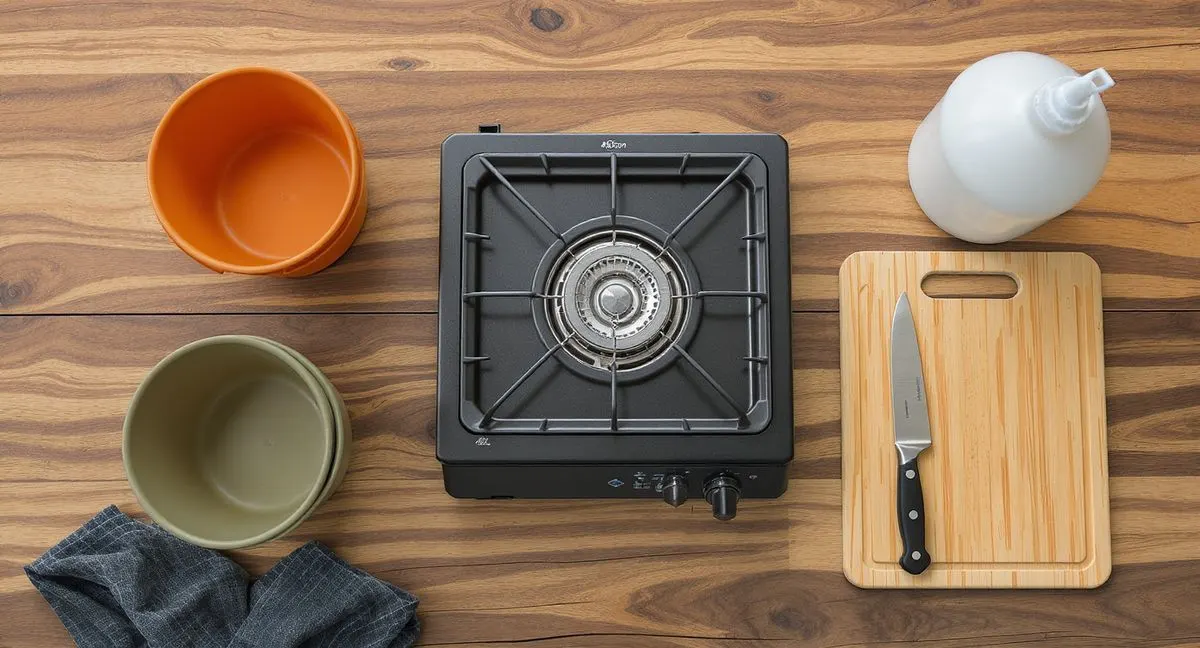
- Stove: the Gas One GS-1000G butane stove, the lowest-cost cooktop on this site. It is labelled for outdoor use only, so this is an outdoor kitchen that packs into the van.
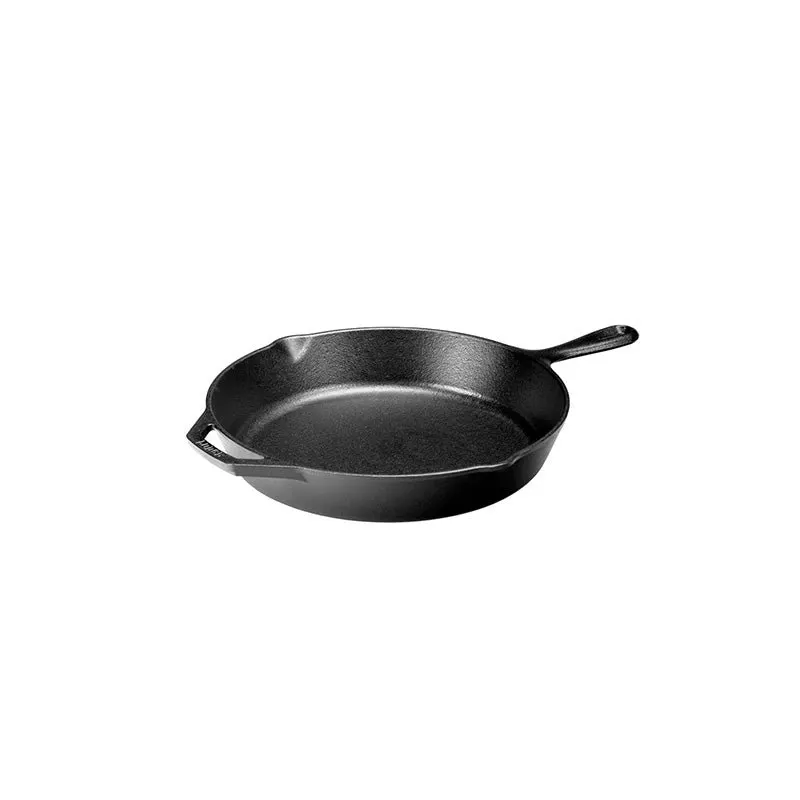
- Pan: the Lodge L8SK3 10.25-inch cast iron skillet, the lowest-cost pan on this site and one that works on any heat source you might upgrade to.
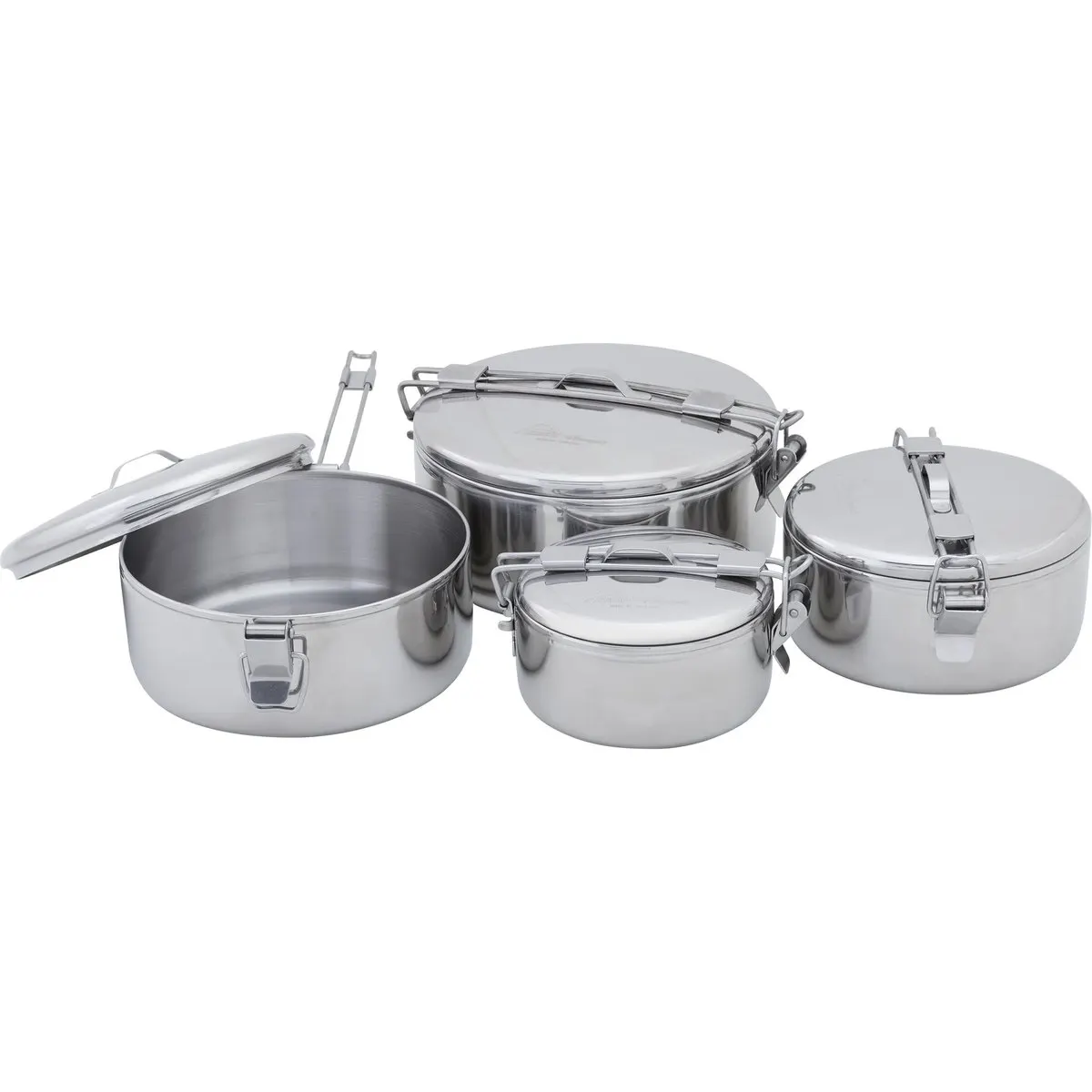
- Pot: the MSR Alpine StowAway 1.6 L, a simple stainless pot whose handle locks the lid shut.
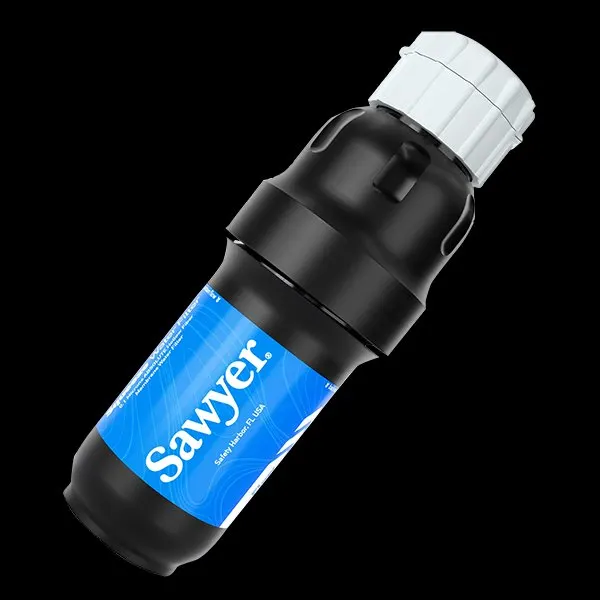
- Water filter: the Sawyer Squeeze, for bacteria and protozoa (not viruses or chemicals).
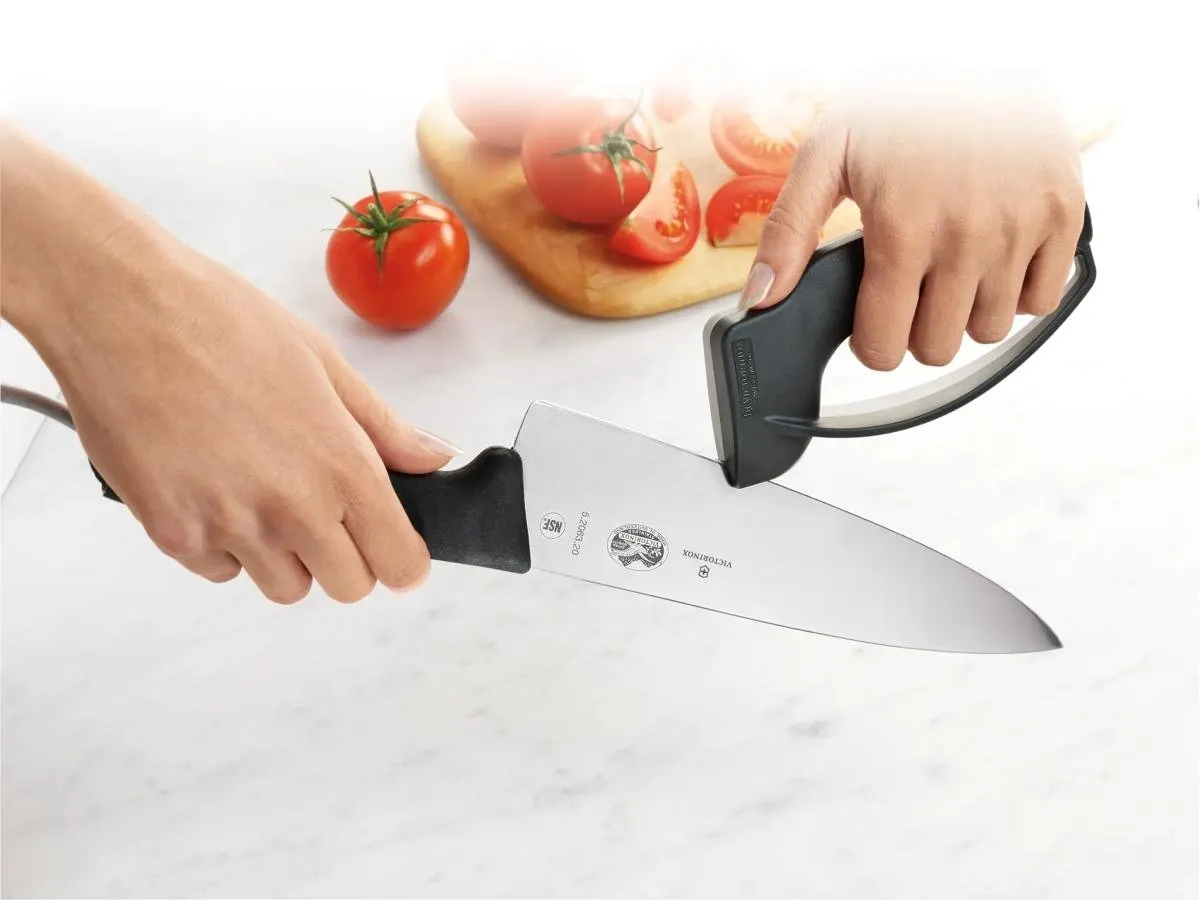
- Knife: the Victorinox Fibrox 8-inch chef's knife.
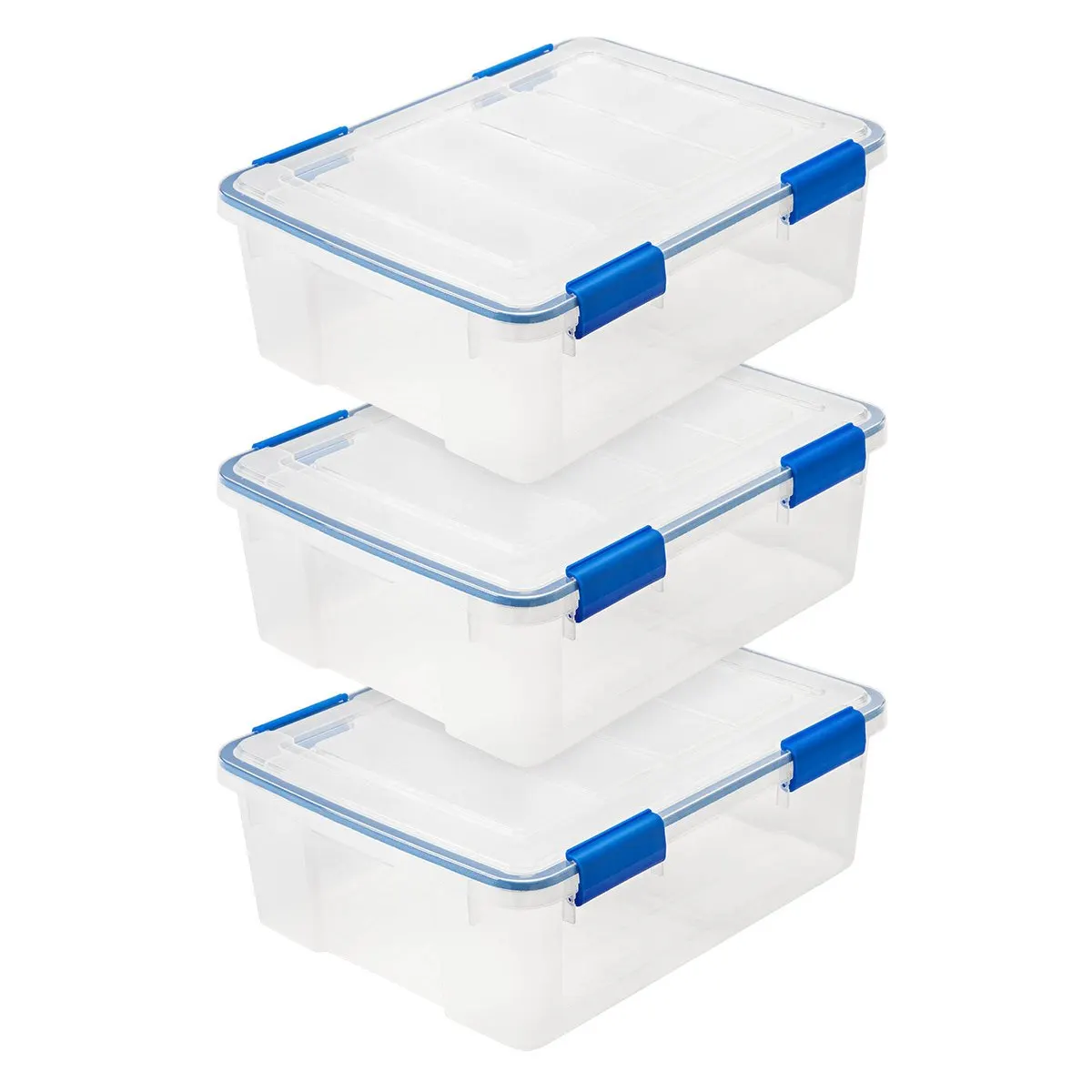
- Dry storage: the IRIS USA Weathertight 19-Qt bins, six identical 19-quart gasketed bins.
Prices on Amazon move often, so this guide gives no dollar figures. Use the "Check price on Amazon" button on each review for current numbers. This guide is based on manufacturer specs and documentation, not hands-on testing.
What this page covers: the low-cost build list for a kitchen that lives in your van with no electrics, plus the order to upgrade it later. If you only need a pack-and-go kit for a weekend in a car or SUV, use the weekend car-camping checklist. If you want a buy-first, buy-later sequence instead, see the one-person compact van plan (with a 12V fridge) or the two-person induction plan (for cooking indoors).
Who this guide is for
It's for you if:
- You're a weekender or part-timer doing occasional nights in a van, an SUV or a small cargo van like a Transit Connect.
- You're testing van life before committing to a build, and don't want to spend on cabinets or electrics you may not keep.
- You're converting a rental or a daily driver, so nothing can be bolted in.
- You're a full-timer on a tight budget who's happy to cook outside.
- You travel in mild weather. Butane works best above freezing; see the cold-weather note below.
- You have no house battery, inverter or solar, and don't plan to add them yet.
It's not for you if:
- You need to cook inside the van, for example in rain, wind, or places where cooking outside isn't practical. The butane stove here is outdoor-only, and the indoor-friendly route is induction, which needs a battery system (see the upgrade path below).
- You travel in sustained sub-freezing weather; plan on a propane stove or induction instead of butane.
- You need refrigeration for medication or long stretches without shops.
How to choose: what actually drives the cost
A minimal kitchen is cheap because it avoids the expensive parts of a van kitchen, not because it buys cheap versions of them. Where the money goes, from biggest to smallest:
- Power for cooking and cooling. In most van kitchens the largest costs aren't kitchen gear at all: they're the battery bank, inverter, solar and wiring needed to run an induction cooktop and a compressor fridge. Cooking on butane outdoors and using a cooler takes those out of the budget entirely. This is the single biggest saving.
- Refrigeration. A 12V compressor fridge is usually the most expensive single appliance in a van kitchen, even the lower-cost models. A cooler with ice costs far less up front, though ice is an ongoing purchase and limits trip length.
- Built-in plumbing and cabinetry. Sinks, pumps, tanks and custom cabinets add materials and many hours of work. Jugs, a wash bin and plastic bins do the same jobs portably.
- Cookware. A full nesting set or a premium stainless pan costs considerably more than one cast iron skillet and one stainless pot. Two pieces are enough for most meals for one or two people.
- Consumables. Butane cartridges, ice and soap are small, recurring costs. Cartridges are a commodity item, so buy a few at a time rather than a large stock you then have to store safely.
When you shop, compare within each category on the "Check price on Amazon" buttons: the stove, pan and pot are the lowest-cost items in their categories on this site, and the storage bins and knife are where this build spends a little more for things you use every day.
Comparison table
| Item | Role | Fuel or power | Cooktops | Key limit |
|---|---|---|---|---|
| Gas One GS-1000G | Stove | 8 oz butane | n/a | Outdoor use only |
| Lodge L8SK3 skillet | Pan | None | All, incl. induction | 5.34 lb |
| MSR Alpine StowAway 1.6 L | Pot | None | Gas; induction unlisted | 1.6 L only |
| Sawyer Squeeze | Water filter | None | n/a | No viruses or chemicals |
| IRIS USA Weathertight 19-Qt bins (6-pack) | Dry storage | None | n/a | Six bins take floor space |
The picks
Gas One GS-1000G Portable Butane Stove
What it is: a single-burner cassette-style butane stove with automatic ignition and a carry case. The Amazon listing the site links to sells the GS-1000G (the review URL still says GS-3000, the model it was first written about). It's rated at 7,650 BTU and runs on 8 oz butane cartridges.
Choose this if:
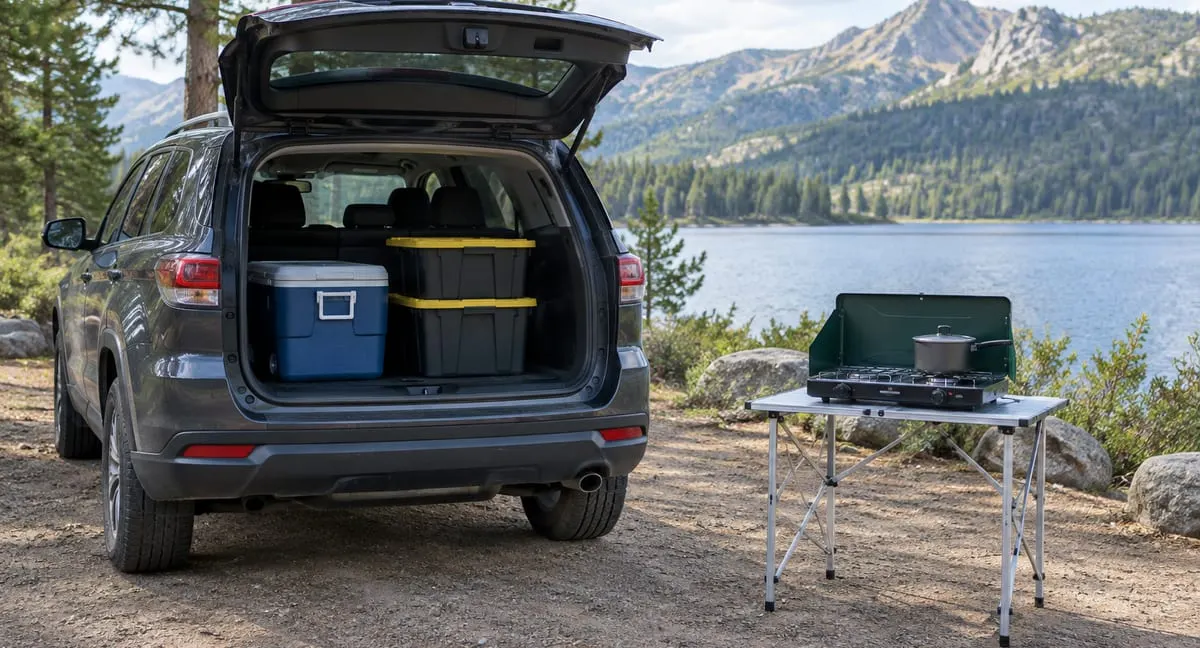
- You're happy to cook on a table outside the van.
- You want a stove with no electrical system behind it.
- You want the lowest-cost cooktop on this site, or a backup for a later induction build.
Skip this if:
- You need to cook inside the vehicle. The listing marks it outdoor use only, and butane stoves produce carbon monoxide. A cracked window, a roof fan or a CO alarm does not make an outdoor-only stove acceptable indoors; a CO alarm is a last-line warning device, not permission.
- You cook in sustained freezing temperatures.
- You want fast boils or two burners; 7,650 BTU is modest.
Operating requirements: set it on a stable, level, non-flammable surface outside, away from the van's sides, awnings and anything that can catch fire. Shield it from wind. Use pans that don't overhang the cartridge compartment, since cassette stove manuals commonly warn that reflected heat can overheat the cartridge. Remove the cartridge after cooking and store cartridges away from heat. Read the manual that ships with the stove.
Cold weather: butane cartridges lose pressure as they cool and struggle around freezing, so the flame weakens or stops. Keep the cartridge warm until you cook, and see the cold-weather van cooking guide if you travel in winter.
Strengths and limits: cheap, simple, no wiring. Outdoor-only, one burner, and an ongoing cartridge cost. Full review.
Lodge L8SK3 10.25-inch Cast Iron Skillet
What it is: a pre-seasoned cast iron skillet that Lodge lists for any stovetop including induction, the oven, the grill and the campfire.
Choose this if:
- You want one pan that fries, sears, bakes flatbread and makes one-pan dinners.
- You may add induction later; it will work on it.
Skip this if:
- Weight is critical (5.34 lb per Lodge).
- You won't dry and oil it after washing.
Care: scrape it warm, a splash of hot water and a brush or chainmail scrubber, dry it on the burner, wipe on oil. Very little water. Store it low in the van.
Strengths and limits: no coating to wear out, commonly used for decades. Heavy and slow to respond. Full review.
MSR Alpine StowAway 1.6 L Pot
What it is: a single-wall stainless pot with a fitted lid; the hinged handle flips over the lid to hold it shut, so it doubles as a storage container while driving. MSR lists it at 19.5 oz and 8.3 x 7.2 x 4.0 in packed.
Choose this if:
- You cook for one or two simple meals: coffee water, oats, rice, soup, pasta for one.
- You want a coating-free pot next to the skillet.
Skip this if:
- You cook full dinners for three or four; step up to the GSI Glacier below.
- You'll move to induction and can't test it: MSR doesn't list induction compatibility, so check it with a magnet.
Strengths and limits: budget price, nothing to peel or melt. Single-wall steel can scorch thick foods on a hot flame. Full review.
Sawyer Squeeze Water Filter
What it is: a 0.1-micron hollow-fiber filter. Sawyer says it removes 99.99999% of bacteria and 99.9999% of protozoa such as giardia and cryptosporidium, and 100% of microplastics, backed by a lifetime limited warranty.
Choose this if:
- You fill from campground and park taps and want a backstop for bacteria and protozoa.
- You want a small filter with no cartridges to replace on a schedule.
Skip this if:
- You need protection from viruses: Sawyer doesn't list virus removal for the Squeeze, so it is a filter, not a purifier.
- Your water may carry chemicals, heavy metals, pesticides or salt. It doesn't remove those.
Strengths and limits: small, cheap to run, no cartridges. Not a purifier, and it doesn't improve taste or remove chemicals. Backflush it as Sawyer instructs. Full review.
Victorinox Fibrox 8-inch Chef's Knife
What it is: a stamped stainless chef's knife with a textured plastic handle, one of the most widely recommended budget chef's knives.
Choose this if:
- You want one knife for every prep job.
- You want a knife that's easy to sharpen and hard to damage.
Skip this if:
- You only cut sandwiches and fruit; a folding knife like the Opinel No. 8 costs less and stows smaller.
Fit: store it in a sheath or edge guard so it can't move in a drawer; see the van knife storage and safety guide.
Strengths and limits: comfortable and easy to maintain. Not the cheapest knife you can buy, but the step up from a supermarket knife is noticeable. Full review.
Iris Weathertight Storage Set (6-pack)
What it is: six identical 19-quart clear bins with gasket seals and multi-buckle latches. IRIS lists each bin at 17.50 x 11.75 x 7.88 in, with grooved lids for stacking.
Choose this if:
- You want a pantry, cookware box and cleaning kit that stay dry and latched on rough roads.
- You need storage that moves between vehicles.
Skip this if:
- Floor space is very tight. Six bins of that size take up a lot of room; measure first. The Plano Sportsman 108-quart trunk is a lower-cost single-box alternative if you'd rather have one big container.
Strengths and limits: clear, gasketed and stackable. This is the one place the build spends a little more than the cheapest option, because it's what keeps food dry and the kitchen organized. Full review.
Step up for two to four people: GSI Glacier Stainless Camper 4 Person
The GSI Glacier Stainless Camper is mid-range, not budget, but if you cook for more than two it replaces the MSR pot with 3 L and 2 L stainless pots, a 9-inch fry pan, and plastic dishes and insulated mugs for four, all in an 8.4 x 8.4 x 5.4 in bundle. GSI doesn't list it for induction.
The rest of the kit (commodity items)
These are generic items, so buy whatever fits your space. None needs a review.
- Butane cartridges. A small starter supply. Store them upright, away from heat, never in a hot closed car in direct sun.
- Fresh water. A 5-gallon food-grade jug with a spigot (Aqua-Tainer style). Refill at potable taps.
- Grey water. A second jug, or a collapsible bladder that packs flat. Empty it at dump stations or as local rules allow; the weekend checklist explains straining and disposal options.
- Two collapsible wash bins for the two-bin dishwashing system, plus a sink strainer to keep food scraps out of the grey water.
- Dish soap, baking soda (a spoonful in the grey jug helps with smell), and a few microfiber cloths.
- A flexible cutting board that rolls up.
- A folding table to cook on outside.
- Battery LED puck lights and a headlamp for cooking after dark. If you'd rather recharge a headlamp than buy batteries, the Nitecore NU25 MCT weighs 50 g, charges over USB-C in about an hour and a quarter from a car USB port or power bank, and has a 3000K warm mode that's easier on the eyes for cooking. Its battery is built in, with no spare-battery option, and Nitecore's 45-hour maximum runtime is at just 6 lumens.
- A cooler if you need cold food. Without one, shop every few days and lean on shelf-stable staples.
Operating the kitchen safely
- Cook outside. Set the table and stove away from the van, out of the wind, on a level surface. The GS-1000G's listing says outdoor use only, and a CO alarm, open window or fan does not make it acceptable inside the van. The weekend checklist's cooking-location section quotes the stove makers' clearance distances, fuel storage temperatures and fire-rule checks in full; they apply to a van kitchen cooked outside just as much.
- Fuel. Change cartridges outside, away from flames, and remove the cartridge from the stove after cooking.
- Water. Treat tap water from unknown sources with the filter, but remember that the Sawyer doesn't remove viruses or chemicals. If you're unsure about a source, choose another source.
- Food. Without refrigeration, buy fresh food in small amounts and favour shelf-stable staples. See the van pantry staples guide.
What's deliberately missing
- Induction cooktop. The cooktop itself isn't the expensive part; the battery bank, inverter and solar needed to run it cost considerably more than everything in this kitchen.
- 12V fridge. Even the lower-cost compressor fridges on this site cost considerably more than the core kit here. For weekends, a cooler works. For longer trips, the fridge is the first upgrade. The weekend car-camping kitchen checklist covers when a cooler is enough and when a 12V fridge is worth it for short trips.
- Built-in sink or plumbing. Adds materials and install time. Not needed for a working kitchen.
- Extra knives, boards and gadgets. One knife and one board cover nearly all prep.
- A pantry cabinet. The Iris bins are the pantry. They live under a bed, a bench or behind a seat.
The upgrade path
Every piece of the minimal kitchen carries forward:
Upgrade 1: a compressor fridge. Lower-cost options on this site include the Alpicool C20 and the BougeRV 30-quart; the Iceco VL35 ProS is a step up. Size the battery with the fridge battery tool.
Upgrade 2: a house battery, solar and an inverter. This unlocks induction cooking indoors and longer off-grid stays, with the butane stove kept as an outdoor backup. It's the most expensive upgrade, so it makes sense once you know you'll keep living in the van. Follow the manufacturers' installation instructions, and use a qualified RV electrical technician where codes or your insurer require one. Use the power calculator to size it. The example two-person induction kitchen plan shows the battery and inverter arithmetic for this step.
Upgrade 3: cookware for induction. The Lodge skillet already works on induction. Test the MSR pot with a magnet; if it doesn't grab firmly, add an induction-listed pot such as the Sea to Summit Detour 3L, or move to the Magma Nesting 10-piece if you want a full nesting set.
Upgrade 4: a countertop gravity filter. The LifeStraw Home pitcher adds a carbon and ion-exchange stage. LifeStraw's product pages list testing to NSF/ANSI 42, 53 and 401 and NSF P231 (bacteria and parasites) for its Home pitchers; check the listing for the exact model's claims. It still isn't described as removing viruses or salt. The Sawyer then becomes your backup.
None of the upgrades throws anything away. The butane stove becomes the outdoor backup, the skillet keeps working on induction, and the bins become permanent pantry storage.
FAQ
Can you really cook real meals in a minimal budget van kitchen? Yes, outdoors. A single butane burner, a cast iron skillet and a 1.6 L pot handle stir-fries, rice dishes, pasta for one or two, eggs, pancakes and seared meat. Our one-pot meals guide has recipes that suit this kit. The limits are one burner at a time and cooking outside.
Do I need a fridge for a minimal van kitchen? No, but you'll shop more often, every two or three days for fresh food. Shelf-stable ingredients (canned goods, dry pasta, rice, lentils, spices) become the backbone of the pantry. See the van pantry staples guide.
Is butane or induction cheaper to run in a van? If you already own a large battery, solar and an inverter, induction costs little per meal because the sun charges the battery. If you don't, butane is far cheaper overall, because you avoid buying the electrical system. The trade-off is that butane stoves like the GS-1000G are outdoor-only.
Can I use the butane stove inside the van if I open a window or run a fan? No. The GS-1000G's listing marks it outdoor use only, and butane stoves produce carbon monoxide. Ventilation and CO alarms don't change that. If you need to cook inside, plan for induction.
How long does a budget butane stove last? Makers don't publish a service life. The piezo igniter is the simplest part to fail on any butane stove, and a long lighter gets the stove going if it does. Keep the stove clean and dry and in its case.
Can this build work in a Ford Transit Connect or similar small cargo van? Usually, but measure. Each Iris bin is 17.50 x 11.75 x 7.88 in per IRIS, and the six-pack stacks in two or three layers. Set up the folding table outside the slider door to cook. See the van kitchen layouts guide for small-van layouts.
What if I want to upgrade later? Everything transfers. The stove becomes an outdoor backup, the skillet works on induction, the bins stay as pantry storage, and the Sawyer moves to the emergency kit. Start small and upgrade when you know what you need.
Is the Iris set two large bins or six? Six. The linked Iris set is six identical 19-quart bins with gasketed lids, not two 27-quart bins.
See the Ford Transit Weekend Warrior setup for an example of a portable kitchen in a Transit, and the cookware complete guide if you're choosing pans beyond the basics. For a one-person list that adds a 12V fridge to a kit like this one, see the example one-person compact van kitchen plan.
Sources and verification
Manufacturer pages we opened for the specs above:
- Lodge, catalog with L8SK3 dimensions and weight (PDF hosted at https://images.orgill.com/weblarge/10031/Lodge_GL12_GC12_Catalog.pdf) (checked 2026-10-09)
- MSR (Cascade Designs), Alpine StowAway Pots: https://cascadedesigns.com/products/alpine-stowaway-pots (checked 2026-10-09)
- Sawyer, Squeeze Water Filtration System: https://sawyer.com/SP131.htm (checked 2026-10-09)
- IRIS USA, WeatherPro 19 Qt Gasket Box: https://irisusainc.com/products/storage-container-weatherpro-19-qt-gasket-box (checked 2026-10-09)
- GSI Outdoors, Glacier Stainless Camper: https://gsioutdoors.com/products/glacier-stainless-camper (checked 2026-10-09)
- LifeStraw, Home Essential 7-Cup pitcher: https://lifestraw.com/products/lifestraw-home-essential-7-cup-plastic (checked 2026-10-09)
- Iwatani Corporation of America, ZA-3HP butane stove instruction manual (PDF linked from Amazon), for typical cassette-stove warnings (checked 2026-10-09)
Products covered in this guide
Disclosure: As an Amazon Associate I earn from qualifying purchases. Links to Amazon on this page are affiliate links: if you buy through one, VanLifeKitchens.com may earn a commission at no extra cost to you. Read our affiliate disclosure.