BioLite CampStove 2+ vs MSR PocketRocket 2 Mini Stove
Ultralight canister stove vs wood-burning USB-charging stove. Two radically different philosophies of portable cooking heat.
Disclosure: As an Amazon Associate I earn from qualifying purchases. Links to Amazon on this page are affiliate links: if you buy through one, VanLifeKitchens.com may earn a commission at no extra cost to you. Read our affiliate disclosure.
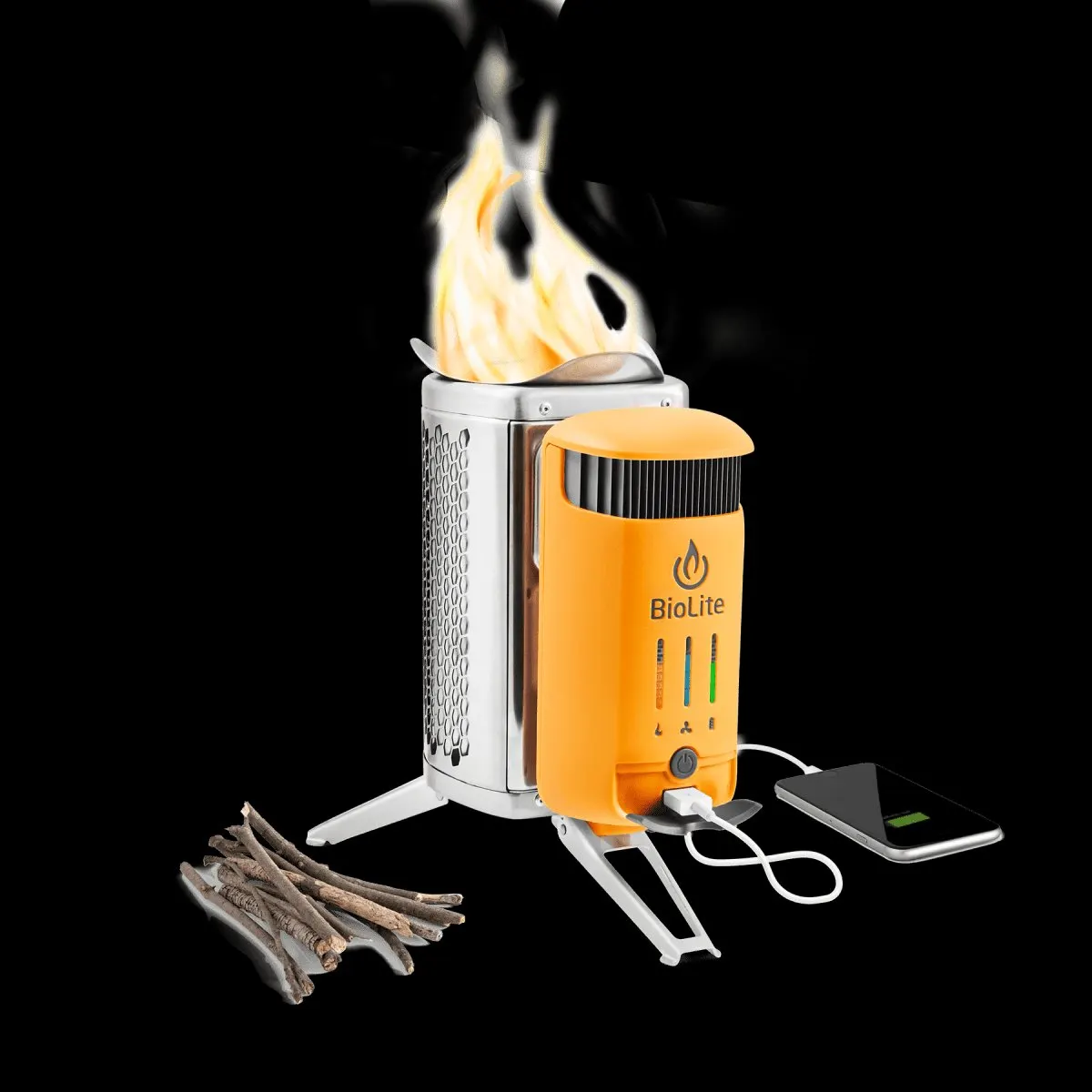
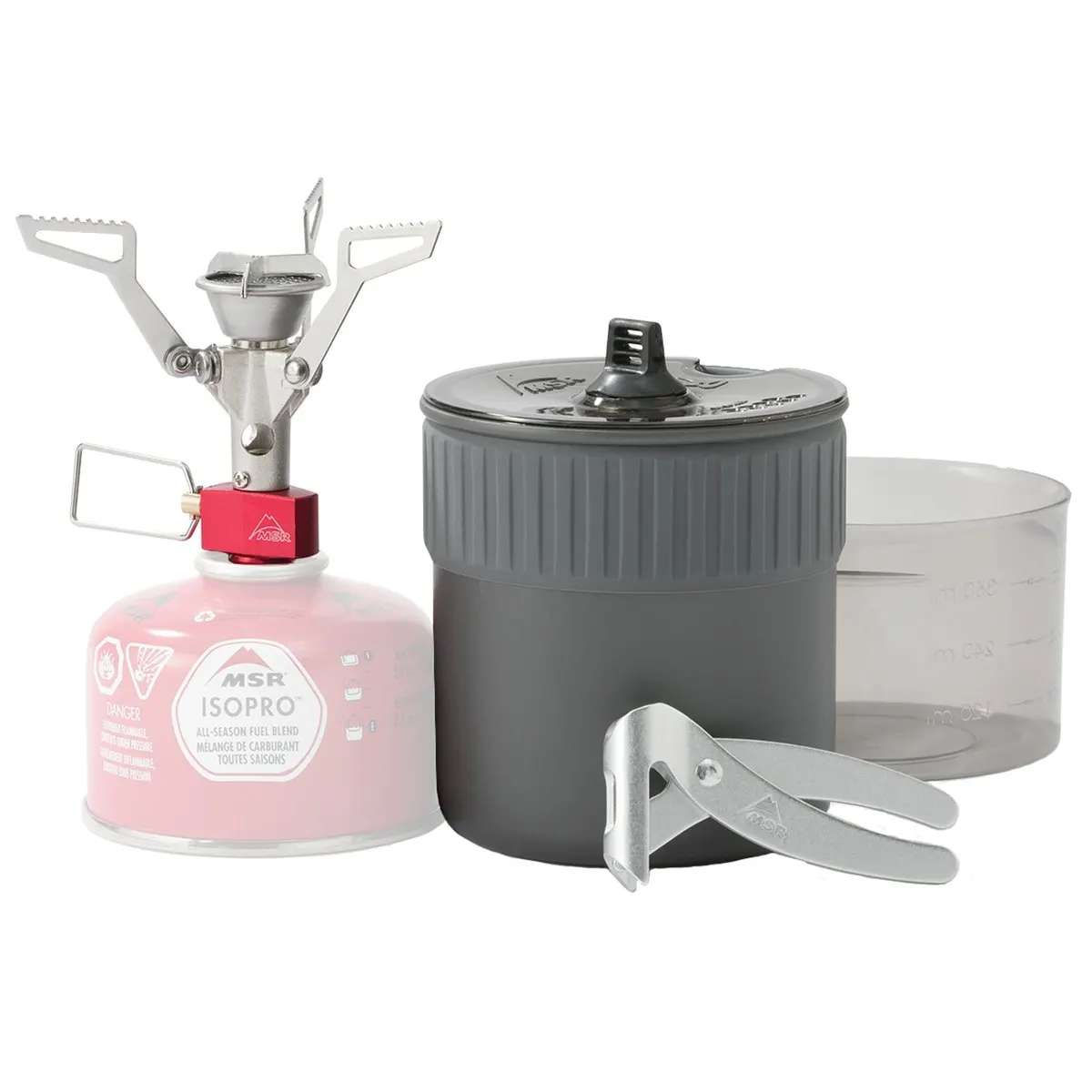
We recommend the MSR PocketRocket 2 Mini Stove
“The MSR PocketRocket 2 wins for most van dwellers — 2.6 oz vs 2 lbs and instant, adjustable heat from a canister. Like any canister stove, it needs a natural windbreak or sheltered spot in wind (MSR's manual forbids windscreens) and loses output in the cold. The BioLite wins for off-grid purists who want free fuel and USB charging from fire. Pick the PocketRocket for hybrid van/backpacking. Pick the BioLite for established campsites with firewood.”
Read the full MSR PocketRocket 2 Mini Stove reviewSpecifications
| Spec | BioLite CampStove 2+ | MSR PocketRocket 2 Mini Stove |
|---|---|---|
| Best for | Outdoor wood-fuel cooking | Van-and-backpacking canister stove |
| Part Number | CSC0200 (Stove Only) | — |
| Boil Time | 4.5 min / 1 L (BioLite) | 3.5 min / 1 L on MSR IsoPro (MSR) |
| USB Output | 3 W peak (BioLite) | — |
| Battery | 3,200 mAh onboard (BioLite) | — |
| Fan Speeds | 4 (BioLite) | — |
| Weight | 2.06 lb / 935 g (BioLite) | 2.6 oz (73 g) minimum; 3.7 oz packaged (MSR) |
| Packed Size | 5.0 x 7.91 in (BioLite) | — |
| Fuel | Biomass: sticks, twigs, pinecones, pellets (BioLite) | MSR 80/20 isobutane-propane canisters, EN 417 (manual) |
| Warranty | 1 year (BioLite) | Limited (MSR; details at msrgear.com/warranty) |
| Clearance | 18 in sides, 48 in above (BioLite manual) | — |
| Burn Time | — | About 60 min per 8 oz canister; 16 L boiled (MSR) |
| Heat Input | — | 3.9 kW nominal, 280 g/h (manual) |
| Dimensions | — | 1.3 x 1.6 x 3.1 in (MSR) |
| Cookware Limit | — | 8 in diameter, 5 in high, 8 lb (manual) |
BioLite CampStove 2+
- Burns free biomass (sticks, pinecones, pellets)
- 3 W USB charging from fire
- Fan-assisted combustion reduces smoke
- Boils 1 L in 4.5 minutes (BioLite rating)
- Outdoor use only
- Requires dry fuel (rain day is a problem)
MSR PocketRocket 2 Mini Stove
- 2.6 oz — lightest stove in the catalog
- Boils 1 L in 3.5 minutes (MSR rating)
- Folds small; uses EN 417 isobutane-propane canisters
- About 16 L boiled per 8 oz canister (MSR)
- Coarse simmer control
- No windscreen allowed; 8 in cookware limit (manual)
- Canister stove: outdoor use only
The short answer
For most van dwellers, buy the MSR PocketRocket 2. It weighs 2.6 oz, folds to about 1.3 x 1.6 x 3.1 inches by MSR's figures, and lights in seconds. MSR rates it at 3.5 minutes to boil a litre. It's one of the cheaper stoves we cover and runs on widely available threaded isobutane-propane canisters. It's especially strong if you also backpack or hike overnight, because the same stove and fuel go from the van drawer to your pack. Our MSR PocketRocket 2 review covers that hybrid use in detail.
Buy the BioLite CampStove 2+ if you spend long stretches parked in forests with plenty of dry, legally gatherable wood and want two things no canister stove offers: free fuel, and a little USB charging from the fire. It burns sticks, twigs, pinecones and wood pellets, and its thermoelectric generator puts out up to 3 W while you cook. It's heavier, needs tending, and is outdoor-only, but in the right camp it does something unique. The BioLite CampStove 2+ review explains where it fits and where it doesn't.
Both are outdoor-only stoves. MSR's PocketRocket 2 manual says "FOR OUTDOOR USE ONLY" and "Never use this stove in an enclosed space such as a camper, tent, car, or home." BioLite's CampStove 2 instructions say "This stove is for OUTDOOR USE ONLY. Never for use in tents, vehicles, indoors, or other places without fresh air." Neither may be used inside a van, with or without a fan or CO alarm.
Neither should be your only van stove. For everyday cooking, see the cooktops complete guide.
Quick comparison
| MSR PocketRocket 2 | BioLite CampStove 2+ | |
|---|---|---|
| Weight | 2.6 oz (minimum) | 2.06 lb (935 g) |
| Packed size | 1.3 x 1.6 x 3.1 in | 5.0 x 7.91 in |
| 1 L boil (maker) | 3.5 min | 4.5 min |
| Fuel | MSR 80/20 isobutane-propane | Dry biomass |
| Extras | None, no igniter | 3 W USB, 3,200 mAh battery |
Figures are from MSR's and BioLite's product pages, as cited in our reviews.
Fuel: purchased canisters vs free biomass
The PocketRocket runs on threaded isobutane-propane canisters. Many brands fit physically, but MSR's manual specifies MSR 80/20 isobutane-propane canisters certified to EN 417 and says other gas containers may be hazardous. MSR's product page gives about 60 minutes of burn and 16 litres boiled per 8 oz IsoPro canister under its test conditions. For one person boiling about two litres a day, that's roughly a week per canister by our arithmetic, so fuel becomes a steady expense if you cook on it daily. Canisters can be scarce in remote areas or small towns off-season, and partly empty ones pile up; recycling them generally requires a fully empty, punctured canister, so check local rules.
The BioLite's fuel costs nothing. BioLite lists sticks, twigs, pinecones and wood pellets, and its instructions say dry, dense fuels burn hottest and longest; pencil- to thumb-thick sticks are a sensible starting size for a stove this small. On a forested campsite where gathering dead and down wood is allowed, the fuel for dinner may be lying nearby. The catch is that it has to be dry: BioLite's own instructions say wet or damp wood or leaves "will smoke and burn poorly", so after rain or heavy dew, or in persistently damp climates, it isn't dependable as a primary stove. You also need time to gather a pile of thin, dry sticks before you light it. In deserts and grasslands with little wood, the free-fuel advantage disappears, and some land managers prohibit gathering wood at all.
Edge: PocketRocket for reliability, BioLite for running cost. The canister works anywhere you can get one. Free fuel only helps where dry wood exists.
Speed, heat and cooking control
The PocketRocket is the faster and simpler stove. MSR rates it at 3.5 minutes for a litre under favourable conditions; cold water, cold canisters, altitude and wind lengthen that. Light it, boil, turn it off. Its weakness is low heat. MSR's listing says the flame adjusts from a simmer to a rolling boil, but even at its lowest a small single burner puts its heat in a small spot under the pot, so rice and sauces need attention and stirring. It's a water-boiling stove first.
BioLite rates the CampStove 2+ at a 4.5-minute litre boil and doesn't publish a BTU rating on the pages our review checked. Its fan has four speeds, which gives more control than a passive wood stove. But heat rises and falls as fuel burns down and fresh sticks catch, so like wood stoves in general it is harder to hold at a gentle simmer or a steady sear than a gas burner. You're the thermostat, feeding sticks every few minutes, and an open wood fire shouldn't be left unattended anyway.
Both prefer small, light cookware. MSR's manual says never to use cookware wider than 8 inches on the PocketRocket, and its diagram gives limits of 8 inches across, 5 inches high and 8 lb. On the BioLite, a 1-litre pot or a small skillet suits the stand, and its review calls heavy cast iron a poor match for so small a stand.
Edge: PocketRocket. It boils faster and takes no tending, though neither is great for fine simmering.
Weather, wind and where you can use it
Neither is an indoor stove, and both manufacturers say so in writing. BioLite's instructions: "This stove is for OUTDOOR USE ONLY. Never for use in tents, vehicles, indoors, or other places without fresh air," with flammables kept at least 18 inches from the sides and 48 inches above, on level ground away from overhanging branches. MSR's manual: "FOR OUTDOOR USE ONLY," never "in an enclosed space such as a camper, tent, car, or home," with combustibles at least 4 feet from the top and sides and flammable liquids and vapours at least 25 feet away. Set either stove up outside, on a stable surface away from the van. A roof fan or open door doesn't make indoor use acceptable, and a CO alarm, which every van with fuel appliances should have, is a last-line warning, not permission. Our van cooking safety guide covers the details.
In wind, the PocketRocket has a real weakness. Its burner is exposed apart from MSR's built-in WindClip shaping, and moderate wind deflects the flame, lengthens boils and wastes fuel. Don't add a windscreen: MSR's manual says "Never use any kind of windscreen" and never to use a reflector or diffuser, because heat reflected onto the canister can make it explode or leak. Use the van (from the clearance distance above), a rock or your body as a windbreak. Rain hurts the BioLite more, because it can't burn wet fuel well. The PocketRocket loses strength as canisters get cold, and MSR's manual says not to operate or store it below 0°F, so keep a canister above freezing before cooking on frosty mornings.
Fire restrictions favour the PocketRocket too. Many US fire restriction orders allow only gas or liquid-fuel stoves that can be shut off with a valve, and prohibit wood-burning stoves along with campfires. The PocketRocket has a valve; the BioLite burns wood and doesn't. Check the current order where you camp, but expect the BioLite to be banned first.
Edge: PocketRocket. Wet fuel doesn't affect it, it's allowed under many fire restrictions, and wind is its main weak spot.
Weight, size and storage
This is no contest. The PocketRocket weighs 2.6 oz (3.7 oz packaged, per MSR) and comes with a small hard case; folded, it fits inside a 1-litre pot with a lighter and a canister, roughly the volume of a water bottle. It vanishes into a drawer and adds essentially nothing to a backpack. MSR's manual says to store canisters below 120°F, which rules out a closed van in summer sun or a spot near a heater.
The BioLite weighs 2.06 lb, about 12 times as much, and packs to 5.0 x 7.91 inches; the listing compares that to a 32-ounce wide-mouth water bottle. That's fine in a van but a real burden in a pack. It carries no pressurised fuel, though BioLite's instructions still say to store it cool and dry and warn that the battery in its power module can present a fire or leakage risk if mishandled, so keep it off the dashboard and away from heaters too.
Edge: PocketRocket. It's lighter and smaller, and it doubles as a backpacking stove.
Charging and extras
Only one of these does anything beyond heat. BioLite rates the CampStove 2+'s thermoelectric generator at 3 W peak, charging devices directly and topping up a 3,200 mAh onboard battery that also runs the fan. Our arithmetic: a typical phone battery holds roughly 12 to 20 Wh, so even a steady 3 W would need five hours or more of hot fire for a full charge, far longer than a meal. Expect a partial phone top-up from a long dinner fire, and more meaningful charges for small devices like headlamps and the included FlexLight. It won't charge a laptop. It supplements your solar; it doesn't replace it.
The PocketRocket is purely a stove. It has no igniter, so carry a lighter. MSR's manual says there are no user-serviceable parts; the seals between stove and canister are the part to check before each connection, and MSR says not to use the stove with damaged or worn seals.
Edge: BioLite. Its USB charging is a real off-grid bonus that the PocketRocket doesn't offer.
Value
The PocketRocket is a budget stove, and the BioLite costs considerably more. Canisters add an ongoing cost if you cook on the PocketRocket daily, but it takes a long stretch of daily use before fuel closes the gap. Check current prices with the buttons on each review page, since they move often. The BioLite's value is real but conditional. It pays off in fuel savings and device charging only if you spend a lot of time where dry wood is abundant, gathering is allowed and fire restrictions aren't in force, and you're happy to tend a fire. For a premium-priced stove that may sit unused in wet or treeless places, the PocketRocket plus a primary two-burner or induction setup is usually the more practical combination.
Which one should you buy?
Buy the MSR PocketRocket 2 if:
- You also backpack or do overnight trips and want one stove for both
- Your cooking is mostly boiling water: coffee, oatmeal, noodles, rehydrated meals
- You want the smallest, lightest backup stove you can carry
- You travel through deserts, wet climates or places without firewood
Buy the BioLite CampStove 2+ if:
- You boondock for long stretches in forests with plenty of dry wood
- You want a small USB top-up for a phone or headlamp while you cook
- You enjoy tending a fire and don't mind the learning curve
- It'll be a second or third stove alongside a dependable primary
FAQ
Is the BioLite CampStove 2+ or the MSR PocketRocket 2 better for van life?
For most van dwellers, the PocketRocket. It's lighter, faster, cheaper and works anywhere you can get a canister. The BioLite is better only for forest boondockers who value free fuel and fire-powered USB charging.
Can I use either stove inside my van?
No. BioLite says its stove is "Never for use in tents, vehicles, indoors, or other places without fresh air." MSR says the PocketRocket is "FOR OUTDOOR USE ONLY" and never to use it "in an enclosed space such as a camper, tent, car, or home." Use either one outside, away from the van. A CO alarm is worth having in any van, but it doesn't make indoor use acceptable.
How long does a PocketRocket canister last?
MSR's figure is about 60 minutes of burn and 16 litres boiled per 8 oz IsoPro canister. For one person boiling about two litres a day, that's roughly a week by our arithmetic. Wind, cold and altitude reduce it.
Can the BioLite charge a laptop?
No. Its 3 W peak USB output suits phones (as a partial top-up), headlamps, the included FlexLight and other small devices. Laptops need far more power.
Can I use cast iron on either stove?
Not heavy cast iron. MSR's manual limits PocketRocket cookware to 8 inches across, 5 inches high and 8 lb, and the BioLite's small stand suits a 1-litre pot or small skillet. Use a light pot or small pan on either.
Sources and verification
- MSR PocketRocket 2 review: specs and sources for the PocketRocket 2, including MSR's instruction manual quoted above and MSR's product page (checked 2026-10-12)
- BioLite CampStove 2+ review: specs and sources for the CampStove 2+, including BioLite's product page and CampStove 2 instructions quoted above (checked 2026-10-12)
- Canister-life and phone-charging figures marked as our arithmetic are estimates from the makers' published figures, not measurements.