Duxtop 9100MC Induction Cooktop vs Iwatani Cassette Feu Butane Stove
A budget induction hob vs Iwatani's current butane cassette stove. Two fuel philosophies for van cooking, head to head.
Disclosure: As an Amazon Associate I earn from qualifying purchases. Links to Amazon on this page are affiliate links: if you buy through one, VanLifeKitchens.com may earn a commission at no extra cost to you. Read our affiliate disclosure.
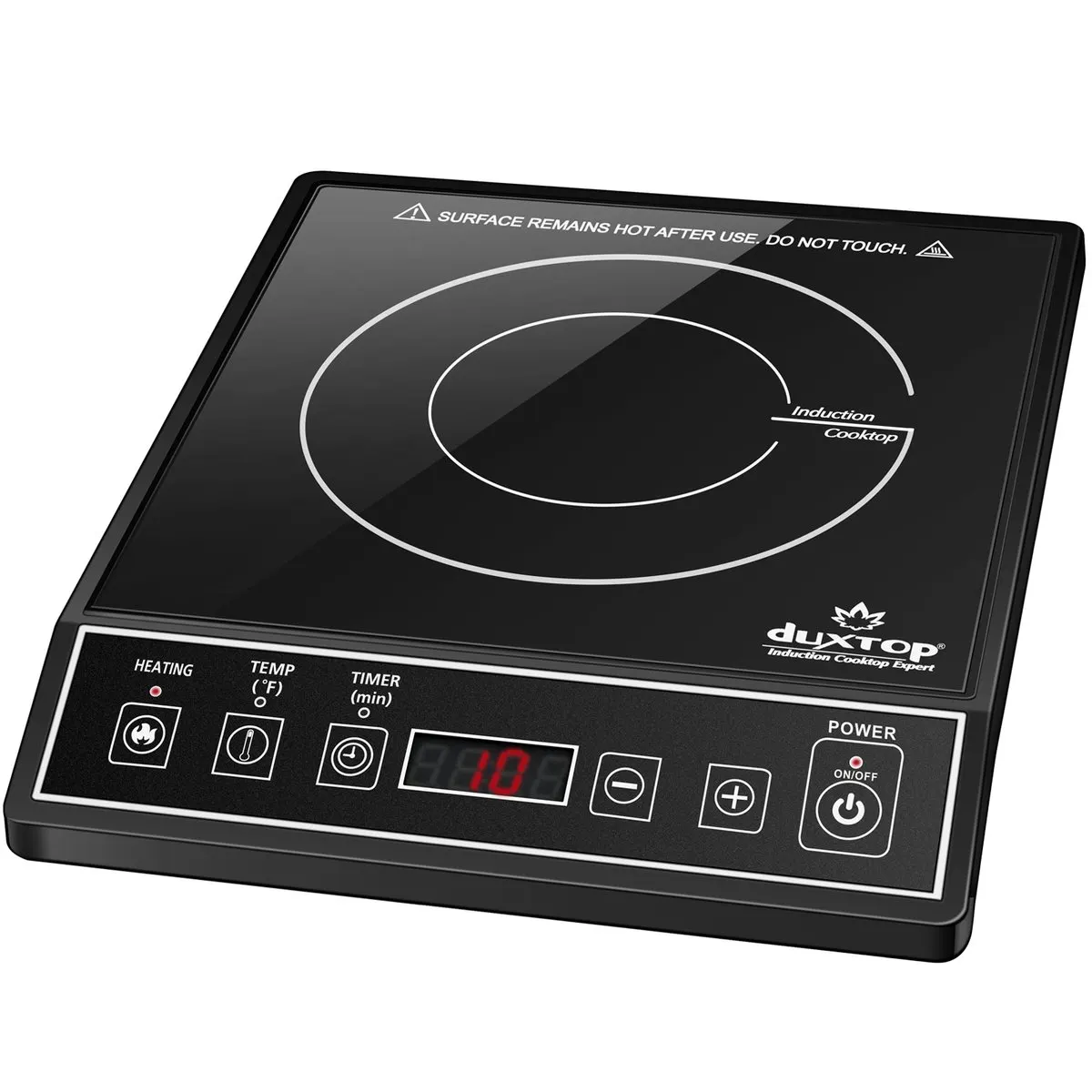
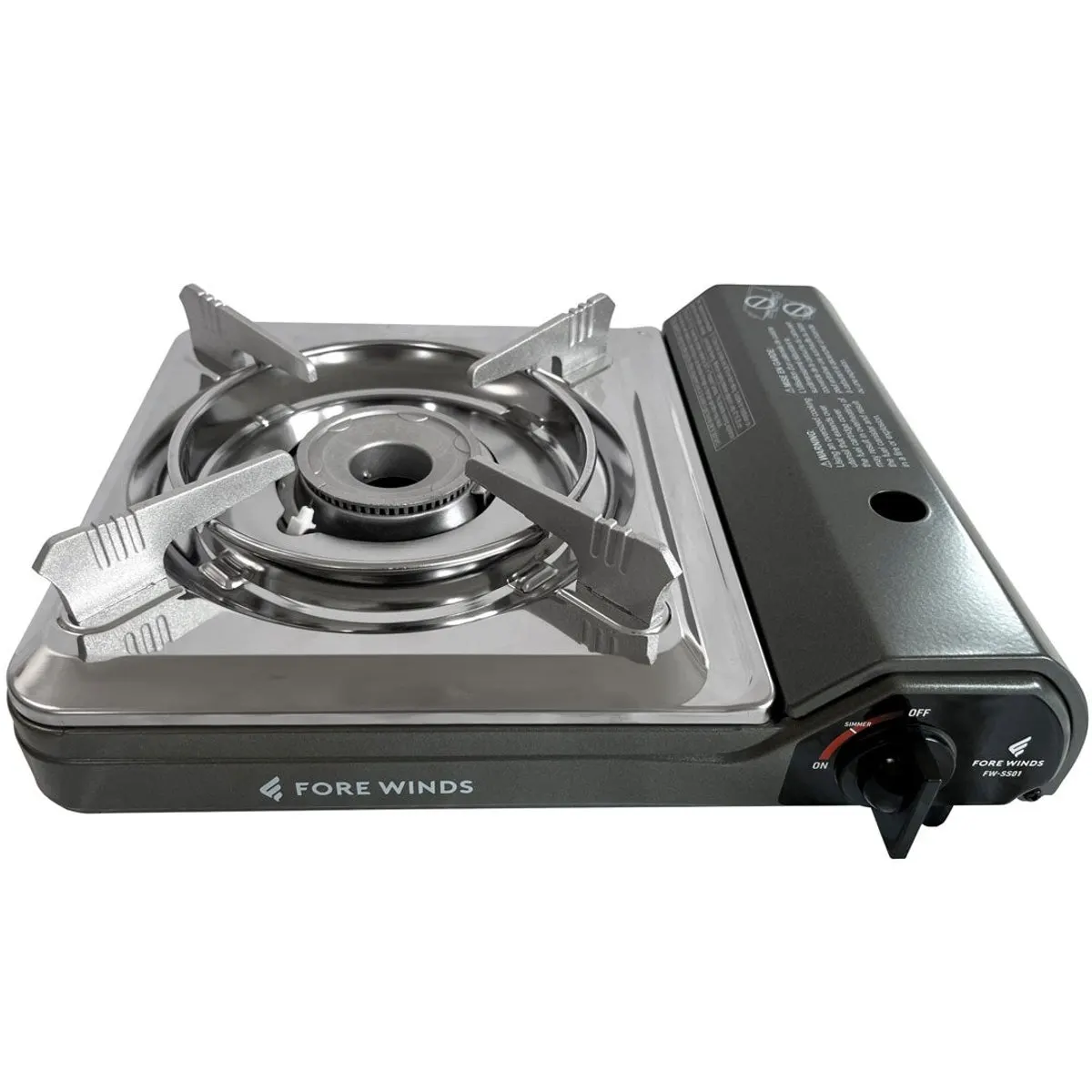
We recommend the Duxtop 9100MC Portable Induction Cooktop
“The Duxtop wins for full-time builds with electrical systems — instant temperature response, no combustion gases, precise control. The Iwatani Cassette Feu wins for builds without electrical infrastructure, as long as you cook outdoors: 12,000 BTU/hr, a built-in windbreaker, and a pressure-sensing safety stop, with no battery draw. Iwatani warns never to use cassette appliances in enclosed spaces such as a car or tent. The Iwatani is priced as a premium butane stove and usually costs more, but the choice comes down to your power system. Neither is a cold-weather primary on its own: induction depends on your battery bank, and standard butane boils at about 31°F and output drops as canisters chill toward freezing. Many van kitchens pair the Duxtop as the indoor primary with a butane stove as an outdoor backup.”
Read the full Duxtop 9100MC Portable Induction Cooktop reviewSpecifications
| Spec | Duxtop 9100MC Portable Induction Cooktop | Iwatani Cassette Feu Butane Camp Stove (Gray) |
|---|---|---|
| Best for | Induction with a large inverter | Outdoor butane cooking |
| Power | 1,800 W max, 120 V / 60 Hz, 15 A circuit (manual) | — |
| Power Levels | 15 levels, 200–1,800 W (manual); listing says 20 levels, 100–1,800 W | — |
| Temperature | 140–460°F (manual); listing says 100–460°F | — |
| Dimensions | 11.4 x 14 x 2.5 in (manual) | 13 x 11 x 3.8 in |
| Weight | 5 lb 12 oz (manual); 6.2 lb (listing) | 3.1 lbs (no canister) |
| Cookware | Magnetic base, 5 in minimum (listing) | — |
| Clearance | At least 4 in from walls (manual) | — |
| Timer | Up to 170 min; auto shut-off after 120 min without input (manual) | — |
| Warranty | 2 years limited (manual) | — |
| Output | — | 12,000 BTU/hr |
| Fuel | — | Butane (8 oz cassette) |
| Burn Time | — | About 70 min at max |
| Ignition | — | Piezo |
| Included | — | Hard carrying case |
Duxtop 9100MC Portable Induction Cooktop
- 1,800 W maximum, power and temperature modes
- Push-button controls
- 170-minute timer and 120-minute auto shut-off (manual)
- Budget-tier price
- Needs induction-compatible cookware
- Fan is audible
Iwatani Cassette Feu Butane Camp Stove (Gray)
- Built-in stainless windbreaker
- Magnetic canister lock, no lever
- Pressure-sensing automatic safety stop
- Heat panel keeps output steady as the can empties
- Costs considerably more than the ZA-3HP
- Butane is weak below freezing; outdoor use only (carbon monoxide)
The short answer
If your van has the electrical system to support it, buy the Duxtop 9100MC as your main stove. That means an inverter rated around 2,000 W continuous or more, a battery and BMS that can supply roughly 165 A at 12.8 V, and enough solar or alternator charging to recharge after cooking. Induction makes no flame and no carbon monoxide, so it's the one you can use inside the van. It responds instantly and cleans up with a wipe. The Duxtop 9100MC review walks through the inverter and battery math.
Buy the Iwatani Cassette Feu if you don't have that system, or as a backup for cooking outdoors. It's a 12,000 BTU/hr butane cassette stove (the listing gives model VA-30; the pictured unit is the Fore Winds FW-SS01) with a built-in stainless windbreaker, a magnetic canister lock and a pressure-sensing safety stop, and it draws nothing from your batteries. It's the most fully featured butane stove on this site; the Iwatani Cassette Feu review explains what changed from the old ZA-3HP.
The location rule decides a lot. Iwatani's US Cassette Feu manual, which we found for the earlier ZA-3HP model, says the stove is approved for indoor use only in commercial restaurants, and that as a camp cooking appliance it is "outdoor only" and "may not be used indoors in tents, campers, apartments or other confined areas." We couldn't find a manual for the current VA-30/FW-SS01 version, so check the one in the box, but expect the same rule. The Duxtop is a household indoor appliance.
The Duxtop is a budget cooktop and the Cassette Feu is now priced as a premium butane stove, but the stove price is the small part of this decision. Your power system, and where you're willing to cook, decide it. Neither is a dependable cold-weather primary on its own: induction is only as reliable as your battery bank, and butane fades near freezing. That's why pairing the two, induction inside and butane outside, is a common setup. For the full fuel-type picture, see the induction vs butane vs propane guide.
Quick comparison
| Duxtop 9100MC | Iwatani Cassette Feu | |
|---|---|---|
| Heat source | 1,800 W induction | 12,000 BTU/hr butane |
| Where to use | Inside the van | Outdoors (camp use) |
| Needs | Big inverter and battery | 8 oz butane cassettes |
| Cold weather | Battery-dependent | Weak near freezing |
| Cookware | Magnetic base only | Any, within size limits |
Where you can cook, and air quality
This is the biggest difference between the two. The Duxtop has no combustion, so it adds no carbon monoxide or combustion byproducts to the air. Duxtop's manual asks for a 120 V / 60 Hz, 15 A circuit and at least 4 inches from walls for the cooling fan. You still want a roof fan for steam and cooking smells, but you can cook on it with the doors shut on a rainy night.
The Iwatani burns butane, which produces carbon monoxide, carbon dioxide, nitrogen dioxide and water vapour. Iwatani's Cassette Feu manual warns: "Never use this appliance in an enclosed space such as a camper, tent, car or home." Retail listings note CSA approval for indoor use, but that approval is for commercial restaurants with mechanical exhaust, not vehicles. So cook outside the van: a table beside it, or a table at the open slider with the stove and cook outside. Opening a roof vent or fitting a CO alarm doesn't make indoor use acceptable; a CO alarm is a last-line warning device, not permission.
It helps to separate the two kinds of ventilation. Combustion ventilation (air for the flame, removal of CO and other combustion gases) is what the outdoor-only rule covers. General cooking ventilation (steam, grease, odour) applies to induction too. Our van kitchen ventilation guide and van cooking safety guide cover both.
The Iwatani's safety stop is a real plus. The listing says it cuts the gas and puts out the flame if canister pressure rises to unsafe levels; supplier spec sheets for the FW-SS01 put the trip point at 60 to 90 psi. The usual cause is an oversized pan or griddle trapping heat over the canister bay, and the stove's own label warns against cookware that's too large.
Edge: Duxtop. It's the only one of the two you can use inside the van.
Cooking performance and control
Both cook real meals, in different ways. The Duxtop puts up to 1,800 W directly into the pan (the current listing describes 20 power levels from 100 to 1,800 W; Duxtop's US manual describes 15 levels from 200 to 1,800 W). Duxtop doesn't publish a boil time; our estimate is a little under four minutes for a covered litre from about 60°F, based on roughly 90 Wh of heat and the listing's 83% efficiency. At low settings the element cycles on and off, which is generally adequate for simmering rice or chili. Induction responds as soon as you press a button.
The Iwatani runs at 12,000 BTU/hr, full cassette-stove output. Expect normal butane-stove performance: fast enough for coffee and pasta, hot enough to sear in a preheated cast iron skillet, and a marked simmer range on the knob. Iwatani's heat panel carries a little burner heat back to the canister, and Iwatani says this keeps output steadier as the can empties.
Pan size matters for both, for different reasons. Duxtop doesn't publish a coil size, but on plates this size the coil is smaller than the glass, so a 9 or 10 inch magnetic pan (5 inch minimum base, per the manual) works best and a 12-inch pan heats unevenly. On the Iwatani, the limit is about protecting the canister: the stove's label warns against oversized cookware, and nothing should overhang the canister compartment. Iwatani's ZA-3HP manual, the closest manual we found, asks for a pot base under 9.5 inches across; check the manual in the Cassette Feu's box.
Edge: Duxtop for fine, fast control; the Iwatani is a capable outdoor stove in its own right.
Power system vs fuel supply
This usually settles the purchase. Our estimates for the Duxtop assume 85–90% inverter efficiency and a 12.8 V nominal LiFePO4 battery:
- Continuous draw at full power: 1,800 W AC, about 2,000–2,120 W from the battery, or about 156–165 A at 12.8 V.
- Inverter: its continuous rating (not surge) must exceed the cooktop's draw at the setting you use, plus other loads, or its overload protection trips. About 2,000 W continuous is the practical floor for full power; 3,000 W gives headroom. Pure sine wave is the general recommendation for induction, not a Duxtop manual instruction.
- Per session: a typical 25-minute dinner using about 400 Wh at the cooktop takes about 35–37 Ah; 20 minutes at full power takes about 52–55 Ah.
If you don't have the inverter, batteries and solar yet, they cost far more than the cooktop. A cooking-sized inverter is a serious DC install; follow the manufacturer's instructions and use a qualified RV electrical technician where codes or your insurer require one.
The Iwatani needs no electrical system at all, only 8 oz butane cassettes. VA-30 spec sheets from Iwatani's commercial suppliers give about 70 minutes per canister at full power, longer at simmer. Carry spares and swap them between meals. Store them upright, out of direct sun and away from the dashboard and any heater; a parked van can get far hotter than the air outside.
To find out whether your system can take induction, run the power calculator.
Edge: Depends on your build. The Duxtop wins if your electrical system can feed it. The Iwatani wins if it can't, as long as you cook outside.
Wind and cold weather
The Duxtop ignores wind, and cold doesn't affect the cooktop. It does affect the system behind it: in sub-freezing weather, solar output drops, LiFePO4 batteries generally must not be charged below about 32°F, and a heater running all night competes for the same battery.
The Iwatani's built-in windbreaker is its biggest upgrade over the ZA-3HP, and since it's an outdoor stove, wind is the condition you'll cook in. The windbreaker helps with ordinary breezes, not a gale. Cold is the harder limit. Standard butane boils at about 31°F, and Iwatani's ZA-3HP manual quotes the same 12,000 BTU/h rating at 68–77°F ambient. Output drops as canisters chill, and in real cold the stove may not light. Storing cans in the warm part of the van overnight helps; you then take them outside to cook. See the cold weather van cooking guide.
Edge: Duxtop, if your battery bank is protected from the cold. Otherwise neither is a solid winter primary.
Size, storage and daily use
Duxtop's manual gives the 9100MC as 11.4 x 14 x 2.5 inches and 5 lb 12 oz (the listing says 6.2 lb), so it fits a drawer or a padded vertical slot. Its 5 ft cord is attached, so place your outlet near where you cook. Flat glass with no grates makes cleanup easy, though its fan vents collect crumbs and sand.
The Iwatani is about 13 x 11 x 3.8 inches and 3.1 lb without a canister, per supplier VA-30 spec sheets, and comes with a hard carrying case. The stainless drip pan lifts out for cleaning, and a keyed design means it only goes back in the right way. Take the canister out whenever you pack the stove away.
Edge: Duxtop. Slimmer and easier to clean, though the Iwatani's case makes it simple to store.
Value
The Duxtop is the cheaper stove, but the real cost difference is everything around them. Induction depends on an inverter and battery bank: if you already have them, the Duxtop's running cost is close to free; if you don't, building them costs far more than either stove. Butane needs only the stove and cassettes: cheap to start, but an ongoing expense if you cook twice a day.
If butane will only be an emergency backup, the budget Gas One GS-1000G costs much less, at a lower 7,650 BTU rating. The Iwatani makes sense when you'll cook on butane often, outdoors, in breezy conditions.
Which one should you buy?
Buy the Duxtop 9100MC if:
- You have an inverter of about 2,000 W continuous or more and enough lithium to cook on
- You want to cook inside the van, with no combustion gases
- You value fine power steps and instant response
- Your solar recharges the bank on most days
Buy the Iwatani Cassette Feu if:
- Your van has little or no inverter and battery capacity, and you're happy to cook outside
- You want an outdoor backup stove that doesn't depend on your electrical system
- You often cook outside in a breeze, where the windbreaker helps
- You'll cook on butane regularly and want a better build than budget models
FAQ
Is induction or butane better for van cooking?
Induction can be used inside and produces no combustion gases, but it needs a large inverter and battery bank. Butane needs no electrical system, but Iwatani's manual limits camp use to outdoors. If your power system can run induction, it's the better primary.
Can I use the Iwatani Cassette Feu inside my van?
No. Iwatani's Cassette Feu manual (the ZA-3HP edition we found) says that as a camp appliance it is "outdoor only" and "may not be used indoors in tents, campers, apartments or other confined areas," and warns never to use it in a camper, tent, car or home. Cook outside the van, for example on a table at the open slider.
Can I run the Duxtop 9100MC off my van battery?
Yes, through an inverter whose continuous rating exceeds the cooktop's draw plus other loads (about 2,000 W for full power), on a battery and BMS that can supply roughly 165 A at 12.8 V. Pure sine wave is the general recommendation for induction cooktops.
Does butane work in cold weather?
Poorly as temperatures approach and drop below freezing. Standard butane boils at about 31°F, so output falls as the canister cools. Keep canisters warm before use, or rely on induction or propane (outdoors) for winter cooking.
Should I own both an induction cooktop and a butane stove?
It's a common pairing. Use induction as the everyday primary inside, and keep the butane stove as an outdoor backup for cloudy stretches, low batteries or an electrical fault.
Sources and verification
- Duxtop 9100MC review: specs and sources for the 9100MC, including the Duxtop US manual and the Amazon listing it cites (checked 2026-10-12)
- Iwatani Cassette Feu review: specs and sources for the Cassette Feu, including the Iwatani ZA-3HP manual quoted above and the Amazon listing it cites; the review checked those on 2026-10-10, and its size, weight and burn-time figures come from supplier VA-30 spec sheets (checked 2026-10-12)
- Battery, inverter and boil-time figures on this page are our estimates from rated draw, using the assumptions stated above, not measurements.