Zwilling Fresh & Save vs FoodSaver Compact Vacuum Sealer
A USB-rechargeable handheld valve-bag pump against a 120 V countertop heat sealer, for vacuum storage in a van.
Disclosure: As an Amazon Associate I earn from qualifying purchases. Links to Amazon on this page are affiliate links: if you buy through one, VanLifeKitchens.com may earn a commission at no extra cost to you. Read our affiliate disclosure.

Zwilling Fresh & Save Vacuum Sealer Machine Starter Set, 6pc (36806-005)
For: Vacuum storage without an inverter
We recommend the Zwilling Fresh & Save Vacuum Sealer Machine Starter Set, 6pc (36806-005)
“For most van kitchens the Zwilling Fresh & Save is the better fit: it charges on about 5 watts of USB, needs no inverter and uses reusable bags. The FoodSaver Compact is the better tool if you batch-prep and freeze meat, because its heat-sealed seam is permanent, but it needs 120 V AC and single-use bags.”
Read the full Zwilling Fresh & Save Vacuum Sealer Machine Starter Set, 6pc (36806-005) reviewSpecifications
| Spec | Zwilling Fresh & Save Vacuum Sealer Machine Starter Set, 6pc (36806-005) | FoodSaver Compact Vacuum Sealer |
|---|---|---|
| Best for | Vacuum storage without an inverter | Vacuum-sealing fridge and freezer food |
| Model | 36806-005 (6-piece set) | 2115762 |
| Battery | 3.7 V Li-ion, 1,200 mAh, about 4.4 Wh (manual) | — |
| Charging | 5 V, max 1 A (5 W); 2–5 hours (manual) | — |
| Energy per full charge | About 0.4–0.5 Ah at 12.8 V (estimate) | — |
| Pump Size | About 2 in diameter x 7.5 in (manual) | — |
| Pump Weight | About 0.66 lb (manual) | — |
| Included | Pump, 1 large glass-base container, 2 small and 2 medium bags (listing) | 11 in x 8 ft roll, 3 quart bags, 2 gallon bags (listing) |
| Settings | — | Dry / moist |
| Storage | — | Vertical |
| Bags | — | FoodSaver rolls and pre-cut bags (11 in roll included) |
| Power Source | — | 120V AC (wattage not published; ~100 W assumed) |
Zwilling Fresh & Save Vacuum Sealer Machine Starter Set, 6pc (36806-005)
- USB charging at up to 5 W; no inverter (manual)
- Reusable bags and container; no rolls
- Automatic stop at target vacuum
- Pump is about 2 x 7.5 in
- Not a heat seal; liquids must be frozen first
- Kit container has a glass base
- Listing doesn't say which pump version ships
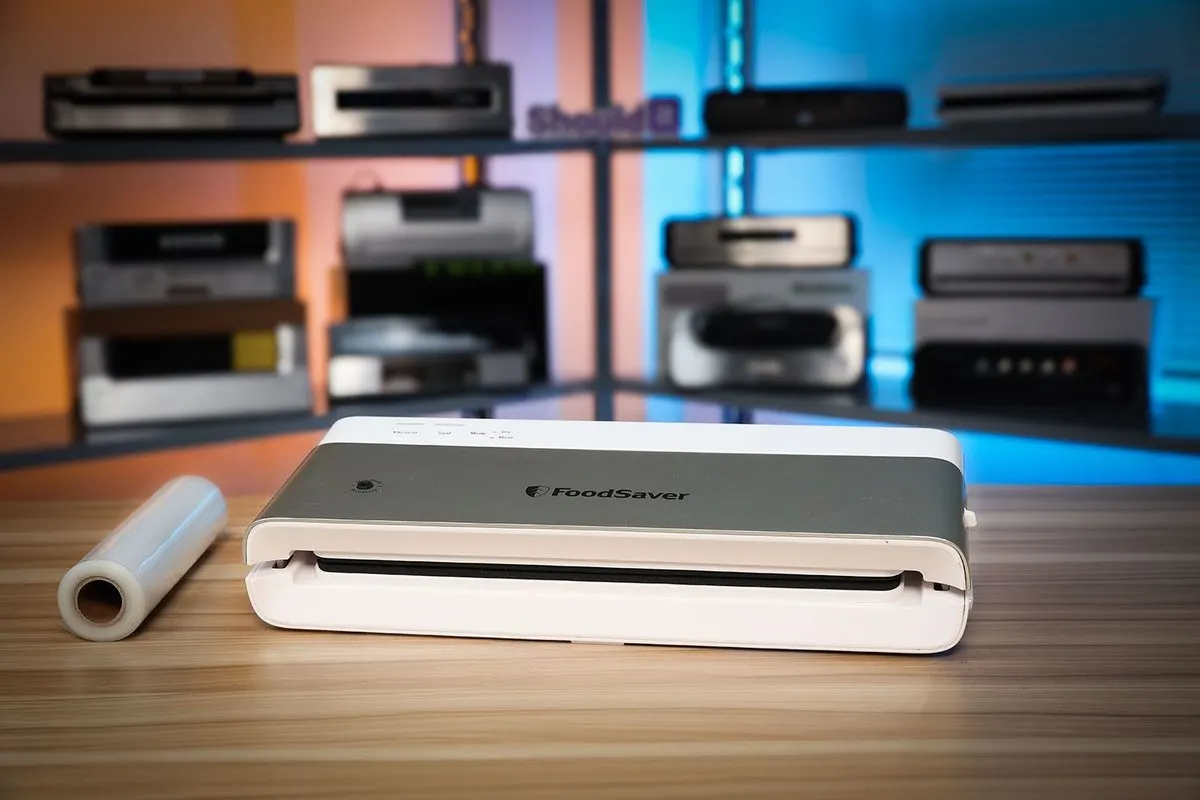
FoodSaver Compact Vacuum Sealer
- Dry and moist food settings
- Compact, stores vertically
- Works with FoodSaver bags and rolls
- Helps prevent freezer burn in dual-zone fridges
- Requires inverter power
- Proprietary bags add ongoing cost
The short answer
For most van kitchens, the Zwilling Fresh & Save is the better vacuum sealer. It's a handheld, rechargeable pump that charges on about 5 watts of USB, so it needs no inverter. It works with reusable zip bags and containers with built-in valves, and the pump fits in a drawer. For everyday resealing of cheese, cured meat, coffee and leftovers, it's the lower-power, lower-waste tool.
The FoodSaver Compact is the better choice if you batch-prep and freeze. It heat-seals a permanent seam across cut-to-length bags, has dry and moist settings, and suits sealing a week of raw meat portions for the freezer zone. It runs on 120 V AC, so it needs an inverter or a power station, and its bags are single-use unless you wash and reuse them.
For the full detail, read our Zwilling Fresh & Save review and our FoodSaver Compact review. VanLifeKitchens researches products rather than testing them. The figures below come from the sources cited in those reviews.
Key specs side by side
| Spec | Zwilling Fresh & Save 6-pc | FoodSaver Compact (2115762) |
|---|---|---|
| How it seals | Pump on a one-way valve in a zip bag or lid | Vacuum, then heat-sealed seam |
| Power | 3.7 V, 1,200 mAh battery; 5 V, 1 A USB charge | 120 V AC; wattage not published |
| Inverter needed | No | Yes; about 300 W pure sine suggested |
| Bags | Reusable zip bags with valves | FoodSaver rolls and pre-cut bags |
| In the box | Pump, glass-base container, 4 bags | 11 in x 8 ft roll, 3 quart and 2 gallon bags |
Power and your van's electrical system
This is the biggest difference between the two.
Zwilling. Zwilling's manual lists a 3.7 V, 1,200 mAh lithium-ion battery, about 4.4 Wh, charged at 5 V and up to 1 A. It also says you can charge from a computer's USB port, so any USB-A socket in the van works. By our estimate, a full charge takes about 0.4 to 0.5 Ah from a 12.8 V house battery. No inverter means no inverter idle draw either.
FoodSaver. It plugs into 120 V AC. FoodSaver's own site refused our requests, and the listing doesn't state a wattage, so our FoodSaver review assumes about 100 W. On that assumption one bag uses about 1 to 1.5 Wh from the battery, including inverter losses, roughly 0.1 Ah. A ten-bag session is about 1 Ah. That's still small. The real cost is needing an inverter switched on, and remembering to turn it off.
If you already run an inverter for coffee or cooking, the power difference hardly matters. If you don't have one, the Zwilling is the only one of the two you can use.
Edge: Zwilling, clearly.
Seal type and what each is good at
Heat seal (FoodSaver). The machine pulls air out of a textured bag and melts a seam closed. The seam is permanent until you cut it. That's the right seal for long freezer storage, where you want no air to creep back in for weeks or months. The FoodSaver review covers the freeze-first method for soups and the moist setting for marinated meat.
Valve and zip (Zwilling). You zip the bag, place the pump on the valve, and it stops on its own when the vacuum is right. Then you press the valve's PUSH button to seal it. Zwilling's manual says the bag opening must be clean and dry and the valve clear of food. If a bag loses its vacuum, Zwilling's troubleshooting points to a dirty or wet seal, a misplaced valve, or a pump sitting loosely. The same bags and boxes reopen and reseal as often as you like, which suits food you dip into daily.
Liquids. Both struggle with free liquid. FoodSaver's moist setting handles surface moisture, and soups need freezing first. Zwilling says its pump must not take in liquid, recommends briefly freezing soft or liquid foods, and requires its liquid barrier for liquids, marinating and sous vide.
Edge: FoodSaver for freezer stockpiles; Zwilling for everyday reseal.
Space, waste and running costs
Space. The Zwilling pump is about 2 inches across and 7.5 inches tall, and the bags store flat. The FoodSaver stores upright, per its listing. The listing gives about 17.9 x 5.6 x 10.2 inches, which may be the box. You also need space for rolls and scissors.
Fragility. The Zwilling kit's large container has a borosilicate glass base, so pack it low and padded. The FoodSaver has no glass.
Waste and refills. FoodSaver bags are cut from rolls and are essentially single-use, though our FoodSaver review explains how to wash and reuse bags that held low-risk dry food. Zwilling bags and boxes are designed to be reused, so there's no roll to buy. Over a year of full-time use, that's the main running-cost difference.
Edge: Zwilling, for space and waste; FoodSaver if glass worries you.
Food safety is the same for both
Neither makes perishable food safe for longer in the fridge. Zwilling's manual says vacuuming "is not a substitute for proper freezing, cooling or preservation of food." Our FoodSaver review lays out the FDA fridge and freezer times that still apply. Zwilling adds that raw cabbage, beans, onions and garlic should be blanched first, that blue cheese shouldn't be vacuum-stored, and that fresh mushrooms should only be stored deep-frozen. Keep the fridge at 40°F or below, and check it with a thermometer such as the AcuRite 00986M.
Value
Both sit around the budget-to-mid-range point for vacuum sealers, so the decision is about running costs and your electrical system rather than the purchase price. The FoodSaver needs ongoing rolls and an inverter. The Zwilling's bags and boxes are reusable, so after the starter set the main cost is buying more of them as your storage grows. Check current prices on Amazon.
Which one should you buy?
Buy the Zwilling Fresh & Save if:
- You have no inverter, or you'd rather not run one for small jobs.
- You reseal the same cheese, meat, coffee and leftovers every day.
- You want reusable bags instead of rolls.
- Drawer space is tight.
Buy the FoodSaver Compact if:
- You batch-prep and freeze portions weekly.
- You want a permanent heat seal for long freezer storage.
- You already have a pure sine inverter or a power station.
- You'd rather not carry a glass container.
For the bigger picture on cold storage, see the van life grocery shopping strategy and the 12V fridges complete guide.
FAQ
Which vacuum sealer works without an inverter?
The Zwilling Fresh & Save. Its pump charges over USB at 5 V and up to 1 A. The FoodSaver Compact needs 120 V AC.
Which is better for freezing meat?
The FoodSaver. Its heat-sealed seam is permanent, which suits long freezer storage. The Zwilling's zip-and-valve bags are built for repeated opening and resealing.
Can either vacuum-seal soup?
Not as a liquid. Freeze it in the bag first. FoodSaver's moist setting handles surface moisture only, and Zwilling says its pump must not take in liquid.
How much battery does each use?
A full Zwilling charge is about 0.4 to 0.5 Ah at 12.8 V by our estimate. For the FoodSaver, we estimate about 0.1 Ah per bag through an inverter, assuming about 100 W, since FoodSaver doesn't publish a wattage.
Do the bags work with each other?
No. FoodSaver heat-seals its own textured bags and rolls. Zwilling pumps work with Fresh & Save bags and lids, which have their own valves.
Sources and verification
- Zwilling Fresh & Save review: specs and sources, including Zwilling's pump page and US operating manual (checked 2026-10-13).
- FoodSaver Compact review: specs and sources, including the Amazon listing for model 2115762 and the FDA storage chart (checked 2026-10-13).