Zwilling Fresh & Save Vacuum Sealer Machine Starter Set, 6pc (36806-005)

- Model
- 36806-005 (6-piece set)
- Battery
- 3.7 V Li-ion, 1,200 mAh, about 4.4 Wh (manual)
- Charging
- 5 V, max 1 A (5 W); 2–5 hours (manual)
- Energy per full charge
- About 0.4–0.5 Ah at 12.8 V (estimate)
- Pump Size
- About 2 in diameter x 7.5 in (manual)
- Pump Weight
- About 0.66 lb (manual)
- Included
- Pump, 1 large glass-base container, 2 small and 2 medium bags (listing)
Overview: who is the Zwilling Fresh & Save for?
Most vacuum sealers are countertop machines that melt a seam across a plastic bag. They need an outlet, so in a van they need an inverter. Zwilling's Fresh & Save works differently. A handheld, rechargeable pump about the size of a pepper mill sits on a one-way valve built into a reusable zip bag or a container lid, pulls the air out and stops on its own. It charges over USB, so it runs from the same port that charges your phone.
This review is for van lifers who want the main benefit of vacuum storage, with less air around cheese, cured meat, coffee and leftovers, without an inverter, a roll of disposable bags or another countertop machine. It's less suited to people who seal big batches of raw meat for months in a freezer, and we explain why below.
Choose this if:
- You have no inverter, or you'd rather not run one for a small job.
- You want reusable bags and containers instead of single-use heat-sealed bags.
- You open and reseal the same food often: cheese, deli meat, coffee, half an onion.
Skip this if:
- You mainly bulk-freeze raw meat for long storage. A heat sealer like the FoodSaver Compact makes a permanent seam.
- You want to vacuum soups and sauces without freezing them first. Zwilling says the pump must not take in liquid.
- You'd rather not carry glass. The kit's large container has a borosilicate glass base.
What the Amazon link sells: "Zwilling Fresh & Save Vacuum Sealer Marchine Starter Set, 6pc" (ASIN B08DHKPBHS, part number 36806-005). Per the listing, the set includes one rechargeable vacuum pump, one large vacuum storage container with a borosilicate glass base and a plastic lid, two small and two medium reusable vacuum bags. The listing doesn't state the bag or container volumes.
A note on method: VanLifeKitchens researches products rather than testing them. Figures below come from Zwilling's Fresh & Save vacuum pump page, Zwilling's US operating manual for the pump and the Amazon listing, all listed under Sources. See how we research.
Which pump version? Zwilling's pump page we checked is titled "Vacuum pump with charging cap", but the US manual it links to is the newer "V2 Sensor" edition, with a charging station, a USB-C port and a liquid sensor. Zwilling says all Fresh & Save pumps and lids are compatible. The set listing doesn't say which pump ships. If yours arrives with a charging cap rather than a station, follow the leaflet in the box for charging. The way you seal food is the same.
Bottom line up front: the Fresh & Save is the lowest-power way to vacuum-store food in a van. It charges on about 5 watts of USB and needs no inverter. It's best for everyday resealing rather than long-term freezer stockpiles.
Specifications and sources
| Spec | Figure | Source |
|---|---|---|
| Battery | 3.7 V lithium-ion, 1,200 mAh | Zwilling US manual |
| Charging input | 5 V, max 1 A (5 W), USB-A to USB-C cable | Zwilling US manual |
| Charge time | 2 to 5 hours | Zwilling US manual |
| Pump size | About 2 in diameter x 7.5 in tall | Zwilling US manual |
| Pump weight | About 0.66 lb | Zwilling manual and page |
| Set contents | Pump, 1 large container, 4 bags | Amazon listing |
| Operation | Stops automatically at target vacuum | Zwilling page and manual |
Zwilling doesn't publish how many seals a charge gives, the vacuum level, or the bag sizes in this set, so we don't make those up.
Wattage and what it means for your van's power
This is the reason to buy a Fresh & Save for a van.
Charging wattage. Zwilling's manual lists the power adapter output as 5 V at a maximum of 1 A, or 5 watts. The adapter isn't included with the current US pump. The manual says you can charge from a computer's USB port instead, so any USB-A port works: a 12 V USB socket, a power station or a USB hub.
Battery energy. 3.7 V x 1.2 Ah is about 4.4 Wh. A full charge from empty, allowing for charging losses, takes roughly 5 to 6 Wh from your house battery. That's about 0.4 to 0.5 Ah at 12.8 V. That's our estimate, assuming 75 to 90 percent charger efficiency.
Inverter: none needed. That's the key difference from the FoodSaver Compact, which runs on 120 V AC and needs an inverter. Keeping the inverter off also avoids its idle draw, which can be larger than the sealing itself.
For scale, a full Fresh & Save charge is roughly the energy of a short phone top-up. In your daily van kitchen power budget, the pump rounds to zero. Zwilling's manual asks you to charge it at least every 3 to 6 months to keep the battery healthy, so add it to a monthly charging routine.
How it works
Place the pump on the valve of a bag or container lid, press lightly and press the button. The pump draws out the air and, per Zwilling, "stops automatically when the vacuum pressure reaches the right level." On the V2 pump the indicator light flashes while it works, stays on for 5 seconds when done, and flashes red if the liquid sensor detects liquid.
Bags. Fill, zip shut, then vacuum through the valve. Zwilling's manual says the bag opening must be completely clean and dry and the valve must stay clear of the food. After each vacuum, press the PUSH button in the middle of the valve to seal it. For soft or liquid foods, Zwilling recommends freezing them briefly in the bag first. It says the liquid barrier "must be used" for soft or liquid food, for marinating and for sous vide, and that you must stop the pump by hand as soon as liquid reaches it. Don't let powders like flour reach the pump either.
Containers. Clean and dry the lid seal and the box rim before each use. Leave 0.39 to 0.79 inches (1 to 2 cm) of space below the rim, and don't let food touch the valve inside the lid. To open, pull the silicone valve to the side to let air back in.
Bottles. Zwilling sells a wine sealer that works with the same pump.
What vacuum storage does and doesn't do
Zwilling is clear on this: "vacuuming is not a substitute for proper freezing, cooling or preservation of food." Removing air slows mold, staling, drying and freezer burn. It doesn't make perishable food safe for longer at fridge temperatures. Cooked leftovers and opened deli meat still follow normal fridge times. Our FoodSaver review walks through the FDA storage times, and they apply here unchanged.
Zwilling's manual adds some specific rules worth keeping on a card in the galley:
- Let food cool to room temperature before vacuuming, and dry it if you can.
- Raw cabbage, beans, onions and garlic release gases that break the vacuum. Blanch them first.
- Don't store blue cheese under vacuum. Store fresh mushrooms only deep-frozen.
- Boxes can go in the microwave, with the vacuum released and the lid loose. Bags can be used for gentle microwave defrosting only when not under vacuum, and not with oily contents.
- Never put the pump in the dishwasher. Wipe it with a dry or slightly damp cloth. The silicone seal pulls off for washing.
For keeping a small 12V fridge organised around vacuum bags and portioned meals, see the van life grocery shopping strategy and the storage complete guide.
How it fits a van kitchen
Space. The pump is about 2 inches across and 7.5 inches tall, so it fits in a utensil drawer or a door pocket. The bags store flat. The large container is the bulky part.
Glass on the road. The kit's large container has a borosilicate glass base. In a van, store it low, in a padded slot or a lined drawer, never on an open shelf. Our guide to stopping van kitchen rattles covers drawer liners and dividers that help.
Fridge space. Vacuum bags shrink around their contents, so cheese, meat and leftovers take less room in a chest fridge than in rigid tubs. In a small fridge such as the ICECO GO20 that matters.
Charging. Keep the cable with the pump. The manual says not to put a pump that has sucked in liquid back on its charging station until it is cleaned and dry.
Limitations
- Not a heat seal. A zip and a valve aren't the same as a melted seam. If a bag loses vacuum, Zwilling's troubleshooting points to a dirty or wet seal or valve, or a pump sitting loosely on the valve.
- No liquids. Soups and sauces must be frozen first, and the pump must stop before liquid reaches it.
- Glass container in the kit. Fragile on rough roads.
- Unpublished figures. Zwilling doesn't publish seals per charge, vacuum strength or the set's bag sizes.
- Pump version uncertainty. The listing doesn't say whether the charging-cap pump or the newer V2 station pump ships.
- Adapter not included with the current US pump, per the manual. Any USB-A port works.
How it compares with what we cover
- FoodSaver Compact vacuum sealer: a 120 V countertop heat sealer with cut-to-length rolls. Better for long freezer storage and batch prep; needs an inverter and uses disposable bags. Head-to-head: Zwilling Fresh & Save vs FoodSaver Compact.
- Stasher silicone bags: reusable and tough, but there's no vacuum, so air stays in.
- Sistema Klip It Plus containers: latched dry storage with no vacuum, for pantry goods.
Value
The Fresh & Save starter set sits in the mid-range for vacuum sealers. The pump is the main cost, and the bags and containers are reusable, so there's no running cost for rolls. If you already avoid the inverter for small loads, that's the real saving. Fresh & Save bags and boxes also come in other sizes and sets once you know which you use. Check the current price on Amazon.
Final verdict
For a van kitchen with a small electrical system, the Zwilling Fresh & Save is the vacuum sealer that fits best. It charges on 5 watts of USB, a full charge costs about half an amp-hour, it needs no inverter, and the bags are reusable. Use it for everyday resealing of cheese, cured meat, coffee and leftovers. Freeze soft foods before sealing, keep the glass box padded, and if you stockpile meat in a freezer for months, a heat sealer is still the better tool.
FAQ
How much power does the Zwilling Fresh & Save pump use?
Zwilling's manual lists a 3.7 V, 1,200 mAh battery, about 4.4 Wh, charged at 5 V and up to 1 A (5 W). A full charge takes roughly 0.4 to 0.5 Ah from a 12.8 V house battery, by our estimate.
Does it need an inverter?
No. It charges over USB. Zwilling's manual says a computer's USB port works, so any USB-A port in the van will do.
How long does it take to charge?
Zwilling's US manual says 2 to 5 hours.
Can it vacuum soup or marinades?
Only with care. Zwilling recommends freezing soft or liquid foods briefly first, says the liquid barrier must be used for liquids, marinating and sous vide, and says you must stop the pump as soon as liquid reaches it.
Does vacuum sealing make food last longer in the fridge?
It keeps quality longer by slowing mold, drying and freezer burn. Zwilling says vacuuming is not a substitute for proper cooling, freezing or preservation, so fridge safety times don't change.
What's in the 6-piece set?
Per the Amazon listing: one rechargeable pump, one large container with a glass base and a plastic lid, two small bags and two medium bags.
Sources and verification
- ZWILLING Fresh & Save vacuum pump with charging cap, product page (Canada), https://www.zwilling.com/ca/zwilling-fresh-save-vacuum-pump-with-charging-cap-36801-002/36801-002-0.html: pump dimensions and 0.307 kg weight, lithium-ion battery, USB charging, automatic shut-off, compatibility of all Fresh & Save pumps and lids, links to the US manual and safety leaflet (checked 2026-10-13).
- ZWILLING Fresh & Save vacuum pump operating instructions (US/CAN, V2 Sensor), https://www.zwilling.com/on/demandware.static/-/Library-Sites-ZwillingSharedLibrary/default/dw09eb7f41/images/PCM-pdf/2004308Y1_US-CAN_Vacuum-Pump_Grey_V2-Sensor_11-23.pdf: 3.7 V 1,200 mAh battery, 5 V 1 A (5 W) adapter output, adapter not included, USB-A to USB-C cable, 2 to 5 hour charge, charge every 3 to 6 months, indicator lights, liquid sensor and liquid barrier, bag and box instructions, food cautions, microwave guidance, cleaning, troubleshooting (checked 2026-10-13).
- Amazon listing, ASIN B08DHKPBHS: title, part number 36806-005, set contents, materials, bag care claims, availability (checked 2026-10-13).
Compare with similar products
See how this stacks up against the other small appliances we've reviewed.
Head-to-head comparisons
Related Reviews

For: Soups and sauces on an inverter
Breville BSB510XL Control Grip Immersion Blender, Brushed Stainless Steel
A 280 W, 15-speed stick blender with a trigger grip, an 8-inch stainless shaft, a 42 oz jug, a 25 oz chopping bowl and a whisk that store as one stack. A 30-second job uses about 2.3 Wh, roughly 0.2 Ah at 12.8 V through an inverter, by our estimate. It needs a 500–600 W pure sine inverter, a 1-minute rest after each minute of use, and indoor use.
For: Stovetop baking without an oven
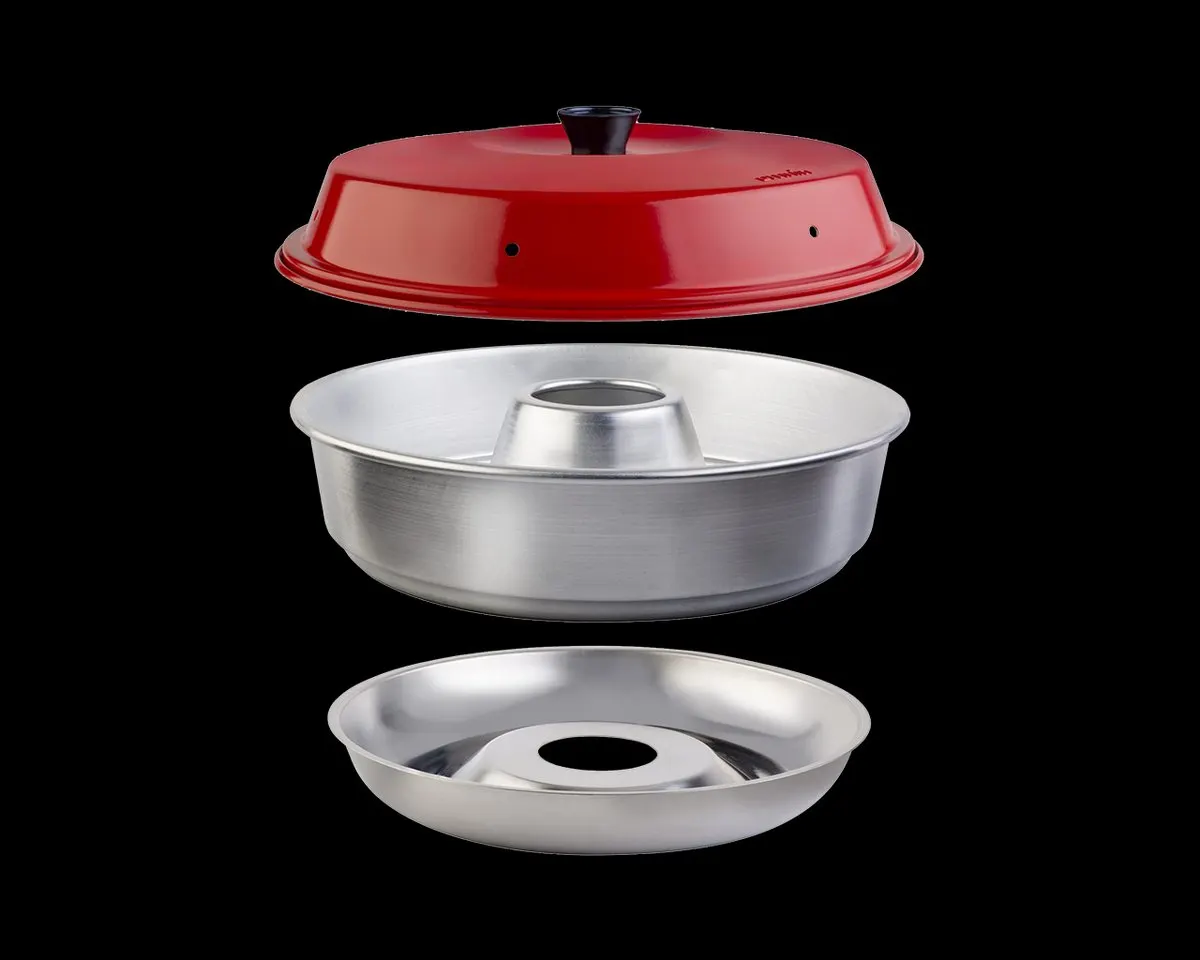
Omnia Stovetop Oven (Model 1301)
A stovetop oven that bakes bread, pizza, cinnamon rolls and casseroles on a gas, electric or camp-stove burner, with no electricity or built-in oven needed. Omnia says it does not work on induction. Non-stick pans and silicone moulds are sold separately.
For: Smoothies on a large inverter
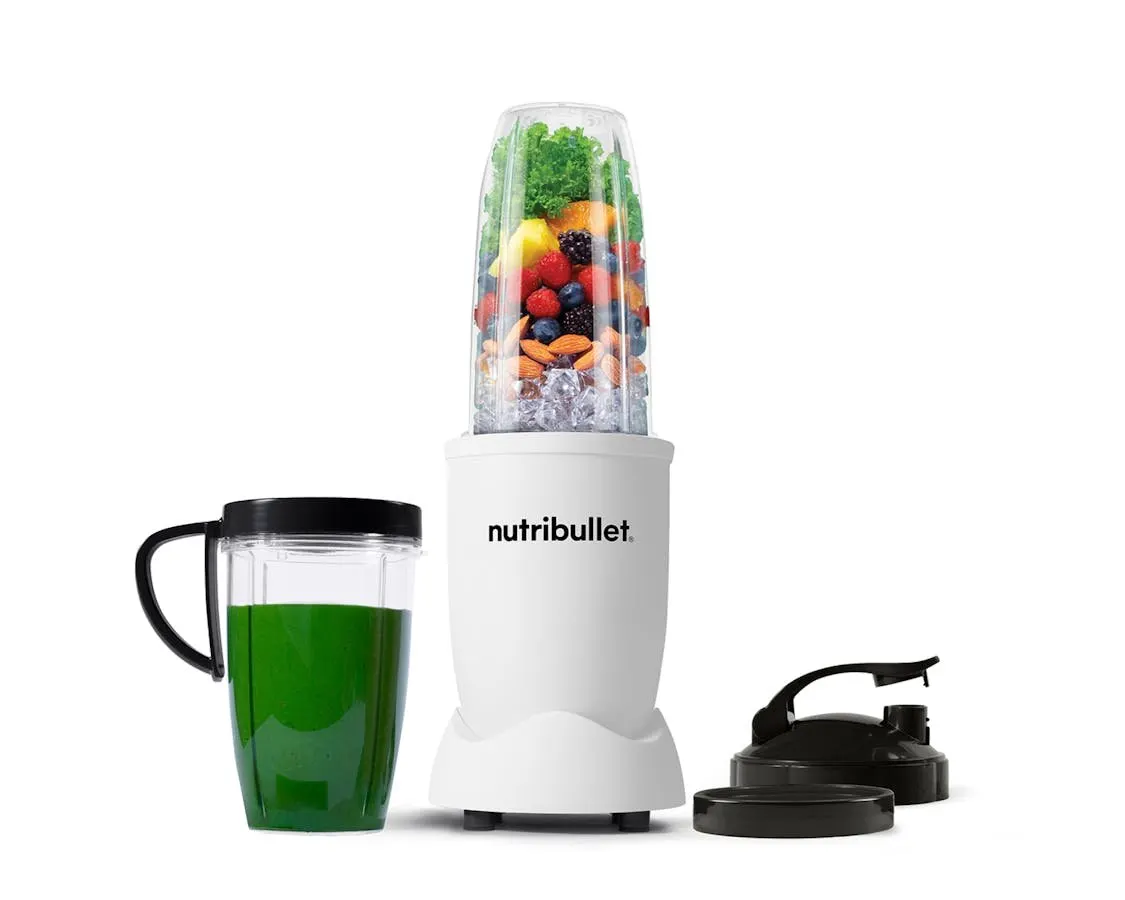
NutriBullet Pro 900W Compact Blender
A compact 900W blender for smoothies, sauces and cold soups in a van kitchen. It handles frozen fruit and greens with enough liquid, and the twist-on cups double as drinking containers.