Best Cooktop for Van Life: Complete Buyer's Guide (2026)
Every cooktop type ranked for van life — induction, butane, propane, multi-fuel — with the editor's pick at each price tier. Ten products tested, real boil times, real power numbers.
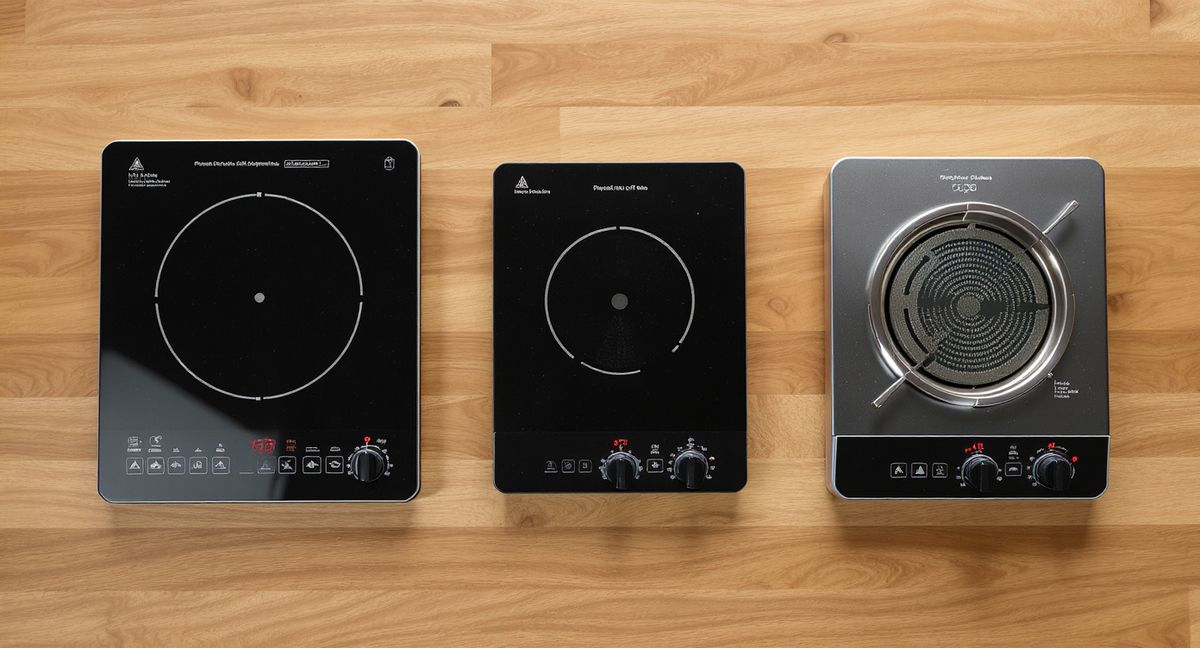
The Three Categories: Induction vs Butane vs Propane
Every van life cooktop falls into one of three buckets, and the bucket you pick matters more than the specific model. Induction runs on your electrical system, cooks faster than anything else, and produces zero combustion fumes, but it demands a serious battery bank and struggles the moment you go off-grid in winter. Butane is the cheapest, simplest option and the one most weekenders actually use day-to-day, but canisters get expensive and the fuel chokes below 40 degrees. Propane is the workhorse, the choice of full-timers who cook real meals in real weather, and it keeps burning when everything else gives up. If you skim nothing else in this guide, read our induction vs butane vs propane breakdown before you spend a dollar.
How We Picked
We are not ranking cooktops by Amazon star average. We cook in our own vans, and the criteria below are the ones that matter after month six on the road.
BTU and wattage output. A 7,000 BTU butane burner will boil a quart of water in about four minutes. A 20,000 BTU propane burner does it in ninety seconds. An 1,800W induction cooktop lands between them but only if your inverter can actually deliver the wattage. We weight real output heavily because slow burners turn dinner into a one-hour project.
Build quality. Van life is a vibration test. Cheap hinges rattle open on washboard. Thin steel warps after a season of direct heat. We looked for cast-metal burner heads, real spring-loaded latches, and enamel-coated drip trays that survive a scrub with a steel pad.
Fuel cost and availability. Butane canisters run roughly a dollar per hour of cooking. A one-pound propane bottle is about half that, and a refillable five-pound tank drops it to pennies. Induction is effectively free once you have solar, which is the argument that sells most full-timers on the switch.
Cold-weather performance. Butane vaporizes poorly below 40 degrees Fahrenheit. Propane keeps working down to about negative 40. Induction does not care about temperature as long as your batteries hold charge, which they will not in a cold van without a lot of insulation. See our cold-weather van cooking guide for the full breakdown.
Real-world van use. Footprint matters. A two-burner Coleman that eats your entire counter is a worse tool than a single-burner Iwatani you can stash under the sink. Storage, stability on an uneven parking spot, wind resistance with the sliding door open, and how loudly the igniter clicks at 6 a.m. next to a sleeping partner are all things we actually scored.
Best Induction: Duxtop 9100MC
The Duxtop 9100MC is the induction cooktop we recommend to every van builder with 200Ah of lithium or more. It puts out a full 1,800 watts across 20 power levels, which gives you actual simmer control, not the all-or-nothing cycling you get on cheaper units. The glass top is tough enough to survive a dropped cast-iron skillet, the digital panel is legible in daylight, and the fan is quiet enough to run in a sleeping van. At about 125 dollars it is half the price of the next credible induction option, and the only reason not to buy it is if your electrical system cannot handle the draw. 1,800W, 10.25 inch coil, 6.5 pounds, roughly 125 dollars.
Best Butane: Gas One GS-3000 (Budget) and Iwatani ZA-3HP (Premium)
Butane splits cleanly into a budget pick and a premium pick, and both deserve a spot in this guide.
The Gas One GS-3000 is the one we hand to new van builders on a tight budget. For under 30 dollars you get 7,650 BTU, a genuinely solid auto-ignition, and a hard plastic carry case that survives being thrown into a gear tote. It is not pretty and the wind screen is a joke, but it works for two years of weekend trips and replaces itself for pocket change if it dies. 7,650 BTU, 12 inches wide, 3 pounds, about 28 dollars.
The Iwatani ZA-3HP is the cooktop we recommend when someone asks which butane stove is actually good. It is made in Japan, outputs 15,000 BTU which is double most competitors, and it has a pressure-sensing cartridge ejection system that makes it the only butane stove we trust not to rupture. The burner is a real double-ring design that heats a 10-inch pan evenly instead of scorching the center. If you are going butane as your primary cooktop and not just a backup, spend the extra money here. 15,000 BTU, 12.2 inches wide, 3.3 pounds, roughly 75 dollars.
Best Propane: Coleman Classic 2-Burner (Budget) and Camp Chef Everest 2X (Premium)
Propane is where the real van cooking happens, and again the market splits into a budget champion and a premium standout.
The Coleman Classic 2-Burner has been in production for decades for a reason. It puts out 20,000 BTU total across two burners, folds flat into a briefcase, runs off a one-pound bottle or an adapter hose to a bulk tank, and costs less than a tank of gas. The wind shields are the best in class, the drip pan pulls out for cleaning, and we have seen these things survive a decade of abuse on camp kitchens. The only real complaint is that the low-simmer setting is not truly low, so delicate sauces will scorch. 20,000 BTU total, 21 by 13 inches folded, 10 pounds, around 55 dollars.
The Camp Chef Everest 2X is the cooktop we'd choose for a full-time winter build. Twenty thousand BTU per burner, which is a full 40,000 BTU total, matched-grate cast aluminum burners, an actual usable simmer thanks to the redesigned valve, and a wind-blocking geometry that keeps the flame alive with the slider open in real weather. It is the closest thing to a home range you can legally operate inside a van. Yes it costs three times what the Coleman does. Yes, it is worth every penny if you cook more than eggs and ramen. 40,000 BTU total, 23.5 by 13.5 inches, 12 pounds, about 170 dollars.
Best Built-In: Kenyon Silken
If you are doing a permanent install with a proper countertop cutout and shore power or a serious battery bank, the Kenyon Silken is the only built-in induction cooktop we recommend without reservation. It is a marine-grade unit, which means it is rated for the vibration, humidity, and salt exposure that destroys residential cooktops in a van within a year. The glass is ceramic, the controls are sealed, the unit pulls 1,300 watts per burner, and the two-burner version fits a 20-inch cutout. It is expensive. It looks like a yacht galley. It will still be working in ten years. Single burner around 900 dollars, double burner around 1,400 dollars.
Picks By Use Case
Here is the short version if you want to skip the deliberation.
The full-timer who cooks real food. Camp Chef Everest 2X on a five-pound refillable propane tank mounted in a vented box. Nothing else handles three meals a day in all weather.
The weekender. Gas One GS-3000 and a case of butane canisters. You will not use a cooktop enough to justify more, and the Gas One is the highest cost-to-value ratio in this guide.
The cold-weather van lifer. Propane, always. Camp Chef Everest 2X if you can afford it, Coleman Classic if you cannot. Butane and induction both fail you when the temperature drops into the teens, which is the exact moment you most need a hot meal.
The budget builder. Coleman Classic 2-Burner and a one-pound propane adapter hose. Total spend under 80 dollars, total capability roughly 80 percent of the Camp Chef.
The solar-heavy, grid-independent build. Duxtop 9100MC and no combustion fuel in the van at all. You need 300Ah of lithium and 400W of solar to make this work, but once you have it, you never buy fuel again.
The permanent conversion with shore power. Kenyon Silken built into the counter. Spend the money once.
The Cooktop You Should NOT Buy
Avoid any no-name induction cooktop under 60 dollars. The wattage ratings are lies, the fans burn out within a year, and the glass is too thin for real van use. Avoid any butane stove that does not have a pressure-sensing cartridge ejection system, regardless of price, because a ruptured butane canister inside a van is not a thing you recover from. Avoid the Coleman Triton and Coleman Fyresergeant single-burners, which look cheap but run hotter than the Classic, rattle apart, and have no usable simmer. And avoid every RV-specific two-burner drop-in under 300 dollars, because they are all repainted residential gas burners with no marine rating and they will corrode within eighteen months.
FAQ
What is the best overall cooktop for van life? The Camp Chef Everest 2X if you are a full-timer, the Duxtop 9100MC if you have the battery bank for it, and the Gas One GS-3000 if you are on a tight budget. There is no single right answer because van life cooking splits cleanly by fuel type and electrical capacity.
Is induction or propane better for van life? Propane, for most people. Propane works in all weather, does not drain your battery, refills cheaply, and handles real cookware. Induction only wins if you have serious solar and lithium and want to eliminate combustion from your van entirely.
Can I use a regular home cooktop in a van? No. Residential cooktops are not rated for vibration or humidity, they void their warranty the moment you install them in a vehicle, and most importantly they are tested for the clearances of a fixed kitchen, not a three-foot-wide galley. Stick to portable or marine-grade units.
How many BTUs do I need for van cooking? Ten thousand BTUs per burner is the minimum for boiling water quickly and searing meat properly. The Camp Chef Everest 2X delivers 20,000 per burner, which is overkill for ramen and exactly right for everything else.
Is it safe to cook inside a van? Yes, with ventilation. Crack a window, run a roof fan on low, and keep a carbon monoxide detector within six feet of the cooktop. This is non-negotiable with any combustion fuel.
How much does it cost to fuel a van kitchen for a month? Butane runs about 30 to 50 dollars a month of heavy daily use. Propane on a refillable five-pound tank runs 10 to 15 dollars. Induction is effectively free if your solar covers it. Over a year, the fuel savings alone pay for a better cooktop.
More in Buying Guides
The Complete Van Life 12V Fridge Guide (2026)
The definitive resource on 12V compression refrigeration for van life — how they work, how to size them, how to power them, and the 8 fridges we've tested at every price tier. Every review and guide in one place.
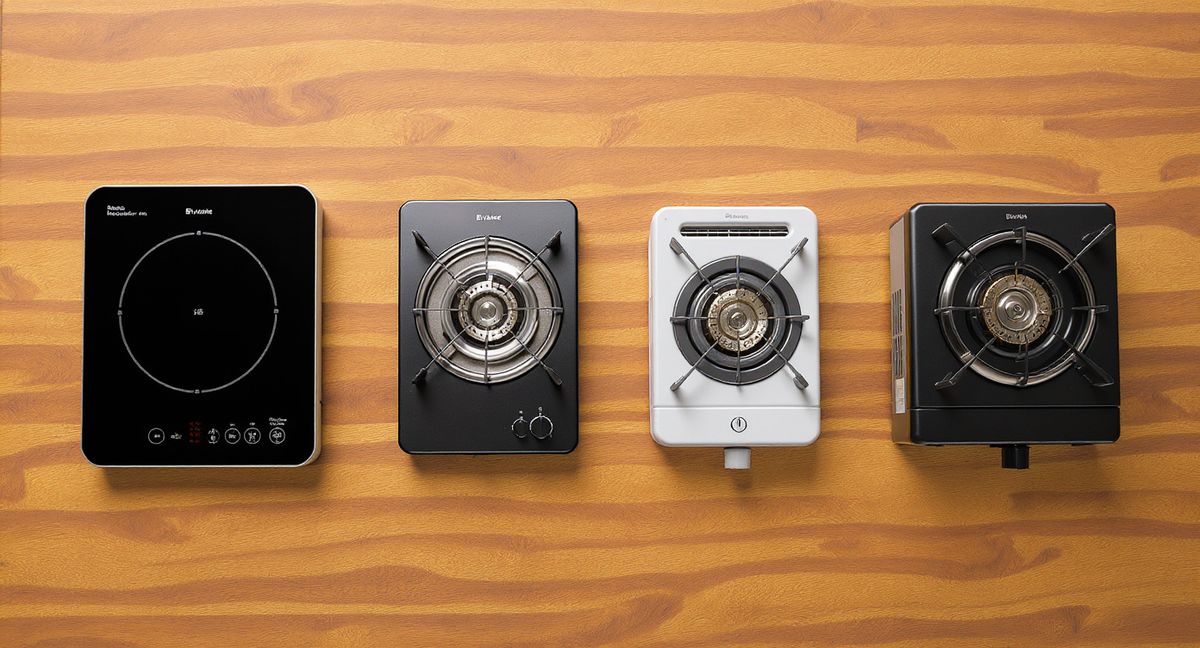
The Complete Van Life Cooktop Guide (2026)
Every fuel type, every product tier, every trade-off — the definitive guide to choosing a portable cooktop for van life. Induction, butane, propane, multi-fuel, with 9 products compared.
The Complete Van Life Cookware Guide (2026)
Nesting sets, cast iron, stainless, titanium — the definitive guide to cookware for small-space van kitchens. 9 cooksets reviewed, plus the two-pan kit that covers every meal.