Jetboil Flash 1.0L Fast Boil System (FLMS3, Mountainscape)

- Model
- FLMS3 (Flash 1.0L)
- Volume
- 1.0 L pot with insulating cozy
- Output
- 5,300 BTU/h on a 100 g can (Jetboil)
- Boil Time
- 120 s per 0.5 L, can-life average (Jetboil)
- Fuel
- Jetboil JetPower isobutane-propane, EN417 (manual)
- Weight
- 13.1 oz (371 g) without stabilizer (Jetboil)
- Packed Size
- 4.25 x 7.5 in (Jetboil)
- Min Use Temp
- -4°F (manual)
- Clearance
- 1 m (3.3 ft) from combustibles and walls (manual)
Overview: who is this for?
The Jetboil Flash 1.0L is an integrated canister stove: burner, 1-litre insulated pot, lid and bottom cover designed as one system. The pot locks onto the burner, and a FluxRing heat exchanger on the pot's base captures more of the flame's heat than an open pot would. It's built for one job above all, boiling water quickly for coffee, tea, oatmeal and dehydrated meals, and everything packs inside the pot.
What the Amazon link sells: the listing this page links to is "Jetboil Flash 1.0L Fast Boil Stove for Camping & Backpacking, Mountainscape", model FLMS3. That's the current Flash 1.0L in the Mountainscape colour. Jetboil sells the same system in other colours (Carbon is FLCB3), and the specifications below apply to all of them. Fuel is sold separately.
Operating location: outdoors only. Jetboil's Flash 1.0L manual says, in its first danger box, "FOR OUTDOOR USE ONLY" and "USE ONLY IN WELL VENTILATED AREA". Its carbon monoxide warning says: "Never use this appliance in an enclosed space such as a camper, caravan, tent, car, mobile home, marine craft, or home." A van is a camper. Use it outside, away from the vehicle's doors and windows, and nothing about a roof fan, an open door or a CO alarm changes that.
Choose this if:
- Most of your hot food is boiled water: coffee, tea, instant oats, noodles, freeze-dried meals.
- You want one stove that works at camp and also goes in a daypack or backpack.
- You want the whole system, fuel can included, packed into one 1-litre pot.
Skip this if:
- You cook real meals in a pan. The Flash is a boiling system; frying, sautéing and simmering are not what it's for.
- You want to cook indoors. For an indoor option, look at induction such as the Duxtop 9100MC.
- You already own an open canister stove like the MSR PocketRocket 2 and a pot. You'd mostly be buying speed and convenience.
This is a research-based review. VanLifeKitchens doesn't test products hands-on. The specifications and location rule come from Jetboil's Flash 1.0L North America instruction manual and its product page. Anything about everyday use is labelled as owner reports.
Specifications and sources
| Spec | Figure | Source |
|---|---|---|
| Volume | 1.0 L pot with insulating cozy | Jetboil page |
| Weight | 13.1 oz (371 g), stabilizer extra 0.9 oz | Jetboil page |
| Packed size | 4.25 x 7.5 in | Jetboil page |
| Boil time | 120 s per 0.5 L, averaged over a can | Jetboil page |
| Water boiled | About 10 L per 100 g can | Jetboil page |
| Output | 5,300 BTU/h (1.5 kW) | Jetboil page |
| Gas consumption | 5,300 / 6,500 / 7,200 BTU/h on 100 / 230 / 450 g cans | Jetboil manual |
| Fuel | Jetboil JetPower isobutane-propane, EN417 | Jetboil manual |
| Minimum use temp | -4°F (-20°C) | Jetboil manual |
| Ignition | Turn-and-click rotary igniter | Jetboil page |
| Regulator | None | Jetboil page |
Jetboil's boil time and fuel figures are its own averages over the life of a can. Real numbers depend on wind, starting water temperature, altitude and how cold the canister is.
How it works
A normal canister stove puts a flame under a pot and lets a lot of the heat escape around the sides. The Flash's pot has a ring of corrugated metal fins on its base, the FluxRing, that sits close to the burner and soaks up more of that heat. The pot then locks to the burner with what Jetboil describes as three locking points and visual indicators, so the burner and pot behave as one unit. A neoprene-style cozy around the pot keeps the water hot after boiling and gives you somewhere to hold it.
There are two convenience touches worth knowing about. The cozy has a heat indicator that turns from black to orange when the contents are above about 149°F (65°C), according to Jetboil's manual. The bottom cover doubles as a measuring cup or a small bowl.
The trade-off is the flame. The Flash has no pressure regulator and a fairly narrow, intense flame designed for boiling. Jetboil sells a separate Pot Support so other cookware between 5 and 9 inches across can sit on the burner, and the manual warns never to use other cookware on the burner without that support. Even with it, the flame doesn't spread like a camp stove burner.
Outdoors-only: what the manual says
Jetboil's manual is unambiguous, and so is this review. The danger boxes say outdoor use only, use only in a well-ventilated area, and never use it in an enclosed space such as a camper, caravan, tent, car, mobile home, marine craft or home, because it can produce carbon monoxide, which has no odour and can kill.
Other placement rules from the same manual:
- Operate at least 1 m (3.3 ft) away from combustible materials, ignition sources and adjacent surfaces, including walls and ceilings.
- Don't obstruct the flow of combustion and ventilation air to the stove.
- Don't use third-party windscreens or an "outback oven". Jetboil says these can overheat the fuel canister, resulting in an explosion.
- Change fuel canisters outside and away from people and ignition sources.
- Perform leak checks outside, using soapy water, never a flame.
- Don't use it for boiling oil or deep frying.
For a van, that means a picnic table, a folding table or a flat rock outside, not the galley counter with the side door open. The GCI Slim-Fold Cook Station is one way to make an outdoor cooking spot. The van cooking safety guide covers why combustion ventilation is a different problem from steam and cooking smells.
Fuel, cold weather and altitude
The Flash runs only on threaded isobutane-propane canisters that meet EN417. Jetboil's manual names its own JetPower 100 g, 230 g and 450 g canisters and says fitting other types of cartridge may be hazardous. The 100 g can packs inside the pot with the burner; larger cans don't.
Jetboil lists a minimum use temperature of -4°F (-20°C). That's the limit it rates the stove to, not a promise of the advertised boil time in that cold. Canister pressure falls as the canister cools, and without a regulator, output falls with it. Owners commonly report slower boils on frosty mornings and a canister that gets colder as it empties. The manual also notes that in temperatures below freezing, the O-rings may not seal fully, resulting in a fuel leak, so check the connection with care in the cold.
What helps, within the manual's rules: keep the canister warm before use (in the van or a jacket, not near a flame or heater), shelter the stove from wind with your body or the vehicle rather than a third-party windscreen, and carry a fuller canister in winter. Jetboil's manual explicitly says don't use the stove to warm the fuel canister. Our cold-weather van cooking guide covers the wider options.
At altitude, the lower boiling point means water boils sooner, though canister stoves can also burn a little differently. Jetboil's manual says performance may be suboptimal in extreme conditions of cold, heat, wind or altitude.
How it fits a van kitchen
The Flash is a specialist. In a van it usually earns its space in one of three roles:
- The coffee stove. Boil 0.5 L outside in a couple of minutes for a pour-over or an AeroPress without setting up a full stove. Jetboil also sells a silicone coffee press accessory that fits the Flash pot.
- The trail stove. If you hike or backpack from the van, one Flash covers both camp mornings and the trail.
- The backup. If your main cooking is induction, a Flash outdoors keeps hot drinks and simple meals going when the battery is low, without taking the space of a two-burner stove.
What it doesn't replace is a camp stove for real cooking. If you fry eggs, sauté onions or make a pan sauce, you want a stove with a wider, steadier flame and a proper grate, such as the Coleman Triton+, or induction indoors. The cooktops buying guide sets out which stove suits which kind of cooking.
Care and maintenance
Jetboil's manual says to hand-wash the pot with soapy water only, with no dishwasher and no abrasives such as sand or salt. With limited water in a van, the easiest habit is to boil water only, so the pot rarely needs more than a rinse. If you cook oatmeal or noodles in it, add water, swirl and wipe soon after. Always disconnect the canister before packing and storing, let the stove cool fully, and store the stove indoors, cool and dry, as the manual says.
Check the flame each time: Jetboil says it should be blue with no yellow tipping at full output and shouldn't flash back into the burner or lift off it. If the igniter gets wet it may not spark; dry it, or light with a match or lighter as the manual describes.
Limitations
- Boiling, not cooking. The narrow flame and tall pot are made for water.
- No regulator. Output falls with canister pressure in cold weather and as the can empties.
- Outdoor use only. It doesn't belong inside the van at all.
- Proprietary fit. Other cookware needs Jetboil's Pot Support, and Jetboil warns against third-party windscreens.
- One litre. Two people can share a meal's worth of water, but a group needs more than one boil.
Verdict
The Jetboil Flash 1.0L is a well-designed answer to a narrow question: how to boil water outside the van as quickly and compactly as possible. Jetboil's published figures, a two-minute half-litre and about 10 litres per 100 g canister, are its headline. Its weakness is the same as its focus. It's an excellent boil system and a poor frying stove, and Jetboil's own manual limits it to outdoor use. If your mornings are coffee and your dinners are rehydrated, it's a strong pick. If you cook, pair it with a real stove or skip it. For the open-burner alternative, see the MSR PocketRocket 2; for a bigger Jetboil system with two burners, see the Jetboil Genesis Basecamp.
FAQ
Can I use the Jetboil Flash inside my van?
No. Jetboil's manual says it's for outdoor use only and never to use it in an enclosed space such as a camper, caravan, tent, car or mobile home, because it can produce carbon monoxide. Opening a door, running a roof fan or having a CO alarm doesn't change that instruction.
How fast does the Jetboil Flash boil water?
Jetboil rates it at 120 seconds per 0.5 litre, averaged over the life of a JetPower canister. Cold canisters, wind and cold starting water slow it down.
What fuel does the Jetboil Flash use?
Threaded isobutane-propane canisters to the EN417 standard. Jetboil's manual names its own JetPower 100 g, 230 g and 450 g canisters and says other types of cartridge may be hazardous.
Does the Jetboil Flash work in cold weather?
Jetboil lists a minimum use temperature of -4°F (-20°C). There's no regulator, so output drops as the canister gets cold. Keep the canister warm before use, and never use the stove to warm it.
Can I fry food on a Jetboil Flash?
Not well, and not in the Flash pot. Jetboil's manual says not to use it for boiling oil or deep frying. Other cookware needs Jetboil's Pot Support, and the flame is narrow, so a frying pan heats unevenly.
How much does the Jetboil Flash weigh?
Jetboil lists 13.1 oz (371 g) for the system without the fuel stabilizer, which adds 0.9 oz. It packs to 4.25 x 7.5 inches with a 100 g canister inside.
Sources and verification
- Jetboil Flash 1.0L Cooking System Instructions, North America edition (Johnson Outdoors): outdoor-only and CO danger statements, specifications (gas consumption, fuel, minimum temperatures), 1 m clearance, windscreen warning, canister rules, storage and maintenance. https://johnsonoutdoors.widen.net/content/jmxvvt7w4u/pdf/JB_productmanual_Flash_1.0L.pdf (checked 2026-10-11)
- Jetboil Flash 1.0L Fast Boil System product page: weight, packed size, boil time, water boiled per can, output, igniter, what's in the box, accessory compatibility. https://jetboil.johnsonoutdoors.com/us/shop/stoves-systems/flash-10l-fast-boil-system (checked 2026-10-11)
- Amazon US listing for ASIN B0DXQC9B14, the listing this review links to: title, model FLMS3, feature bullets and availability (checked 2026-10-11)
Compare with similar products
See how this stacks up against the other cooktops we've reviewed.
Related Reviews
 Outdoor use only
For: Compact two-burner outdoor cooking
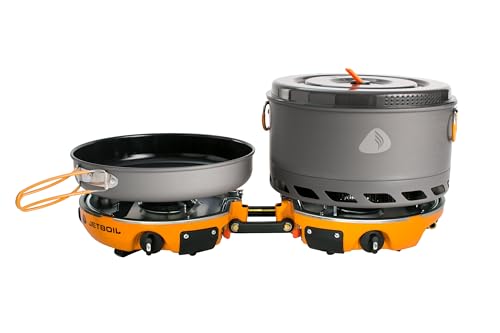
Jetboil Genesis Basecamp Two-Burner Stove System (GNSY, Orange)
A two-burner propane stove that folds and packs with its own 5 L pot and 10-inch fry pan into a 10.3 x 7.2-inch bag. Each burner is rated at 10,000 BTU/h with fine simmer control. It costs considerably more than suitcase-style stoves and, per Jetboil's manual, is for outdoor use only.
 Outdoor use only
For: High-output outdoor butane
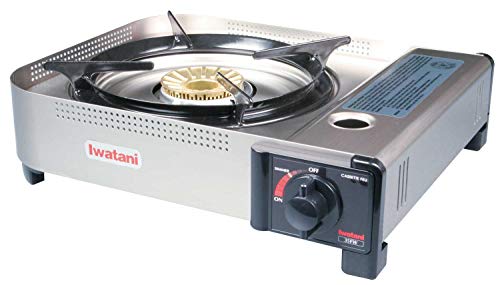
Iwatani 35FW Cassette Feu Portable Butane Stove, 15,000 BTU
Iwatani's 15,000 BTU/h butane cassette stove, CSA-listed as commercial foodservice equipment. The "Indoor & Outdoor" on the Amazon title means commercial restaurants: Iwatani's manual says never to use it in a camper, tent, car or home, so in a van it's an outdoor stove. Not for use below freezing.
For: Induction with a large inverter
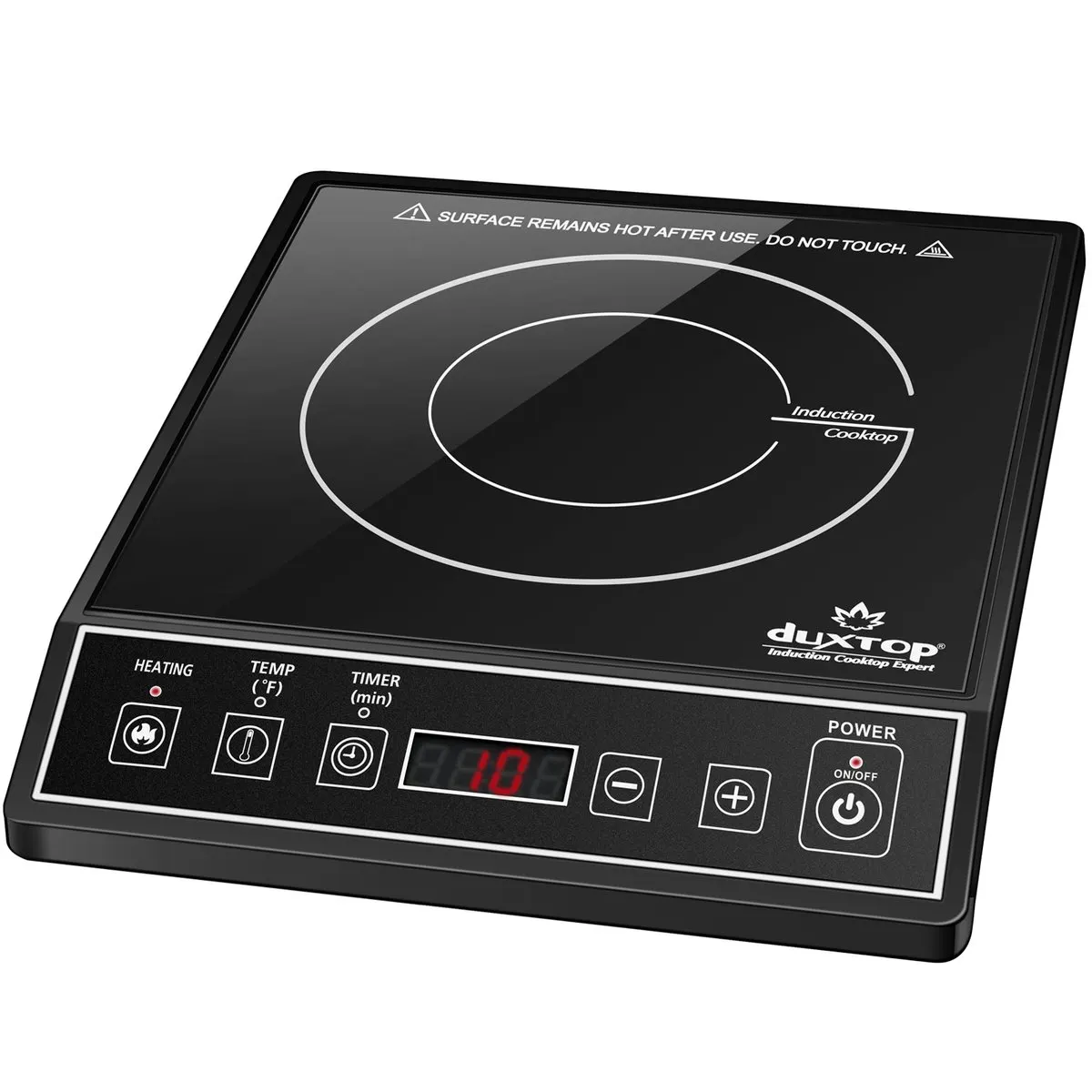
Duxtop 9100MC Portable Induction Cooktop
A budget induction hob with 1800W maximum output and 15 power levels. Induction puts heat straight into the pan, but at full power it needs a large inverter and battery bank, so check your system before you buy.