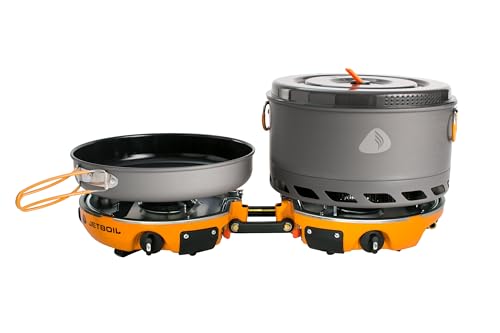
Jetboil Genesis Basecamp Two-Burner Stove System (GNSY, Orange)
- Model
- GNSY
- Burners
- 2 x 10,000 BTU/h (manual)
- Fuel
- Propane, 16.4 oz cylinders or certified bulk adapter (manual)
- Min Use Temp
- 0°F (manual); regulated to 20°F (Jetboil page)
- Weight
- 9 lb 1.6 oz, excl. regulator, windscreen, bag (Jetboil)
- Packed Size
- 10.3 x 7.2 in (Jetboil)
- Cooking Surface
- 20.5 x 9.8 in open (Jetboil)
- Clearance
- 1 m (3.3 ft) from combustibles (manual)
- Warranty
- 1-year limited (Jetboil)
Overview: who is this for?
The Jetboil Genesis Basecamp is a two-burner propane camp stove that folds in half and packs, with its own cookware, into a carry bag about the size of a large stockpot. It's the opposite approach to the classic suitcase-style two-burner. Instead of a wide steel box with lid-mounted wind panels, you get two compact 10,000 BTU/h burners, a clip-on windscreen, a 5-litre FluxRing pot and a 10-inch ceramic-coated frying pan, all designed to nest together.
What the Amazon link sells: the listing this page links to is "Jetboil Genesis Basecamp Camping & Overlanding Stove Cooking System, Orange", model GNSY. That's the full system: the Genesis stove, fuel regulator, windscreen, 5 L FluxRing pot with strainer lid, 10-inch fry pan and carry bag. Jetboil also sells the stove alone without the cookware, and a single-burner HalfGen, under different listings. Propane is sold separately.
Operating location: outdoors only. Jetboil's Genesis manual opens with a danger box: "ONLY USE OUTDOORS IN A WELL-VENTILATED AREA IN ORDER TO AVOID ENDANGERING YOUR LIFE". Its carbon monoxide warning says: "Never use this appliance in an enclosed space such as a camper, caravan, tent, car, mobile home, marine craft, or home." Cook with it outside the van. Ventilation inside a vehicle, a roof fan or a CO alarm doesn't make it acceptable indoors.
Choose this if:
- You cook real meals for two to five people outside the van and want two burners that pack small.
- Storage space matters more to you than having the cheapest two-burner stove.
- You want the cookware included and designed to nest with the stove.
Skip this if:
- You want to cook inside the van. No propane camp stove is for that. Look at induction, such as the Duxtop 9620LS.
- Your priority is maximum output for big pots and woks. The Camp Chef Everest 2X is rated at 20,000 BTU/h per burner.
- Budget is the main constraint. A suitcase-style stove like the Coleman Triton+ costs considerably less.
This is a research-based review. VanLifeKitchens doesn't test products hands-on. The specifications and location rule come from Jetboil's Genesis cooking stove instruction manual and the Genesis Basecamp System product page. Anything about everyday use is labelled as owner reports.
Specifications and sources
| Spec | Figure | Source |
|---|---|---|
| Burners | 2, each 10,000 BTU/h | Jetboil manual and page |
| Fuel | Propane, 16.4 oz cylinders or certified bulk-tank hose adapter | Jetboil manual |
| Regulator | Yes, included | Jetboil page |
| Minimum use temp | 0°F (-20°C) | Jetboil manual |
| Weight | 9 lb 1.6 oz (4.1 kg) system, excluding regulator, windscreen and bag | Jetboil page |
| Packed size | 10.3 x 7.2 in | Jetboil page |
| Open cooking surface | 20.5 x 9.8 in | Jetboil page |
| Boil time | 3 min 15 s per litre in the 5 L pot, averaged over a 1 lb bottle | Jetboil page |
| Water boiled | 48 L per 1 lb propane bottle | Jetboil page |
| Ignition | Lever igniter | Jetboil manual |
| Expansion | JetLink fuel output port | Jetboil manual |
| Warranty | One-year limited | Jetboil page |
One spec needs a note. Jetboil's product page says the stove is regulated for consistent performance down to 20°F (-6°C), while the manual's specification lists a minimum use temperature of 0°F (-20°C). The 20°F figure is the one to plan around for normal cooking performance; the 0°F figure is the rated operating limit.
How it's built
The Genesis is two burner halves hinged together. Closed, the halves latch with rubber latches; open, they sit side by side on a flat surface to make a 20.5 x 9.8-inch cooking area. The fuel regulator threads into a port at the rear of the left side, and a 16.4 oz propane cylinder threads into the regulator. Jetboil's manual also allows bulk-tank hose adapters certified to ANSI Z21.81 / CSA 6.25, following the adapter maker's instructions.
Each burner has its own control valve. Jetboil describes "Simmer Control" that takes four full rotations from closed to full gas flow, which gives fine control at the bottom of the range. Owners commonly say this is the stove's best feature compared with suitcase stoves, where low settings can be touchy. A lever igniter lights either burner.
The windscreen clips into four bumpers at the back and sides. Jetboil's manual asks for at least a 1-inch gap between the windscreen and any cookware, and says not to use any windscreen other than the one supplied, or an outback oven, because they can overheat the fuel canister and cause an explosion.
The right-hand half has a JetLink output port. That lets you link other JetLink-compatible stoves or Jetboil's Luna Satellite Burner from the same fuel supply. Jetboil's manual warns against using stoves or accessories that aren't certified as JetLink-compatible.
The included cookware
The 5-litre FluxRing pot has finned heat-exchanger rings on its base, like the smaller Jetboil systems, and a strainer lid. The 10-inch fry pan is ceramic-coated nonstick. Jetboil's manual says not to heat the 5 L pot empty, not to use it for boiling oil or deep frying, and to hand-wash all the cookware with soapy water: no dishwasher, no abrasives.
Ceramic nonstick is easy to clean with little water, which helps in a van, but it's more delicate than cast iron or stainless and wears with metal utensils and high heat. Use silicone or wooden utensils, and don't preheat the pan empty on full. Our van cookware materials guide covers the trade-offs.
Outdoors-only: what the manual says
Beyond the outdoor-only and CO statements above, Jetboil's Genesis manual says to:
- operate at least 1 m (3.3 ft) away from combustible materials and ignition sources;
- not obstruct the flow of combustion and ventilation air to the stove;
- perform leak checks outside with soapy water, never a flame;
- change gas canisters in a well-ventilated location away from ignition sources and other people;
- never install or use the fuel cylinder upside down;
- never move, lift or tilt the stove with a burner lit;
- disconnect the 16.4 oz cylinder or the bulk-tank adapter from the regulator after every use, and before storage.
In practice that means cooking on a table outside the van, away from the doors and awning edges, and keeping propane cylinders stored in a ventilated spot rather than loose in the living area. The van cooking safety guide and the van kitchen ventilation guide explain the difference between combustion ventilation and ordinary cooking ventilation.
Fuel use and cold weather
Jetboil rates each burner at 10,000 BTU/h. A 16.4 oz propane cylinder holds roughly 21,000–22,000 BTU of fuel by general propane figures, so running both burners flat out would empty one in a little over an hour; one burner on full would take a little over two hours. Those are our estimates from the rating. Real cooking alternates between high and low, and Jetboil's own figure, 48 litres of water boiled per 1 lb bottle, reflects the pot's efficiency.
Propane handles cold far better than butane, and the regulator helps the Genesis hold its output as the cylinder cools and empties. That's why Jetboil can rate it for consistent performance to 20°F. For winter trips, it's a stronger choice than any butane cassette stove. See the cold-weather van cooking guide for more.
For a larger supply, a bulk-tank hose adapter lets you run it from a refillable tank. Use one certified to the standard Jetboil names, connect it outdoors, and follow both makers' instructions. A fixed propane system plumbed into a van is a different matter: that should be designed and installed to code, by a qualified RV gas technician where codes or insurers require one.
How it fits a van kitchen
The Genesis Basecamp's strengths are packability and control. Packed, it's about 10.3 by 7.2 inches with the cookware inside, while suitcase-style two-burners are typically more than 20 inches long. In a van where every cubic inch is spoken for, that difference can decide whether a two-burner stove comes along at all.
It suits people who cook proper meals outside: breakfast for a group, pasta and sauce, or a big pot of chili. With four turns of simmer control, it's better suited than most camp stoves to the gentle end of cooking. The 20.5-inch open width fits a 10-inch pan and the 5-litre pot side by side.
What it doesn't offer is very high output. At 10,000 BTU/h per burner, it's below the 11,000 per burner of the Coleman Triton+ and well below the 20,000 of the Camp Chef Everest 2X. For searing big batches or bringing a large stockpot to the boil quickly, those suitcase stoves have more heat. Our cooktops buying guide and the induction vs butane vs propane guide compare the options.
Limitations
- Outdoor use only. As with every propane camp stove on this site.
- Premium price. It sits at the top of the camp-stove range, partly because the cookware is included.
- Moderate output. 10,000 BTU/h per burner is fine for most cooking but not the most powerful option.
- Hand-wash cookware. No dishwasher, no abrasives, and the ceramic coating needs gentle utensils.
- One-year warranty. Shorter than some competitors.
Verdict
The Jetboil Genesis Basecamp is the most compact way on this site to carry a two-burner propane stove and matching cookware. Its simmer control and regulated burners make it a capable outdoor cooking stove, and the whole system packs into a bag about the size of the pot. You pay a premium for that packability, and you give up some raw output against suitcase stoves. Like every fuel-burning stove we cover, Jetboil limits it to outdoor use. If space is your tightest constraint and you cook proper meals outside, it's a strong choice. If budget or maximum heat matter more, the Coleman Triton+ or the Camp Chef Everest 2X fit better. For a smaller Jetboil that only boils water, see the Jetboil Flash.
FAQ
Can I use the Jetboil Genesis inside a van?
No. Jetboil's manual says "ONLY USE OUTDOORS IN A WELL-VENTILATED AREA" and never to use it in an enclosed space such as a camper, caravan, tent, car or mobile home, because it can produce carbon monoxide. A roof fan, open door or CO alarm doesn't change that.
What fuel does the Jetboil Genesis use?
Propane. Jetboil's manual specifies 16.4 oz disposable propane cylinders or a bulk-tank hose adapter certified to ANSI Z21.81 / CSA 6.25, both sold separately. It doesn't run on isobutane canisters or butane cassettes.
How powerful is the Jetboil Genesis Basecamp?
Jetboil rates each of its two burners at 10,000 BTU/h and quotes a boil time of 3 minutes 15 seconds per litre in the included 5 L pot, averaged over a 1 lb bottle.
How small does the Jetboil Genesis pack?
Jetboil lists the packed system at 10.3 x 7.2 inches and 9 lb 1.6 oz, excluding the regulator, windscreen and carry bag. Open, the cooking surface is 20.5 x 9.8 inches.
Does the Jetboil Genesis work in cold weather?
Better than butane stoves do. Jetboil's product page says it's regulated for consistent performance down to 20°F, and the manual lists a minimum use temperature of 0°F.
Can I connect other stoves to the Jetboil Genesis?
Yes, through its JetLink output port, using JetLink-compatible stoves or accessories from Jetboil or Eureka!. Jetboil's manual warns against using anything that isn't certified as JetLink-compatible.
Sources and verification
- Jetboil Genesis Cooking Stove Instructions, North America edition (Johnson Outdoors): outdoor-only and CO danger statements, fuel and adapter specification, jet size, gas consumption per burner, minimum use and storage temperatures, 1 m clearance, windscreen and canister rules, JetLink, cleaning and storage. https://johnsonoutdoors.widen.net/content/b54gfbudnd/pdf/JB_productmanual_Genesis.pdf (checked 2026-10-11)
- Jetboil Genesis Basecamp System product page: weight, packed and open dimensions, boil time, water boiled per bottle, what's in the box, regulated-to-20°F claim, one-year limited warranty. https://jetboil.johnsonoutdoors.com/us/shop/stoves-systems/genesis-basecamp-system (checked 2026-10-11)
- Amazon US listing for ASIN B019GPHR64, the listing this review links to: title, model GNSY, kit contents and availability (checked 2026-10-11)
Compare with similar products
See how this stacks up against the other cooktops we've reviewed.
Related Reviews
 Outdoor use only
For: High-output outdoor butane
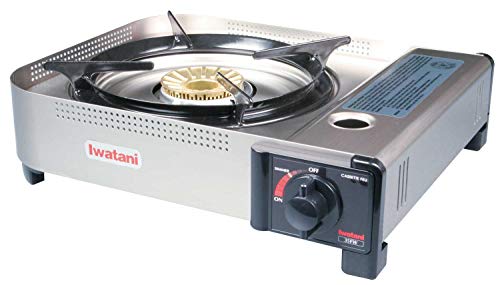
Iwatani 35FW Cassette Feu Portable Butane Stove, 15,000 BTU
Iwatani's 15,000 BTU/h butane cassette stove, CSA-listed as commercial foodservice equipment. The "Indoor & Outdoor" on the Amazon title means commercial restaurants: Iwatani's manual says never to use it in a camper, tent, car or home, so in a van it's an outdoor stove. Not for use below freezing.
For: Induction with a large inverter
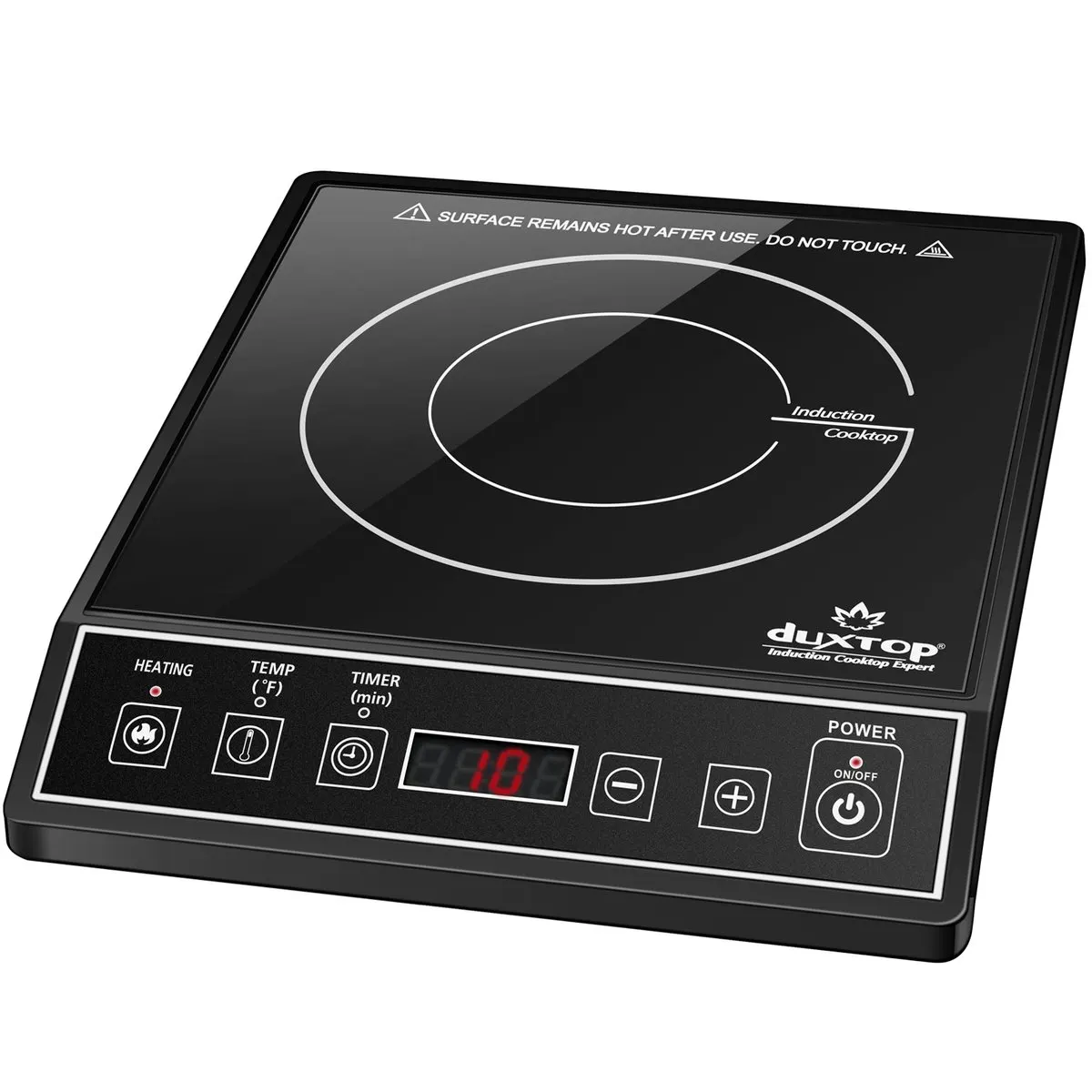
Duxtop 9100MC Portable Induction Cooktop
A budget induction hob with 1800W maximum output and 15 power levels. Induction puts heat straight into the pan, but at full power it needs a large inverter and battery bank, so check your system before you buy.
 Outdoor use only
For: Backup butane burner (outdoors)
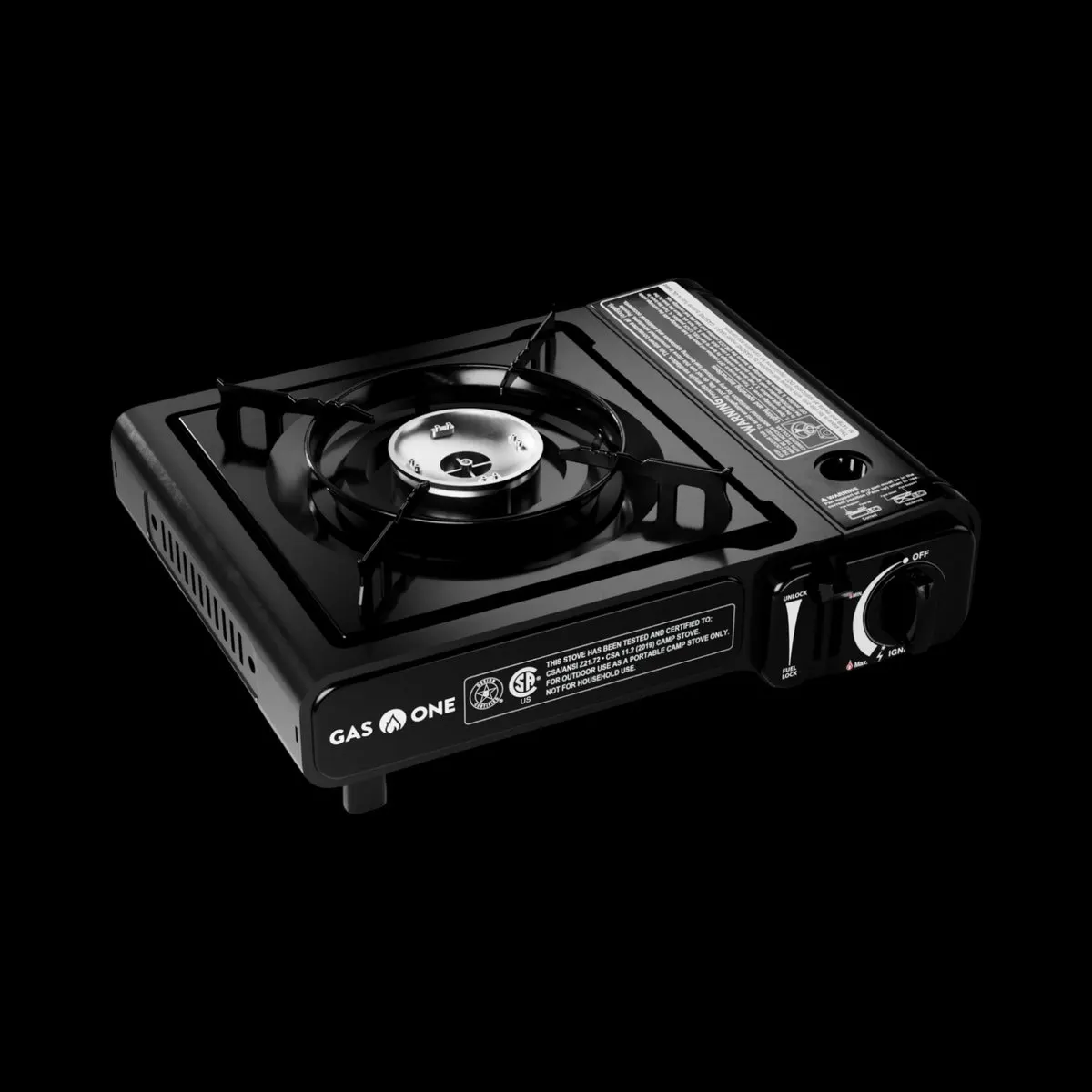
Gas One GS-1000G Portable Butane Stove
A budget single-burner butane stove for a backup or outdoor second burner. No electricity, piezo ignition with a safety shut-off and a carry case. The listing and Gas One label it for outdoor use only, so cook with it outside the van.