AeroPress Original Coffee Maker vs Hario V60 02 Ceramic Dripper
Plastic plunger vs ceramic dripper. Two common pour-over-adjacent methods for van kitchens, and which one survives the actual conditions.
Disclosure: As an Amazon Associate I earn from qualifying purchases. Links to Amazon on this page are affiliate links: if you buy through one, VanLifeKitchens.com may earn a commission at no extra cost to you. Read our affiliate disclosure.
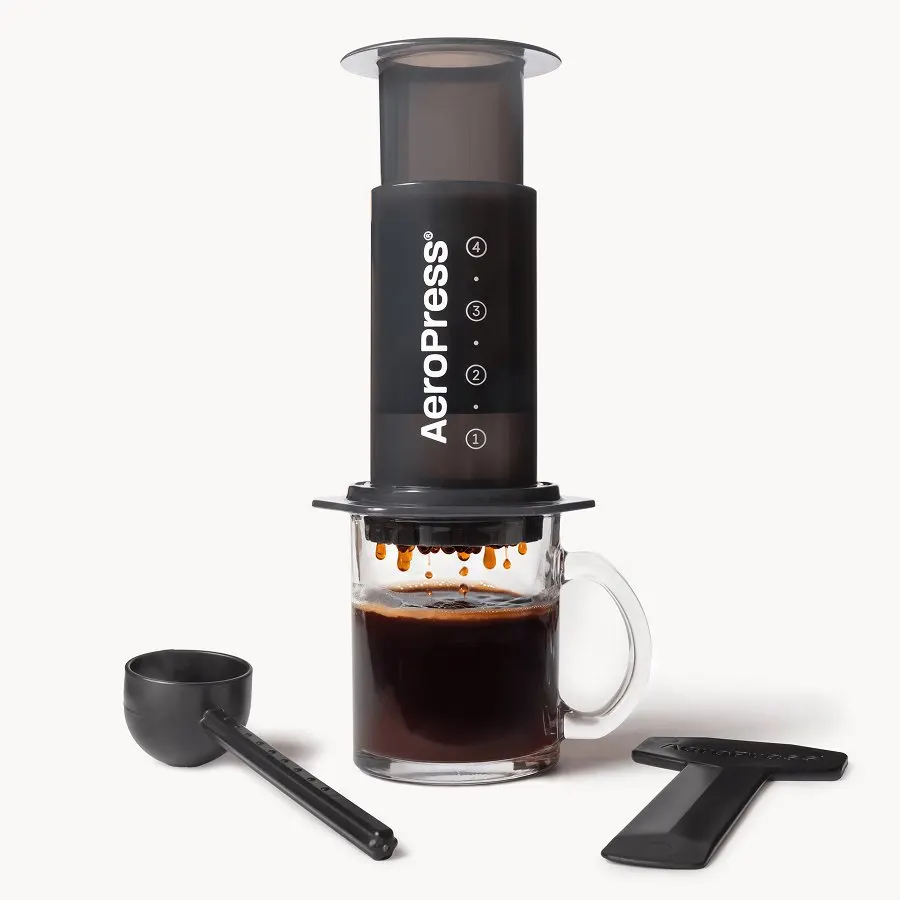
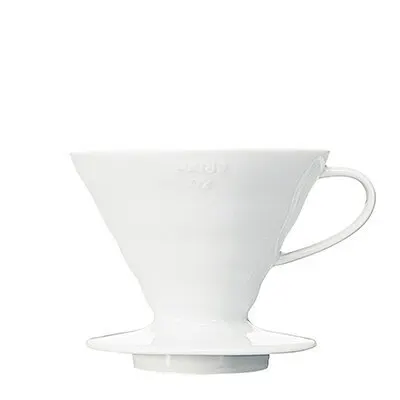
We recommend the AeroPress Original Coffee Maker
“The AeroPress wins for van life because its plastic body has no glass to break, it's forgiving of technique, and it cleans with a quick rinse. The Hario V60 can make a cleaner, brighter cup when you're dialed in, but ceramic can crack if it's dropped, the paper filters need a drawer slot, and the technique is unforgiving when you're making coffee before dawn in a cold van. Pick the V60 for taste ceiling; pick the AeroPress for daily reliability.”
Read the full AeroPress Original Coffee Maker reviewSpecifications
| Spec | AeroPress Original Coffee Maker | Hario V60 02 Ceramic Coffee Dripper |
|---|---|---|
| Best for | One-cup travel coffee | Pour-over with a gooseneck kettle |
| Capacity | 10 oz, 1-2 cups (AeroPress) | 1-4 cups (Hario) |
| Weight | 7.75 oz full set; 6.5 oz travel set (AeroPress) | About 400 g / 14 oz (Amazon) |
| Size | 5.25 in H x 4.2 in W (AeroPress) | 140 x 120 x 102 mm (Hario Europe) |
| Materials | Polypropylene, BPA free (AeroPress) | — |
| Filters | Paper micro-filters, 50 included (Amazon listing) | — |
| Warranty | 1 year (AeroPress) | — |
| Model | — | VDCR-02-R, red (Amazon) |
| Material | — | Porcelain, Arita ware (Amazon, Hario) |
| Cone Angle | — | 60 degrees |
| Filter | — | Hario V60 02 paper, sold separately |
AeroPress Original Coffee Maker
- Brews in a minute or two, quick rinse cleanup
- Plastic body, no glass to break
- Forgiving of grind and technique
- Fits in a glove box
- One mug (10 oz) per brew
- Paper filters need restocking
Hario V60 02 Ceramic Coffee Dripper
- 60° cone with spiral ribs and one large hole
- Ceramic retains heat through the brew
- Brews 1-4 cups
- Made in Japan
- Ceramic can crack if dropped
- Requires a gooseneck kettle for best results
The short answer
For most van kitchens the AeroPress Original is the better buy. Its polypropylene body has no glass or ceramic to break, so it copes with drawers, bins and washboard roads. It makes a good cup with grocery-store pre-ground coffee and a regular kettle, and cleanup is one push of the plunger and a quick rinse. If you want one coffee method that works every morning, buy the AeroPress. Our AeroPress Original review covers it in full.
The Hario V60 02 Ceramic is for people who care most about flavor and are willing to set up for it. With fresh beans, a burr grinder, a scale and a gooseneck kettle, it can brew a cleaner and more transparent cup than the AeroPress. Hario rates it for one to four cups, so it suits couples. The catch is that porcelain chips or breaks if dropped, and the technique leaves little room for error. Read the Hario V60 02 ceramic review before you commit.
Both brewers sit at the budget end of the site's coffee gear, so this isn't a price decision. It comes down to reliability versus taste ceiling. For the full van coffee picture, from grinders to kettles, see the van life coffee guide.
This comparison is research-based. VanLifeKitchens doesn't test products hands-on; figures below come from AeroPress, Hario and the Amazon listings the review pages link to, as cited in each review.
Side by side
| Spec | AeroPress Original | Hario V60 02 Ceramic |
|---|---|---|
| Capacity | 10 oz, 1-2 cups | 1-4 cups |
| Weight | 7.75 oz full set | About 400 g (14 oz) |
| Size | 5.25 in tall x 4.2 in wide | 140 x 120 x 102 mm |
| Material | Polypropylene, BPA free | Porcelain (Arita ware) |
| Warranty | 1 year | Not stated in cited sources |
The AeroPress figures are AeroPress's own. The V60 size is Hario Europe's; its weight is the Amazon listing's figure for the dripper, and Hario Europe gives about 400 g boxed. The listings the review pages link to are the AeroPress Original, model 85A01 (ASIN B0047BIWSK), and the red V60 02 ceramic, model VDCR-02-R (ASIN B0BWH3K9Z9).
Durability and storage on rough roads
This dimension decides the matchup for most people. The AeroPress is BPA-free polypropylene with no glass, ceramic or threaded metal parts, and AeroPress's Amazon listing calls it shatterproof. The realistic risks are crushing it under heavy gear or wearing out the silicone plunger seal, which is the only routine wear part. AeroPress sells replacement seals and advises storing the brewer with the seal pushed all the way through the chamber so it doesn't take a set. Keep it in a drawer or bin rather than under a cast-iron pan. At 5.25 x 4.2 inches and 7.75 oz for the full set, it fits a utensil drawer or a door pocket.
The ceramic V60 is the opposite. It has no seals or moving parts, so the only thing that ends its life is an impact, and a moving van drops things. It needs padded or fixed storage away from heavy cookware: a drawer-divider slot, a foam cut-out or a soft pouch. It's also heavier, at about 400 g, roughly twice the AeroPress full set, and its rigid cone shape doesn't nest with anything else in the site's coffee lineup. The V60 review suggests that people whose gear rides loose in a crate consider a plastic V60 or the AeroPress instead. A plastic V60 is lighter and much harder to break, but it isn't the product compared here.
Edge: AeroPress. Its plastic body has no glass or ceramic to break and is hard to damage in normal use, while the ceramic V60 needs to be stored like glassware.
Cup quality and taste ceiling
This is where the V60 earns its place. The 60-degree cone builds a deep coffee bed. The spiral ribs hold the paper off the wall so air can escape during the bloom, and the single large hole leaves flow rate up to your pour and grind. With a steady pour and good beans, you get a clean, light-bodied cup that's often described as tea-like, with fruity or floral notes in a light roast showing more clearly than through an immersion brewer. The ceramic body also has more thermal mass than plastic, so if you preheat it with the filter rinse it loses less heat during the first pours.
The AeroPress makes consistently good coffee rather than the most detailed coffee. Its paper micro-filter catches most oils and fines, so the cup is clean and fairly light-bodied, with less sediment than a French press. It holds up with stale beans, pre-ground coffee and imperfect water temperature, because immersion followed by pressing is less sensitive to pouring technique than a pour-over cone. The V60 review notes that the clarity advantage shrinks with medium and dark roasts. If you mostly drink darker beans, the gap gets smaller.
Edge: Hario V60, for its taste ceiling. The AeroPress has the higher floor, but the V60 has the higher ceiling.
Technique, gear and the cold-morning routine
The AeroPress routine is simple: filter in the cap, a rinse, one scoop of medium-fine coffee (the grind AeroPress recommends), hot water, a brief stir, then a steady press. AeroPress's listing says to wait about 30 seconds before pressing, and AeroPress says you can brew and clean in about two minutes. You don't need a scale or a gooseneck, and the method is forgiving.
Skip the inverted method you'll see in many online recipes. AeroPress strongly discourages it, warning that an upturned brewer is less stable and can tip over and cause burns from hot liquid. On a van counter that may not be level, that matters more. If you want a longer steep, the AeroPress review suggests setting the plunger loosely in place right after pouring to slow the drip, with the brewer upright.
A V60 brew takes about three to three and a half minutes. The V60 review's starting recipe is 15 g of coffee to 250 g of water: rinse the filter, bloom with about 30 g of water for 30 seconds, then pour the rest in two or three slow spirals. The review is blunt about the gear: you need a gooseneck kettle and a scale, and ideally a burr grinder. Without them, a V60 often makes worse coffee than an AeroPress. The dripper is cheap, but the full setup takes extra counter space and storage. In a cold van before dawn, a method that punishes sloppy pouring is a real cost.
Edge: AeroPress. It's faster, forgiving and needs no extra gear.
Water use and cleanup
Fresh and grey water are limited in a van, so cleanup matters. To clean the AeroPress, you unscrew the cap and push the spent grounds and filter out as one compact puck into the trash or compost. AeroPress says a simple rinse is enough for daily use, because the plunger wipes the chamber as it travels. The AeroPress review estimates a careful rinse of the seal and cap at about 100 to 200 ml. AeroPress also lists it as top-rack dishwasher safe, which helps between trips at home.
The V60 is easier to clean than a French press but still more work than the AeroPress. You discard a soggy filter cone and rinse the dripper, and you also pour extra hot water through the paper before every brew to warm the ceramic and remove paper taste. That's more water to heat and more water going into the grey tank. The V60 review also advises letting the dripper dry before storing it, so a closed drawer doesn't trap moisture.
Edge: AeroPress. Less water in, less water out, and less mess.
Batch size: solo or couple
AeroPress rates the Original at 10 oz, which it describes as one to two cups. That's one full mug, or a stronger concentrate you can top up with hot water. For two full mugs, you brew twice back to back, which the AeroPress review puts at about two extra minutes with a rinse in between. It's workable, but it's a repeat job.
Hario rates the V60 02 for one to four cups in a single pour-over. If two of you drink coffee every morning, one V60 brew can fill both mugs. Just remember that a bigger brew means a longer pour and a bigger dose, so you'll need a grinder that holds enough beans or two grinds.
Edge: Hario V60. It's the better pick if you regularly brew for more than one person.
Filters and consumables
Both use paper. The AeroPress uses one paper micro-filter per brew. The Amazon listing says this package includes 50 filters; AeroPress's own page doesn't give a number. At one a day, that's about seven weeks before you need a replacement pack. Third-party reusable metal discs exist if you'd rather not carry paper. The V60 needs Hario's V60 02 papers, sold separately. Common #2 and #4 cone filters are a flat-bottomed wedge shape rather than a true cone, and they tend to fold or sit unevenly in the V60. That's one more specific item to restock, and the cone-shaped papers take up a drawer slot.
Neither method needs electricity, but both need a way to heat water. A stovetop kettle such as the Hario V60 Buono gooseneck works on gas, electric and induction hobs with no inverter. The Bonavita electric gooseneck gives exact temperature control but needs 120 V AC at 1200 W, which means shore power or a large inverter. If you heat water on a butane or canister stove, follow its manual on where it can be used. Many, including the Jetboil Flash, are labelled for outdoor use only, so heat the water outside and brew inside.
Edge: AeroPress. Its filters are small and you can switch to a reusable metal disc. The V60 needs its own specific papers.
Value
Both the AeroPress Original and the Hario V60 02 Ceramic sit at the budget end of the site's coffee gear, so the sticker price is close to irrelevant here. Check current prices with the "Check price on Amazon" buttons on each review page. The real cost difference is the gear around the brewer. The AeroPress works fine with the kettle you already own. The V60 is only worth buying if you also own, or plan to buy, a gooseneck kettle, a scale and a burr grinder. Both reward fresh grounds, so a grinder like the 1Zpresso Q Air, which 1Zpresso says nests inside the AeroPress plunger, is the better place to spend extra money with either brewer.
AeroPress gives the Original a 1-year warranty, and its main wear part is a seal it sells as a spare. The V60 has no parts to wear out, but it can't be repaired once it cracks.
Which one should you buy?
- Buy the AeroPress if you want one brewer that works every single morning with whatever beans and kettle you have.
- Buy the AeroPress if your coffee gear rides in a drawer or bin with other kit on rough roads.
- Buy the AeroPress if you're watching your fresh and grey water closely.
- Buy the AeroPress if you brew for one person and value speed over ritual.
- Buy the V60 if you already own a gooseneck kettle, a scale and a burr grinder.
- Buy the V60 if you buy light-roast single-origin beans and want to taste what the roaster intended.
- Buy the V60 if you regularly brew two to four cups at once.
- Buy the V60 if you have padded or fixed storage for the ceramic, or you're mostly parked for long stretches.
FAQ
Is the AeroPress or the V60 better for van life? For most van dwellers, the AeroPress. Its plastic body has no glass or ceramic to break, it's forgiving of technique, uses very little cleanup water and fits a utensil drawer. The V60 is better on taste if you have the extra gear and storage for it.
Does the Hario V60 make better coffee than the AeroPress? With good beans and good technique, it can. The V60 gives a cleaner, more transparent cup with more distinct flavor notes, especially with light roasts. With pre-ground or older beans and a regular kettle, the AeroPress usually makes the better cup because it's more forgiving.
Do I need a gooseneck kettle for the V60? For good results, yes. A regular kettle pours too fast and too wide to control the flow. The AeroPress doesn't need a gooseneck, a scale or a timer.
Can the AeroPress brew for two people? AeroPress rates it at 10 oz, one to two cups. For two full mugs, brew two cycles back to back, which adds a couple of minutes. Hario rates the V60 02 for one to four cups in a single pour.
Will a ceramic V60 survive in a van? It can if you store it padded or in a fixed spot away from heavy cookware, but porcelain chips or cracks if dropped. If breakage worries you, a plastic V60 or the AeroPress is the safer choice.
Is the inverted AeroPress method a good idea in a van? No. AeroPress strongly discourages it because the upturned brewer is less stable and can tip over and spill hot liquid, which is more likely on a counter that isn't level. Use the standard upright method.
Sources and verification
- AeroPress Original review: specs and sources for the AeroPress Original, including AeroPress's product page and the Amazon listing (checked 2026-10-12)
- Hario V60 02 ceramic review: specs and sources for the V60 02 ceramic, including Hario Europe, Hario UK and the Amazon listing (checked 2026-10-12)
- https://aeropress.com/product/aeropress: cited in the AeroPress review for capacity, weight, dimensions, material, warranty, dishwasher safety and the inverted-method warning (checked 2026-10-12 in that review)
- https://www.hario-europe.com/products/v60-ceramic-colour-drippers-02: cited in the V60 review for capacity, dimensions, boxed weight and material (checked 2026-10-12 in that review)