de Buyer Mineral B 10.25" Pan vs Lodge 10.25" Cast Iron Skillet
Two bare-metal 10.25-inch pans that their makers list for induction: French carbon steel against American cast iron. Heat response, heat retention, cooking surface and oven use separate them. Both need the same dry-and-oil care.
Disclosure: As an Amazon Associate I earn from qualifying purchases. Links to Amazon on this page are affiliate links: if you buy through one, VanLifeKitchens.com may earn a commission at no extra cost to you. Read our affiliate disclosure.

de Buyer MINERAL B Classic Carbon Steel Fry Pan, 10.25 in (5610.26)
For: Induction searing, quicker response
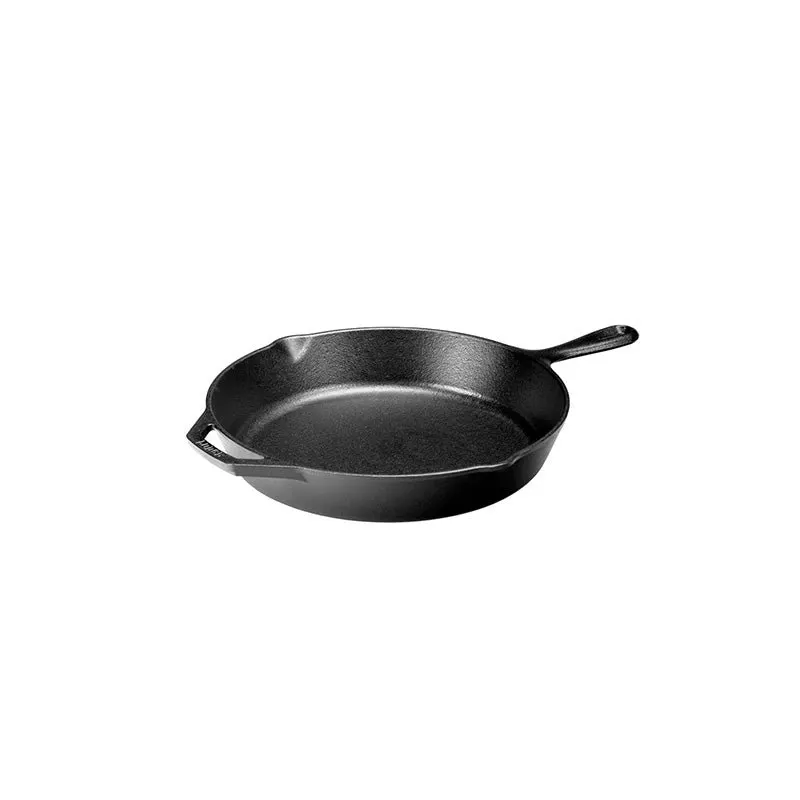
We recommend the Lodge L8SK3 10.25-inch Cast Iron Skillet
“The Lodge L8SK3 is the better first pan for most van cooks. It costs much less, arrives pre-seasoned, has about 8 inches of cooking surface against the de Buyer's 7.3, holds more heat for searing on weak burners, and Lodge lists it for the oven, grill and campfire. The de Buyer Mineral B 5610.26 suits cooks who use induction every day. Its 3 mm carbon steel heats and cools much faster, and it's about 1.1 to 1.5 lb lighter, but it has to be seasoned before use and de Buyer limits it to flash oven use.”
Read the full Lodge L8SK3 10.25-inch Cast Iron Skillet reviewSpecifications
| Spec | de Buyer MINERAL B Classic Carbon Steel Fry Pan, 10.25 in (5610.26) | Lodge L8SK3 10.25-inch Cast Iron Skillet |
|---|---|---|
| Best for | Induction searing, quicker response | Searing on any cooktop |
| Model | 5610.26 (Mineral B Classic, 10.25 in) | — |
| Cooking Surface | 7.3 in | 8 in |
| Thickness | 3 mm carbon steel | — |
| Weight | 4.2 lb (de Buyer USA) | 5.66 lb (Lodge product page; catalog lists 5.34 lb) |
| Handle | Epoxy-coated steel, riveted | — |
| Heat Sources | Electric, gas, induction, ceramic | — |
| Oven | Flash use only: 400°F max, under 10 minutes | — |
| Care | Hand wash, dry, oil lightly; no dishwasher | — |
| Made In | France | — |
| Diameter | — | 10.25 in |
| Materials | — | Cast iron, pre-seasoned |
| Compatibility | — | Gas / induction / electric / oven / fire |
| Warranty | — | Lifetime |
de Buyer MINERAL B Classic Carbon Steel Fry Pan, 10.25 in (5610.26)
- Induction, gas, electric and ceramic (de Buyer)
- No synthetic coating; release improves with seasoning
- Heats and cools faster than cast iron
- Made in France; riveted steel handle
- Must be seasoned, dried and oiled; rusts if left wet
- Oven use limited to 400°F for under 10 min
- Cooking surface only 7.3 in on a 10.25 in pan
Lodge L8SK3 10.25-inch Cast Iron Skillet
- No coating to chip or wear off
- Pre-seasoned, ready to cook
- Works on induction, gas, propane, fire
- Budget-tier price; commonly lasts decades with care
- Heavy (about 5.5 lb)
- Needs proper care (dry immediately, oil lightly)
The short answer
de Buyer Mineral B vs Lodge L8SK3 for a van kitchen: this page compares two bare-metal frying pans of the same 10.25-inch rim size. The de Buyer MINERAL B Classic 5610.26 is 3 mm carbon steel, made in France. The Lodge L8SK3 is pre-seasoned cast iron, made in the USA. Both are listed for induction by their makers, both have no synthetic coating, and both need drying and oiling after every wash.
For most van cooks, the Lodge L8SK3 is still the better first pan. It's a budget pan, it arrives pre-seasoned so it's ready to cook on, it has more cooking surface (about 8 inches against the de Buyer's 7.3), it holds more heat for searing on a weak burner, and Lodge lists it for the oven, grill and campfire as well as any stovetop. Our Lodge cast iron skillet review explains why it's the pan most van kitchens should own first.
Choose the de Buyer Mineral B if you cook mostly on induction and want faster heat changes. At 3 mm thick, carbon steel heats and cools faster than cast iron, so you can go from a hard sear to a gentle pan sauce without waiting. It's lighter than the Lodge: de Buyer lists 4.2 lb against the 5.34 to 5.66 lb Lodge figures in our review. But it starts bare, needs seasoning before eggs release well, costs considerably more, and de Buyer limits it to short oven use. See our de Buyer Mineral B review.
This comparison is research-based. VanLifeKitchens doesn't test products hands-on. Figures come from de Buyer USA's and Lodge's product pages, and from our existing Lodge review where noted.
At a glance
| Spec | de Buyer 5610.26 | Lodge L8SK3 |
|---|---|---|
| Material | 3 mm carbon steel | Cast iron |
| Rim / cooking surface | 10.25 in / 7.3 in | 10.25 in / about 8 in |
| Weight | 4.2 lb | 5.34–5.66 lb |
| Out of the box | Beeswax finish; season first | Pre-seasoned |
| Oven / campfire | Flash only, 400°F, under 10 min | Oven, grill, campfire |
Both makers list their pans for induction. de Buyer lists electric, gas, induction and ceramic hobs. Lodge says its skillet is "compatible with any stovetop (including induction), oven, grill, or campfire." The Lodge weight range and cooking surface come from our Lodge review, which cites Lodge's catalog (5.34 lb) and product page (5.66 lb). Lodge's product page didn't show the L8SK3's dimensions in the text we opened on 2026-10-11.
Heat response
This is the de Buyer's main advantage. Carbon steel at 3 mm has much less mass than cast iron, so it heats faster and, more usefully, cools faster when you turn the heat down. On a portable induction hob, which changes power almost instantly, that means the pan follows the controls more closely. You can sear a steak on high, turn down and make a pan sauce a minute later.
The Lodge does the opposite. Its mass makes it slow to heat and slow to cool. It's better at holding one temperature than changing it. That suits a long sear, cornbread or a fry-up, and it's less suited to dishes that need several heat levels in a row on one burner.
Edge: de Buyer. It responds noticeably faster to heat changes.
Searing and heat retention
Here the Lodge wins. More mass means more stored heat. When you drop a cold steak into a preheated Lodge, the pan loses less temperature than a thinner pan would, so the crust forms faster. That matters on small van burners and on portable induction hobs running at reduced power to protect a battery.
The de Buyer sears very well. That's what carbon steel pans are sold for, and de Buyer describes the Mineral B as better adapted to high heat than stainless. But with less mass, it gives up more heat when cold food goes in. On a powerful burner the difference is small. On a weak one, the Lodge has more in reserve.
Edge: Lodge, for searing on low-output burners.
Cooking surface and capacity
Both pans measure 10.25 inches across the rim. The de Buyer's flared sides leave 7.3 inches of flat cooking surface, per de Buyer. The Lodge has about 8 inches, per our review. That's roughly 20% more flat area in the Lodge.
For one person, either is fine. For two people, the Lodge holds a little more food per batch. If you want the de Buyer's material with more space, the 11-inch Mineral B (5610.28) has an 8.3-inch cooking surface per its Amazon listing title, at the cost of a larger, heavier pan.
The de Buyer's flared sides make it easier to slide out an omelette or toss vegetables. The Lodge's straighter sides hold in fat and juices.
Edge: Lodge for capacity. de Buyer for tossing and sliding.
Weight and storage
de Buyer lists the Mineral B 10.25-inch at 4.2 lb. Our Lodge review gives 5.34 lb (catalog) and 5.66 lb (product page). So the de Buyer is about 1.1 to 1.5 lb lighter. That's a real but modest difference. Both are heavy enough that you should store them low and secure them so they can't slide under braking. Neither nests with other cookware. Both have long fixed handles that need drawer length.
The Amazon listing for the de Buyer shows an item weight of 2 lb, which doesn't match de Buyer's own figure. We use de Buyer's 4.2 lb.
Edge: de Buyer, narrowly.
Getting started: seasoning
The Lodge arrives pre-seasoned. You can cook on it the day it arrives, and eggs release better as the seasoning builds with use.
The de Buyer arrives with a beeswax finish that protects it in transit. On the Amazon listing, de Buyer says to wash that off with hot soapy water, dry the pan, then season it: heat gradually, apply a thin layer of high-smoke-point oil, heat for about 10 minutes or until smoking, cool, drain and reheat for 2 minutes. Until the seasoning builds, eggs and fish are likely to stick. Owners commonly report a break-in period of a few weeks of regular cooking.
Seasoning smokes heavily. Do it outdoors, or with every window and the roof fan open. If you season on a butane or propane camp stove, that stove belongs outdoors. Makers typically label them for outdoor use or well-ventilated areas, and the Gas One GS-1000G on this site is labelled for outdoor use only. A CO alarm is a warning device, not permission to run a fuel-burning stove inside.
Edge: Lodge. It's ready to use out of the box.
Care and water use
The routines are nearly the same. de Buyer USA's page says to hand wash with hot water, avoid soap and the dishwasher, dry thoroughly and apply a light film of oil before storage. Lodge's page says "hand wash, dry, oil." Both rust if put away wet, which matters in a van where cabinets get condensation.
Both use very little washing water: scrape, a splash of hot water, a chainmail scrubber for stuck bits, then dry on the heat and oil. For rust, de Buyer says to scrub it off with salt and oil or #00 steel wool and re-season. The same fix works for cast iron.
Neither pan suits long simmers of tomato, wine or citrus, which strip seasoning. For those, a stainless pan such as the All-Clad D3 is the better tool.
Edge: Tie.
Induction fit
Both are strongly magnetic and both makers list induction. On the two hobs this site reviews:
- The Duxtop 9100MC needs at least a 5-inch flat magnetic base. Both pans clear it easily.
- The NUWAVE PIC Gold recommends pans no larger than 10 inches. Both are 10.25 inches at the rim, with flat bases well inside that.
A thin steel pan is more prone than cast iron to bowing if it's heated hard while empty, so preheat the de Buyer on medium rather than full power. de Buyer's page we opened doesn't address this. Lift both pans rather than sliding them, so they don't scratch the glass. The nesting cookware for induction guide covers pan-size rules and how to check a pan.
Edge: Tie. Both work.
Oven and campfire
Lodge lists its skillet for the oven, the grill and the campfire. de Buyer limits the Mineral B Classic to "oven flash use only," a maximum of 400°F for less than 10 minutes, and doesn't list campfire use on the page we opened. If you bake cornbread, finish a frittata in an oven or cook over a fire, the Lodge is the pan.
Edge: Lodge, clearly.
Value
The Lodge is a budget pan. The de Buyer costs considerably more. The "Check price on Amazon" buttons on each review show current prices. For most van cooks, the Lodge gives more for the money: more cooking surface, pre-seasoning, oven and campfire use. The de Buyer's case is its faster heat response and slightly lower weight, which matter most to people who cook on induction every day and like to change heat quickly.
Which one should you buy?
| Your van kitchen | Better pick | Why |
|---|---|---|
| First pan, any heat source | Lodge | Budget, pre-seasoned, oven and campfire |
| Daily induction cooking, quick heat changes | de Buyer | Thinner steel responds faster |
| Searing on a weak burner | Lodge | More stored heat |
| Cooking for two in one batch | Lodge | About 8 in of surface vs 7.3 |
| Saving a little weight | de Buyer | About 1.1–1.5 lb lighter |
| Baking or campfire | Lodge | de Buyer is flash oven only |
Buy the Lodge L8SK3 if:
- You want one inexpensive pan for every heat source, including the campfire and the oven.
- You want to cook on it the day it arrives.
- You sear on modest burners and want maximum heat retention.
Buy the de Buyer Mineral B 5610.26 if:
- You cook on induction most days and want a pan that follows the controls quickly.
- You're happy to season a bare pan and wait a few weeks for good egg release.
- A little less weight matters, and the higher price doesn't.
FAQ
Is carbon steel or cast iron better for van life? For most van cooks, cast iron is the better first pan: it's cheaper, pre-seasoned and goes on any heat source including a campfire. Carbon steel is thinner and responds faster to heat changes, which suits frequent induction cooking.
Do both pans work on induction? Yes. de Buyer lists the Mineral B for induction, and Lodge says its skillet is compatible with any stovetop including induction.
Which is lighter? The de Buyer. de Buyer lists 4.2 lb for the 10.25-inch. Our Lodge review gives 5.34 to 5.66 lb for the L8SK3.
Which has the bigger cooking surface? The Lodge, with about 8 inches of flat surface against the de Buyer's 7.3 inches. Both measure 10.25 inches at the rim.
Can the de Buyer go in the oven like the Lodge? Only briefly. de Buyer says flash use only, up to 400°F for less than 10 minutes. Lodge lists its skillet for the oven, grill and campfire.
Do I need to season the de Buyer? Yes. It ships with a beeswax finish. de Buyer says to wash it off and season the pan before cooking. The Lodge comes pre-seasoned.
Will either pan rust in a van? Both can if stored wet. Dry each pan on the heat after washing and wipe on a thin film of oil before putting it away.
Sources and verification
- de Buyer USA, MINERAL B Classic Carbon Steel Fry Pan product page: 10.25-inch (5610.26) cooking surface, 3 mm thickness, 4.2 lb, heat sources including induction, oven flash-use limit, care and rust advice, made in France. https://debuyer-usa.com/products/mineral-b-fry-pan (checked 2026-10-11)
- Lodge, Classic Cast Iron Skillet product page: "Compatible with any stovetop (including induction), oven, grill, or campfire," "Hand wash, dry, oil," made in USA, Made Right warranty. https://lodgecastiron.com/products/round-cast-iron-classic-skillet (checked 2026-10-11)
- Amazon listings for ASINs B00462QP0W (de Buyer 5610.26: beeswax finish, seasoning steps, 2 lb item weight) and B00462QP16 (de Buyer 5610.28: 8.3-inch cooking surface in title) (checked 2026-10-11)
The Lodge weights (5.34 lb catalog, 5.66 lb product page) and the 8-inch cooking surface come from our Lodge review and the Lodge vs All-Clad comparison. We didn't reopen those Lodge figures on 2026-10-11.